NEWS
🚨 ‘ABSOLUTE CLOWNS’ — WHITE HOUSE UNLOADS ON WASHINGTON POST 🚨 .After the Washington Post criticized the Trump administration’s Christmas message as “explicitly sectarian,” the White House fired back with a blunt reality check 👇

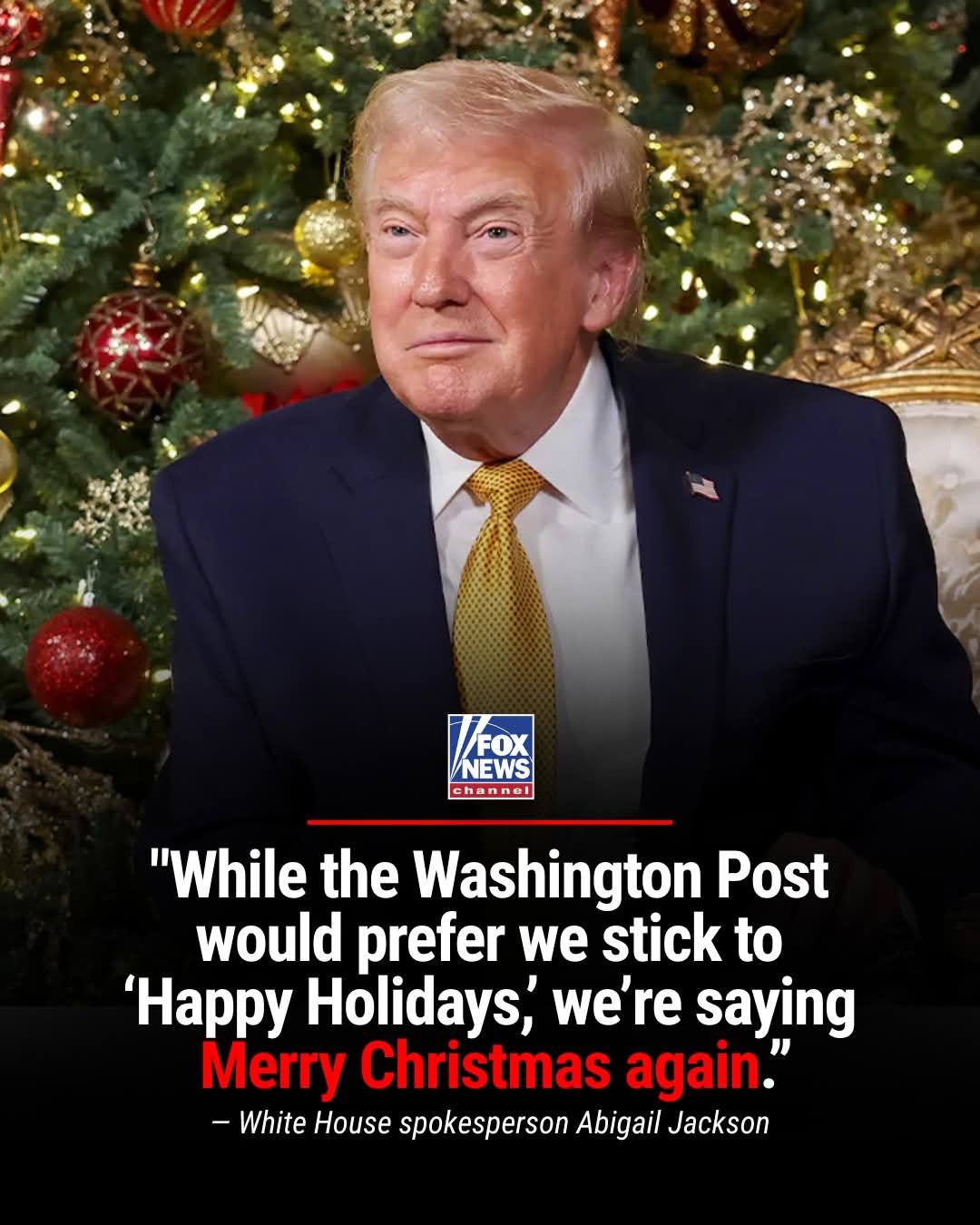
The white House delivered a sharp and unapologetic response this week after a Washington Post article criticized the Trump administration’s Christmas messaging as “explicitly sectarian,” igniting yet another flashpoint in the ongoing cultural and media battles surrounding faith, tradition, and national identity in America.
In a statement that quickly went viral, a White House spokesperson dismissed the criticism outright, saying:
“Christmas is a Christian holiday for millions of Christians celebrating the birth of their Savior, whether the Washington Post likes it or not.”
The response reportedly included the blunt phrase “absolute clowns” to describe the media outlet’s framing—language that immediately energized supporters and outraged critics.
A Familiar Media vs. White House Clash
The controversy began when the Washington Post published an article arguing that the administration’s Christmas messaging was too overtly religious and failed to reflect America’s religious diversity. According to the article, official communications should adopt more “inclusive” language rather than emphasizing Christianity.
But the White House’s rebuttal made clear it had no intention of retreating.
To administration officials and supporters, the criticism wasn’t about inclusion—it was about erasing historical and religious reality.
Christmas, they argue, is not a vague seasonal concept invented for mass appeal, but a holiday rooted in Christian belief, commemorating the birth of Jesus Christ.
“This isn’t controversial,” one senior official said privately. “It’s factual.”
Christmas, Faith, and Cultural Identity
For centuries, Christmas has been celebrated by Christians around the world as a sacred religious holiday.
While it has also become a broader cultural and commercial event in many countries, its origins are unmistakably Christian. The White House response emphasized that acknowledging this reality does not exclude others, nor does it prevent anyone from celebrating—or not celebrating—the holiday in their own way.
Supporters of the administration argue that demanding the removal of religious references from Christmas messaging represents a double standard.
Other religious holidays are routinely acknowledged for their spiritual significance without controversy, they note, while Christmas is often singled out for “neutralization.”
“Calling Christmas Christian isn’t offensive,” said one conservative commentator. “Pretending it’s not Christian is.”
Trump’s Base Applauds the Pushback
The administration’s response was met with enthusiastic approval from Trump supporters, many of whom praised the White House for refusing to bow to what they see as media-driven political correctness.
On social media, the statement was widely shared, with supporters saying it reflected a broader frustration among Americans who feel their traditions and beliefs are constantly criticized or marginalized by elite institutions.
“This is why people voted for Trump,” one viral comment read. “He doesn’t apologize for America’s values.”
The moment also reinforced Trump’s long-standing image as a leader willing to confront legacy media outlets head-on, especially when issues of culture, faith, and national identity are involved.
Critics Cry Division, Supporters Cry Honesty
Critics, meanwhile, accused the administration of fueling division and using inflammatory rhetoric against the press. They argue that government messaging should be careful to represent all Americans, regardless of faith.
But supporters counter that inclusivity does not require dishonesty. Recognizing Christmas as a Christian holiday, they argue, does not diminish religious freedom—it affirms it.
“This debate isn’t really about Christmas,” said a political analyst. “It’s about whether institutions are allowed to speak plainly about tradition without being accused of exclusion.”
A Larger Cultural Battle
The episode highlights a broader cultural conflict playing out across the country: between those who want to preserve traditional expressions of faith and those who believe public language should be stripped of religious specificity.
For the Trump administration, the choice was clear. Rather than soften its message, the White House doubled down—sending a signal to supporters that it will not retreat from defending Christianity’s place in American life.


BREAKING NEWS: Do Americans Approve of Trump’s Way of Ruling? Public Opinion Splits as Debate Over His Leadership Style Resurfaces

‘WE GOT HIM!’: President Trump announced on Truth Social that U.S. forces carried out one of the most daring search-and-rescue missions in history, successfully recovering a senior officer who had been behind enemy lines in Iran.

“Andy Reid: ‘I Would Never Bet Against’ Patrick Mahomes Returning for Week 1 of 2026 Season”

Serena Williams shares a deep message for fans worldwide… Now people everywhere are reacting in a big way….

BREAKING: Trump Fires Attorney General Pam Bondi in Major Cabinet Shakeup Amid Iran War Tensions

See Serena Williams in Spicy Wet Red Barely-There Never-Before-Seen Mouth-Watering Photos: Fans Lose It When the Red Dress Couldn’t Hold Her Melons and Dropped and Revealed Her Giant…

See Serena Williams in Spicy Wet Red Barely-There Never-Before-Seen Mouth-Watering Photos: Fans Lose It When the Red Dress Couldn’t Hold Her Melons and Dropped and Revealed Her Giant…

The Goat ! Serena Williams at the vanity fair Oscar party …..

Fans have to check in : New 17 Serena Williams hot bikinis pictures
Hot Serena Williams bikini photos: 🎾 Serena Williams is embracing her new look and shutting down the noise. The tennis legend recently shared photos in bikinis

Fans Weren’t Ready for What Serena Williams Revealed While Trying on a Bikini in Her Wardrobe…