NEWS
🚨 ENDGAME SIGNALS IN UKRAINE WAR? 🚨 🔥 This could be the moment history turns. 🔥

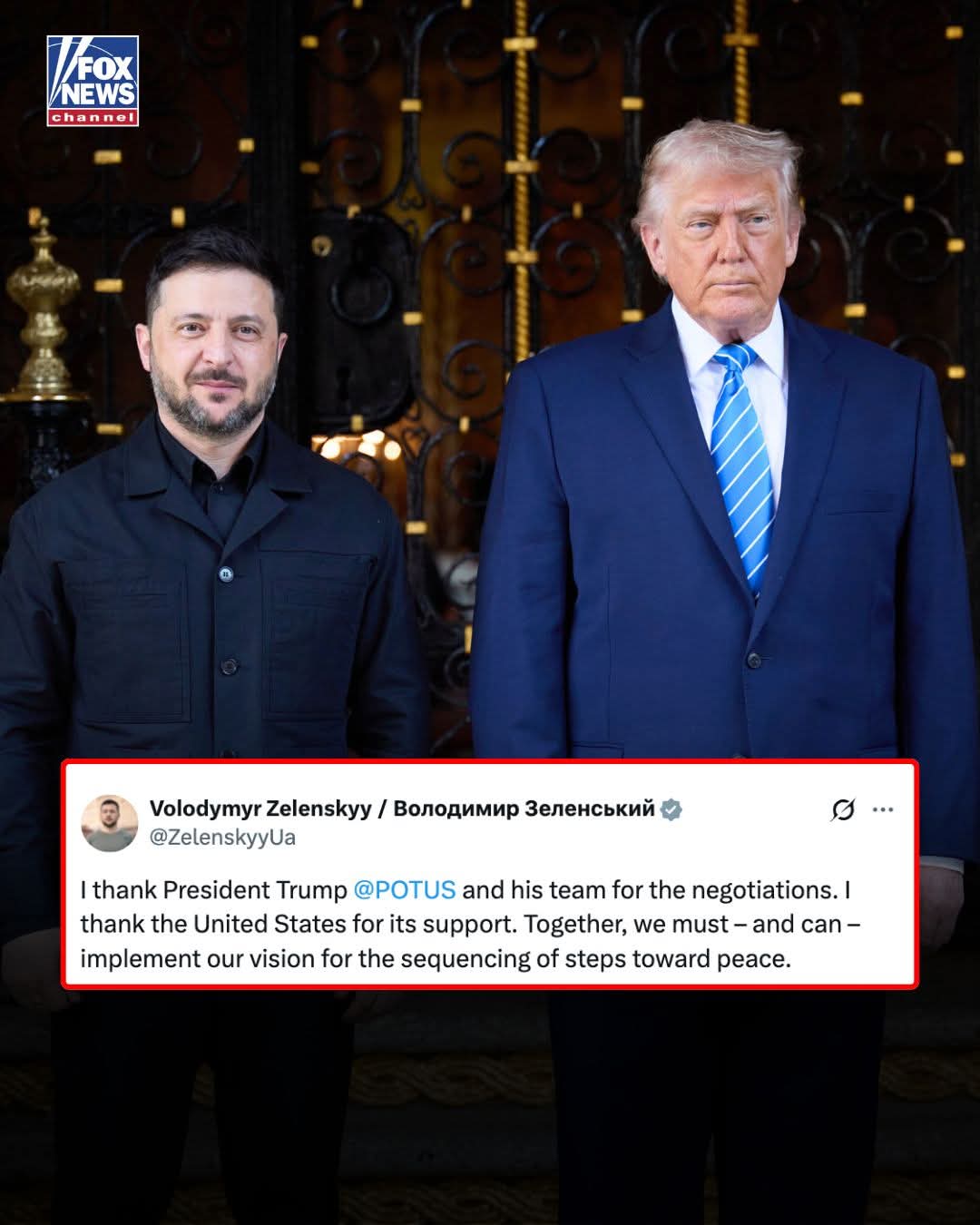
ENDGAME SIGNALS: Are Peace Talks to End the Ukraine War Finally Within Reach?
For the first time in years, the language surrounding the war in Ukraine has shifted—from endless conflict and open-ended escalation to something far more consequential: an endgame.
On Sunday, President Donald J. Trump sent a powerful signal to the world, suggesting that negotiations to potentially end the war in Ukraine are approaching the final stretch. Speaking after a private, high-level meeting with Ukrainian President Volodymyr Zelenskyy in Florida, Trump said progress has been made on a 20-point peace framework, while acknowledging that several difficult issues remain unresolved.
“We could be very close,” Trump said. “There are one or two very thorny issues, very tough issues. But I think we’re doing very well.”
Those words—measured but optimistic—have reverberated across diplomatic circles, financial markets, and global media. After more than four years of brutal warfare, staggering human loss, and geopolitical instability, the possibility of peace is no longer being whispered. It is being openly discussed at the highest levels of power.
A War That Redefined the Global Order
The conflict in Ukraine has reshaped the modern world. Millions displaced. Entire cities reduced to rubble. Energy markets disrupted. Food supplies strained. Military alliances tested. Governments divided.
What began as a regional conflict evolved into a global proxy war, drawing in NATO nations, the European Union, and major world powers through military aid, sanctions, intelligence sharing, and diplomatic pressure. The costs—human, economic, and political—have mounted with no clear off-ramp.
Until now.
The Florida Meeting: Why It Matters
The meeting between Trump and Zelenskyy was not ceremonial. It was strategic.
Sources familiar with the discussion describe it as focused, pragmatic, and outcome-driven, centering on a proposed 20-point plan designed to lay the groundwork for a comprehensive peace agreement. While the full details have not been publicly released, officials from both sides confirmed that the framework addresses:
Long-term security guarantees for Ukraine
Ceasefire mechanisms and enforcement
Territorial disputes and sovereignty concerns
Reconstruction and economic recovery
International oversight and final approvals
Crucially, both leaders publicly acknowledged that real progress has been made, even as they conceded that several issues remain unresolved.
That honesty matters. Peace deals rarely fail because talks begin; they fail when leaders pretend the hardest questions don’t exist.
The “Thorny Issues” Still Standing in the Way
Despite optimism, no one is pretending the road ahead is easy.
1. Territory
Territorial control remains the most emotionally charged and politically explosive issue. Any compromise will face resistance—from nationalists, military leaders, and citizens who have sacrificed deeply during the war.
2. Ceasefire Terms
Who enforces the ceasefire? What happens if violations occur? Are international peacekeepers involved? These questions are critical, because failed ceasefires have doomed past peace efforts in other conflicts.
3. Final Approval and Guarantees
Even if Ukraine and Russia agree in principle, broader international approval—especially from major stakeholders—will be required to make any deal durable.
Trump’s acknowledgment of these obstacles, rather than downplaying them, has been interpreted by analysts as a sign that negotiations are serious and advanced, not symbolic.
Trump’s Diplomatic Approach: Results Over Rhetoric
Supporters argue that Trump’s negotiating style—direct, transactional, and unapologetically outcome-focused—is uniquely suited to breaking long-running stalemates.
.
Rather than endless summits and ambiguous statements, Trump has consistently emphasized closure, deadlines, and clear terms. In this case, his message was simple: the war cannot go on forever, and the costs—to Ukraine, to Europe, to the United States, and to the world—are too high.
Critics may question his methods. But even skeptics are acknowledging something difficult to ignore: momentum exists where stagnation once ruled.
Why This Moment Feels Different
Peace talks have been attempted before. So why does this moment feel different?
War Fatigue Is Real
After years of fighting, pressure is mounting on all sides—from civilians, from economies, and from governments facing internal strain.
Strategic Realism Is Replacing Idealism
There is growing recognition that absolute victory may be unattainable, and that compromise, however painful, may be the only path to stability.
Direct Leadership Engagement
High-level, face-to-face engagement between decision-makers—rather than intermediaries alone—often signals talks are moving from theory to execution.
Clear Language About “Endgame”
Leaders rarely speak publicly about being “very close” unless talks have progressed beyond preliminary stages.
Global Implications of a Peace Deal
If an agreement is reached, the consequences would be enormous:
An end to large-scale fighting in Europe
Stabilization of global energy and food markets
A shift in NATO and EU strategic planning
Refocusing of U.S. foreign policy priorities
Reconstruction and recovery for Ukraine
It would also mark one of the most significant diplomatic breakthroughs of the decade—reshaping how future conflicts are approached and resolved.
Cautious Optimism, Not Celebration—Yet
Despite encouraging signals, seasoned observers urge caution. Peace negotiations can collapse suddenly.
Domestic politics, battlefield developments, or external provocations can derail even the most promising talks.
But optimism, even cautious optimism, is something the world has not felt regarding Ukraine in a long time.
For millions affected by the war, the mere possibility of peace is powerful.
The World Is Watching
Trump’s statement—brief, measured, and deliberate—has reignited global attention. Governments are watching. Markets are reacting. Citizens are debating.
Is this the breakthrough moment?
Is compromise finally overtaking confrontation?
Will leaders seize this opportunity—or let it slip away?
No one knows the final outcome yet. But one thing is clear:
This is no longer just another round of talks. This feels like an endgame.


BREAKING NEWS: Do Americans Approve of Trump’s Way of Ruling? Public Opinion Splits as Debate Over His Leadership Style Resurfaces

‘WE GOT HIM!’: President Trump announced on Truth Social that U.S. forces carried out one of the most daring search-and-rescue missions in history, successfully recovering a senior officer who had been behind enemy lines in Iran.

“Andy Reid: ‘I Would Never Bet Against’ Patrick Mahomes Returning for Week 1 of 2026 Season”

Serena Williams shares a deep message for fans worldwide… Now people everywhere are reacting in a big way….

BREAKING: Trump Fires Attorney General Pam Bondi in Major Cabinet Shakeup Amid Iran War Tensions

See Serena Williams in Spicy Wet Red Barely-There Never-Before-Seen Mouth-Watering Photos: Fans Lose It When the Red Dress Couldn’t Hold Her Melons and Dropped and Revealed Her Giant…

See Serena Williams in Spicy Wet Red Barely-There Never-Before-Seen Mouth-Watering Photos: Fans Lose It When the Red Dress Couldn’t Hold Her Melons and Dropped and Revealed Her Giant…

The Goat ! Serena Williams at the vanity fair Oscar party …..

Fans have to check in : New 17 Serena Williams hot bikinis pictures
Hot Serena Williams bikini photos: 🎾 Serena Williams is embracing her new look and shutting down the noise. The tennis legend recently shared photos in bikinis

Fans Weren’t Ready for What Serena Williams Revealed While Trying on a Bikini in Her Wardrobe…