NEWS
60 minutes ago: BREAKING — The U.S. Court, through its Public Information Office, just issued a rare public statement that’s rocking Washingt0n. The Court says Donald Trump’s military action in Vanezuela and the arrest of Maduro were carried out without Congressional approval, violating Article I, Section 8 and the War Powers Acts. Sources say the move is being labeled illegal and impeachable, with a swift investigation now ordered.

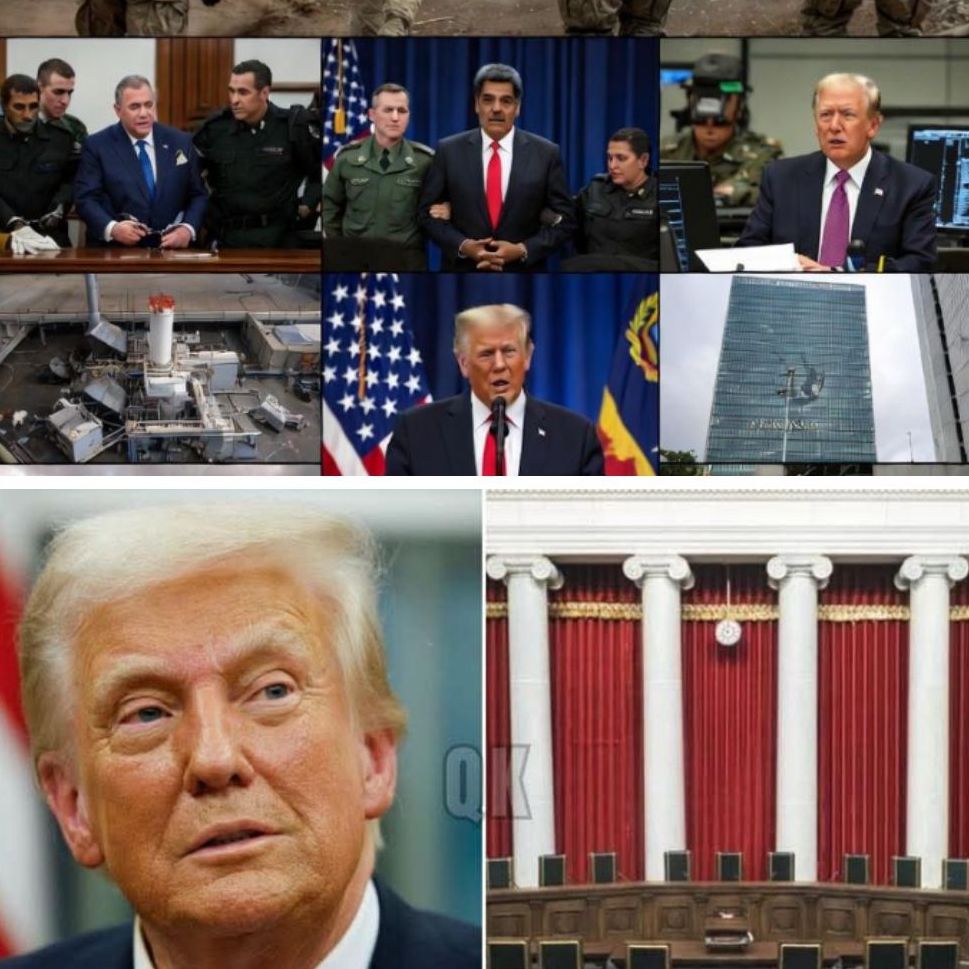
In a stunning escalation of U.S. foreign policy, President Donald Trump announced on January 3 that American forces had conducted a large-scale military operation in Venezuela, resulting in the capture of President Nicolás Maduro and his wife, Cilia Flores. The couple was swiftly transported to New York, where they faced federal charges related to drug trafficking, narco-terrorism, and weapons conspiracies.
Maduro, 63, and Flores appeared in Manhattan federal court on January 5, pleading not guilty to the charges. “I am innocent. I am not guilty. I am a decent man. I am still president of my country,” Maduro declared through an interpreter before being cut off by U.S. District Judge Alvin K. Hellerstein. The former Venezuelan leader described his removal as a “kidnapping” and himself as a “prisoner of war.”
The operation, planned for months, involved airstrikes on key targets in Caracas followed by a rapid raid on Maduro’s residence at a military base. U.S. officials described it as a “law enforcement action” to execute long-standing indictments from 2020, accusing Maduro of heading a “narco-terrorist” network that flooded the U.S. with cocaine.
Defense Secretary Pete Hegseth praised the mission’s precision, noting no U.S. casualties and crediting it for disrupting drug flows.
Trump hailed the raid as a “brilliant operation,” stating the U.S. would “run” Venezuela temporarily to facilitate a transition and reclaim oil resources. “We’re in charge,” he said, emphasizing benefits for American energy companies. In interviews, Trump mentioned discussions with oil firms “before and after” the strikes, promising they would “do a great job.”
Domestic and International Backlash
The move has ignited fierce debate over its legality. Legal experts argue the action violated international law, including the UN Charter’s prohibition on using force against sovereign states, and U.S. domestic laws requiring congressional approval for military engagements beyond limited scope. Comparisons have been drawn to the 1989 arrest of Panama’s Manuel Noriega, but critics note the absence of prior congressional notification or authorization.
Democrats and some Republicans condemned the operation as unauthorized regime change. International reaction was swift: Russia and China denounced it as “lawlessness” at the UN Security Council, while allies like Brazil, Mexico, and Colombia expressed alarm over sovereignty violations. Venezuela’s military and remaining officials labeled it “imperialist aggression.”
In Caracas, Maduro’s vice president, Delcy Rodríguez, was sworn in as acting president on January 5, following a ruling by Venezuela’s Supreme Court.
She initially demanded Maduro’s release but later softened rhetoric, inviting dialogue with the U.S. on “respectful relations.” Trump warned Rodríguez to cooperate, threatening severe consequences otherwise.
Broader Implications
The raid caps years of U.S. pressure on Maduro, whom Washington has long viewed as illegitimate following disputed elections. It also aligns with Trump’s focus on combating drug trafficking and securing energy resources amid global tensions.
Venezuela’s opposition, including Nobel Peace Prize winner María Corina Machado, has mixed reactions—celebrating Maduro’s removal but wary of U.S. intentions, especially after Trump dismissed Machado’s leadership potential.
As Maduro’s trial looms—next hearing set for March—the world watches whether this bold gambit stabilizes Venezuela, lowers U.S. energy costs, and deters adversaries, or risks prolonged instability and diplomatic isolation.


TRUMP VS. THE DEADLY SNAKE: Fangs Out, Whispering Poison Straight Into His Ear on the White House Lawn!

Fans are starting to notice a different side of Taylor Swift lately… And not everyone knows what to make of it..

SAD NEWS: 30 minutes ago, Patrick Mahomes heartbreakingly announced that his wife, Brittany, passed away in a…

TAYLOR SWIFT RUSHED TO HOSPITAL IN TEARS After HORRIFIC Eras Tour Leg-Shattering Accident – Backstage CHAOS Leaves Swifties Heartbroken!

SILENT HERO: Patrick Mahomes and the gift of a second chance. Before the hospital staff shared the story, few knew that Patrick Mahomes had quietly stepped in to cover the total cost of a life-saving brain tumor surgery for a 9-year-old fan.

BREAKING NEWS: Do Americans Approve of Trump’s Way of Ruling? Public Opinion Splits as Debate Over His Leadership Style Resurfaces

‘WE GOT HIM!’: President Trump announced on Truth Social that U.S. forces carried out one of the most daring search-and-rescue missions in history, successfully recovering a senior officer who had been behind enemy lines in Iran.

“Andy Reid: ‘I Would Never Bet Against’ Patrick Mahomes Returning for Week 1 of 2026 Season”

Serena Williams shares a deep message for fans worldwide… Now people everywhere are reacting in a big way….

BREAKING: Trump Fires Attorney General Pam Bondi in Major Cabinet Shakeup Amid Iran War Tensions

See Serena Williams in Spicy Wet Red Barely-There Never-Before-Seen Mouth-Watering Photos: Fans Lose It When the Red Dress Couldn’t Hold Her Melons and Dropped and Revealed Her Giant…
