NEWS
As NATO eyes the Arctic to counter Russian and Chinese expansion, Donald Trump’s renewed claims of saving the alliance ignite controversy. With Greenland at the center, unity, sovereignty, and leadership are being tested like never before.

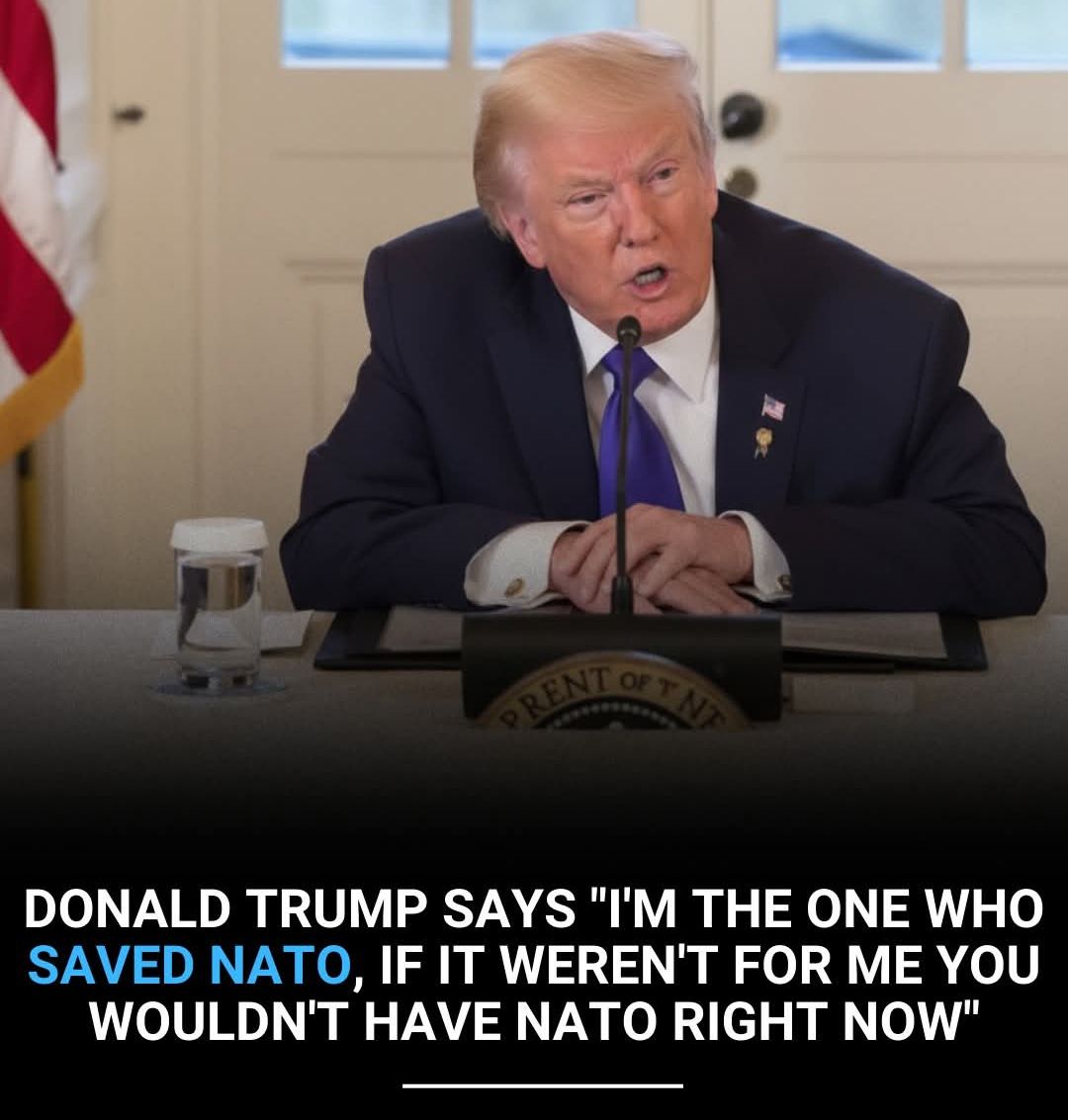
As global attention shifts northward, the Arctic has reemerged as a central arena of geopolitical competition. Melting ice, new shipping routes, and heightened military activity have transformed what was once a remote frontier into a strategic flashpoint. Against this backdrop, former U.S. President Donald Trump has reignited controversy by declaring himself the “saviour of NATO,” even as alliance members quietly coordinate a new security initiative focused on Greenland.
At the heart of the discussion is a proposed joint NATO-linked operation known as “Arctic Sentry.” The plan, backed by the United States alongside Britain, France, and Germany, would expand surveillance and security measures in the Arctic region. The move comes amid growing concerns over increased Russian and Chinese submarine activity, which Western defense officials see as a long-term challenge to NATO’s northern flank.
According to reports, the proposal was discussed during a high-level video call involving UK Prime Minister Sir Keir Starmer, French President Emmanuel Macron, and German political leader Friedrich Merz.
NATO Secretary General Mark Rutte has also publicly emphasized that the Arctic is now a key strategic priority for the alliance, citing its importance to transatlantic security, undersea infrastructure, and deterrence.
While NATO leaders focused on coordination and collective defense, Donald Trump redirected the narrative toward himself. Posting on Truth Social and later repeating the claim in a press interview, Trump argued that NATO “would not exist” without his leadership, asserting that his pressure on European allies to increase defense spending singlehandedly saved the alliance from collapse.
This claim is not new. During his presidency, Trump frequently criticized NATO members for failing to meet defense spending targets and portrayed himself as the only leader willing to confront what he described as unfair burdens placed on the United States. Supporters credit him with forcing overdue reforms, while critics argue NATO was never in danger of dissolution and that Trump’s rhetoric weakened trust within the alliance.
The Arctic debate has also reopened tensions surrounding Greenland, a semi-autonomous territory of Denmark that has long held strategic value due to its location between North America and Europe.
Trump previously drew international backlash by suggesting the United States should buy Greenland—an idea dismissed by Denmark but never fully abandoned in Trump’s political messaging.
That history has made European leaders particularly sensitive to any suggestion of unilateral U.S. action in the region. European Commissioner Andrius Kubilius issued one of the strongest responses yet, warning that any U.S. military takeover or forced control of Greenland would effectively mark the end of NATO in its current form. His statement underscored fears that unilateral moves could fracture the alliance and undermine the very principle of collective defense.
The warning highlights a deeper concern: while NATO remains united in its assessment of rising threats from Russia and China, divisions persist over leadership, decision-making, and respect for sovereignty. The Arctic, rather than serving solely as a zone of cooperation, risks becoming a test case for how much strain the alliance can absorb.
Russia has steadily expanded its Arctic military presence, reopening Cold War–era bases and increasing submarine patrols. China, while not an Arctic nation, has declared itself a “near-Arctic state” and invested heavily in polar research, infrastructure, and dual-use technologies. For NATO, the region represents both a vulnerability and a proving ground for unity.
Trump’s comments, therefore, arrive at a sensitive moment. To his supporters, his assertive tone signals strength and leverage. To critics, it reinforces fears that personal politics could override alliance cohesion. The contrast between quiet diplomatic coordination and loud public claims illustrates a broader tension within Western politics: whether security alliances are built on institutions or personalities.


Serena Williams Breaks Silence: How Gruelling, Invasive Doping Protocols Nearly Destroyed Her Confidence And Almost Forced Her To Quit Tennis For Good

Trump Kisses Mystery Woman LIVE at World Cup Draw… Melania’s Face Says It All during the 2026 World Cup Draw —— furious melania felling BETRAYED – RETALIATES by EXPOSING TRUMP SECRET

Internet Buzz: 3 hot Private Photos of Serena Williams Allegedly Leaked Online,click to see ..see more

Serena Williams Just Stepped Out in a Look That’s Got Everyone Talking – See Why Fans Are Calling It Pure Confidence

Donald Trump showed up at the World Cup stadium and the crowd didn’t just cheer – it erupted. Cameras caught the moment he walked in, and fans instantly lost it.

Trump Drops a Bombshell 60-Day Deadline for Iran: ‘Make a Deal or Face Things They Won’t Like’ – But Says He Doesn’t Think It Will Get That Far. What Happens Next?

Serena Williams Becomes the Center of a Heated Online Conversation, after a leak video show her private ..

Serena Williams’ Very Soaked Hot Body in 5 Private Photos Is Causing Fans to Lose Focus – Wives and Girlfriends Complain Their Men Are Distracted and Demand the Photos Be Deleted. See Them Before They’re Removed……

“Serena Williams’ Private Photos Just Leaked Online… And the Internet Is Completely Losing It

Fans Are Not Ready for These 7 Oiled and Drenched Serena Williams Private Beach Photos – No One Could Believe the Moment Ocean Waves Tore Her Top Off, Revealing Nothing Worn Underneath, but What Fans Could Not Stop Staring At Is the Photo of When the Waves Hit Her Backside and Shifted the Underwear Revealing a Big…

The Queen is back. A special moment as Vicky Mboko shares the court with Serena Williams at Queen’s Club. From inspiration to partnership, they’ll team up in doubles as Serena begins her long-awaited comeback journey.
