CELEBRITY
“You Can’t Own My Voice”: Taylor Swift Ignites Political Firestorm After On-Air Clash, Leaving America Divided Over Celebrity Power, Free Speech, and Performative Values

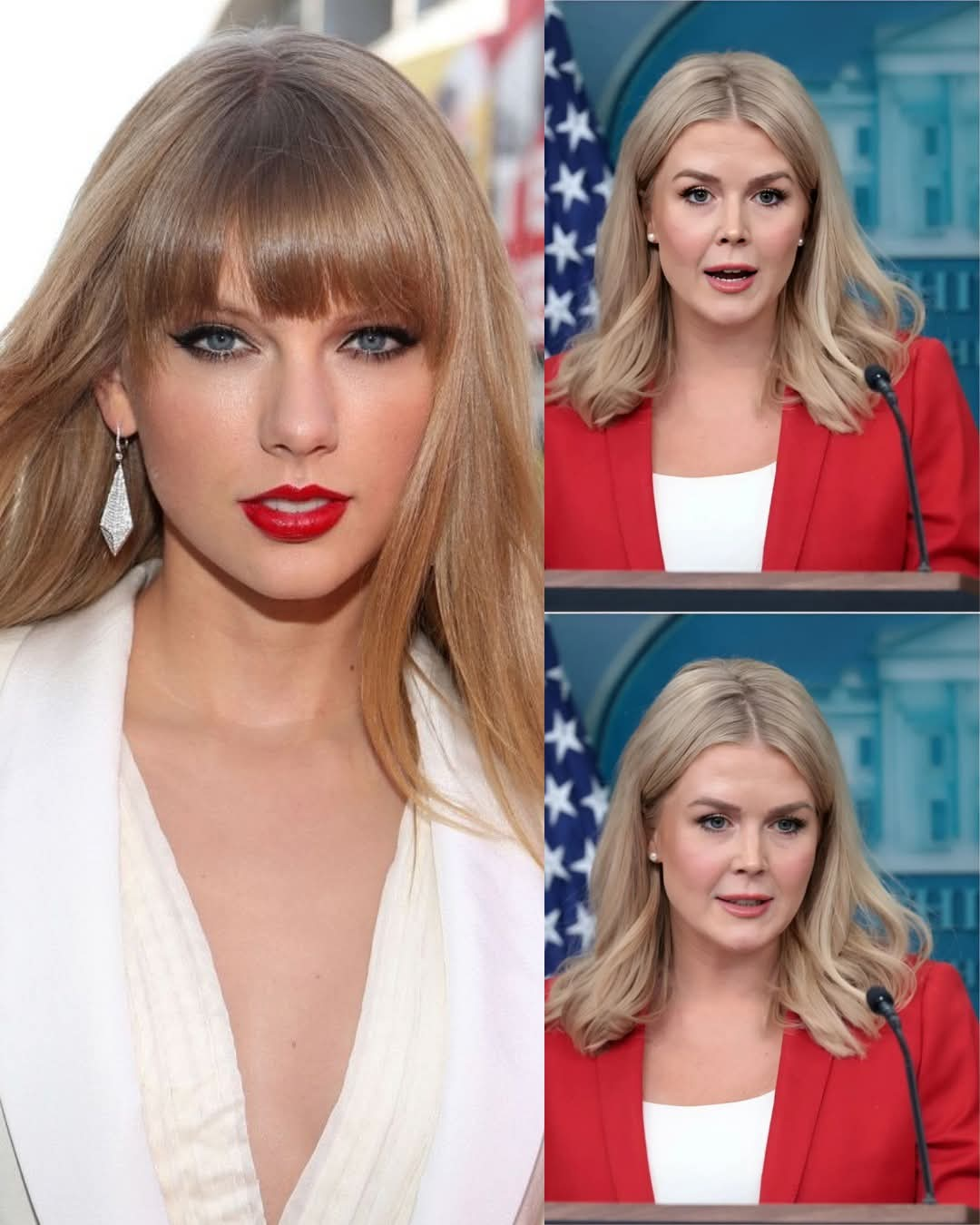
“You Can’t Own My Voice”: The Moment Taylor Swift Shook a Live Political Debate
It lasted less than a minute, but its impact rippled across politics, pop culture, and social media with seismic force.
On a live broadcast that was supposed to be orderly and controlled, Taylor Swift did something few expected: she spoke — calmly, deliberately, and without apology. Her words weren’t shouted. They weren’t wrapped in spectacle. They were measured, steady, and unmistakably defiant.
“You can’t own my voice,” Swift said, her tone even but resolute. “I speak for everyone who’s ever been mocked, silenced, or told to stay in their lane. You’re nothing but a hypocrite.”
The studio went silent.
Across from her, political spokesperson Karoline Leavitt reacted instantly, rising from her chair as her face flushed with anger. “Hypocrite?!” she shot back. “I stand for real American values — something your celebrity privilege could never understand!”
But Swift didn’t flinch. She leaned forward slightly, her response quieter than the outburst before it — and far more devastating.
“Values?” she replied. “Then start living them — instead of performing them.”
Before the moderator could regain control, the damage was already done. The exchange had been clipped, uploaded, reposted, and dissected across every major platform. Within minutes, timelines were flooded with reactions.
Supporters praised Swift as a fearless figure who finally “spoke truth to power,” applauding her for using her platform to confront what they saw as hypocrisy and performative politics. Many said her composure — not her fame — was what made the moment resonate.
Critics, however, fired back just as hard. They accused Swift of embodying “out-of-touch celebrity arrogance,” arguing that entertainers have no place challenging political figures on live television. To them, the moment wasn’t bravery — it was overreach.
Yet the divide only fueled the conversation.
Media analysts noted that what made the clash so explosive wasn’t volume or drama, but contrast. Leavitt’s sharp defensiveness collided with Swift’s controlled restraint. One spoke in slogans. The other spoke in sentences that lingered.
The question that followed echoed everywhere: what finally pushed Taylor Swift to break her long, careful restraint and respond so directly?
For years, Swift has been criticized both for speaking out and for staying silent — a paradox that follows many public figures. This moment suggested a breaking point, not born of impulse, but of accumulation: years of watching culture wars play out, voices dismissed, and values invoked more than practiced.
Whether seen as courageous or controversial, one thing is undeniable: the exchange transformed a routine broadcast into a cultural flashpoint.


And long after the shouting faded, one quiet line remained at the center of the storm:
“Start living them — instead of performing them.”
It wasn’t just a rebuttal.
It was a challenge — and millions are still arguing over who it was meant for.


Serena Williams Becomes the Center of a Heated Online Conversation, after a leak video show her xxx …

Serena Williams’ Very Soaked Hot Body in 5 Private Photos Is Causing Fans to Lose Focus – Wives and Girlfriends Complain Their Men Are Distracted and Demand the Photos Be Deleted. See Them Before They’re Removed……

“Serena Williams’ Private Photos Just Leaked Online… And the Internet Is Completely Losing It

Fans Are Not Ready for These 7 Oiled and Drenched Serena Williams Private Beach Photos – No One Could Believe the Moment Ocean Waves Tore Her Top Off, Revealing Nothing Worn Underneath, but What Fans Could Not Stop Staring At Is the Photo of When the Waves Hit Her Backside and Shifted the Underwear Revealing a Big…

The Queen is back. A special moment as Vicky Mboko shares the court with Serena Williams at Queen’s Club. From inspiration to partnership, they’ll team up in doubles as Serena begins her long-awaited comeback journey.

Serena Williams Retires But The Court Calls Her Back Four Years Later At Age 44 The Tennis Legend Returns To Queen’s Club And Fans Everywhere Are Losing It Click the link To See Why This Comeback Has The World Talking

Serena and Simone Did What No One Thought Possible. The Last One Will Give You Chills

Serena Williams holding a bold sign: Do you still love me? Yes? Click below to check her stunning picture

Serena Williams is done with tennis, but she’s just getting started — and her next chapter might be even more powerful than her last.

Country music icons have teamed up in an unprecedented “super legend alliance” to bring back the heart, soul, and future of authentic country music.

Country music icons Willie Nelson, Dolly Parton, George Strait, Alan Jackson, Blake Shelton, Luke Bryan, and Trace Adkins have teamed up in an unprecedented “super legend alliance” to bring back the heart, soul, and future of authentic country music.
