NEWS
Republican Heavyweights Rally Behind Trump at National Conference, Delivering Fiery Speeches That Signal Unshakable Loyalty and Cement His Grip on the Party’s Future Politics

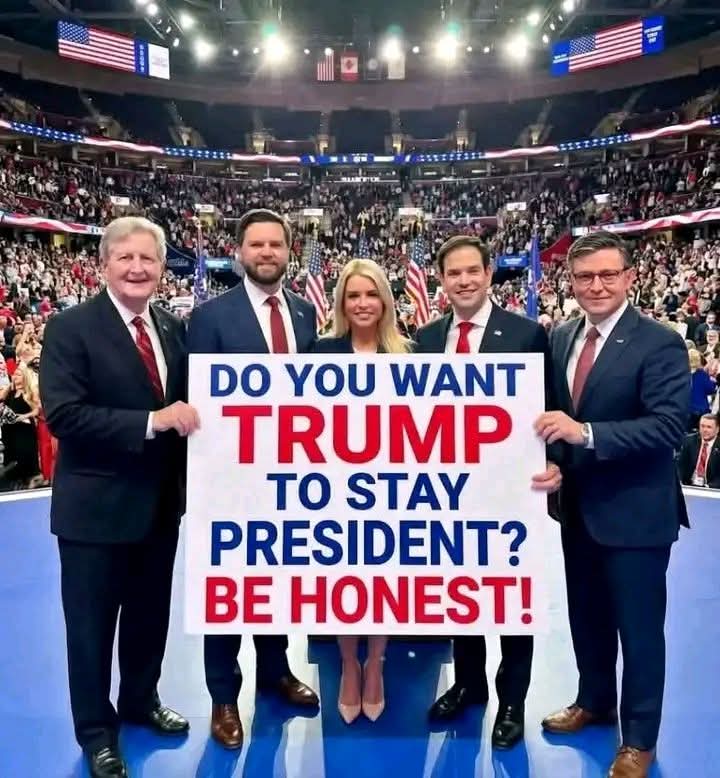
A national political conference turned into a defining moment for the modern Republican Party as several of its most prominent figures delivered an unambiguous and forceful defense of former President Donald J. Trump, signaling that his influence over the party remains firmly intact.
Sen. John Kennedy, Sen. JD Vance, former Florida Attorney General Pam Bondi, Sen. Marco Rubio, and House Speaker Mike Johnson each took the stage before a packed audience, using their remarks to portray Trump as the central figure of the conservative movement and a leader they say continues to embody the will of millions of Americans.
Throughout the event, speakers framed Trump not merely as a former president, but as a symbol of resistance against what they described as an entrenched political establishment, media hostility, and institutional overreach. The repeated emphasis on loyalty and unity underscored a broader message: the Republican Party’s future, at least for now, remains closely tied to Trump’s political legacy.
JD Vance described Trump as a leader who “reshaped the conversation in America,” arguing that his presidency forced Washington to confront issues long ignored by both parties, including trade imbalances, border security, and the cultural divide between political elites and everyday voters. Marco Rubio echoed those sentiments, asserting that Trump’s impact extended beyond policy and into the realm of political realignment, mobilizing voters who previously felt disconnected from national politics.
Pam Bondi focused on Trump’s legal battles, characterizing them as politically motivated efforts to weaken his influence ahead of future elections. She argued that defending Trump was not just about one individual, but about preserving what she called the principle of fairness in the American justice system.
Speaker Mike Johnson emphasized unity, telling the audience that internal division would only strengthen political opponents. He framed the moment as a test of resolve for conservatives nationwide, urging supporters to remain engaged, organized, and vocal as the next election cycle approaches.
The conference made clear that Trump’s presence continues to dominate Republican messaging, energizing supporters while simultaneously deepening divisions with critics who warn against excessive personalization of politics. For detractors, the rhetoric on display raised concerns about party independence and the risks of elevating loyalty over institutional norms. For supporters, however, the event was seen as proof that Trump’s movement remains alive, disciplined, and prepared for future political battles.
As the United States moves closer to another contentious election cycle, the conference served as a powerful reminder that Donald Trump is no longer just a former president — he is still a central force shaping the direction, tone, and identity of American conservative politics.
Whether this unwavering alignment strengthens the Republican Party or limits its ability to broaden its appeal remains an open question. What is clear, however, is that Trump’s influence is far from fading, and the debate surrounding his role in America’s political future is only intensifying.


Serena Williams Becomes the Center of a Heated Online Conversation, after a leak video show her xxx …

Serena Williams’ Very Soaked Hot Body in 5 Private Photos Is Causing Fans to Lose Focus – Wives and Girlfriends Complain Their Men Are Distracted and Demand the Photos Be Deleted. See Them Before They’re Removed……

“Serena Williams’ Private Photos Just Leaked Online… And the Internet Is Completely Losing It

Fans Are Not Ready for These 7 Oiled and Drenched Serena Williams Private Beach Photos – No One Could Believe the Moment Ocean Waves Tore Her Top Off, Revealing Nothing Worn Underneath, but What Fans Could Not Stop Staring At Is the Photo of When the Waves Hit Her Backside and Shifted the Underwear Revealing a Big…

The Queen is back. A special moment as Vicky Mboko shares the court with Serena Williams at Queen’s Club. From inspiration to partnership, they’ll team up in doubles as Serena begins her long-awaited comeback journey.

Serena Williams Retires But The Court Calls Her Back Four Years Later At Age 44 The Tennis Legend Returns To Queen’s Club And Fans Everywhere Are Losing It Click the link To See Why This Comeback Has The World Talking

Serena and Simone Did What No One Thought Possible. The Last One Will Give You Chills

Serena Williams holding a bold sign: Do you still love me? Yes? Click below to check her stunning picture

Serena Williams is done with tennis, but she’s just getting started — and her next chapter might be even more powerful than her last.

Country music icons have teamed up in an unprecedented “super legend alliance” to bring back the heart, soul, and future of authentic country music.

Country music icons Willie Nelson, Dolly Parton, George Strait, Alan Jackson, Blake Shelton, Luke Bryan, and Trace Adkins have teamed up in an unprecedented “super legend alliance” to bring back the heart, soul, and future of authentic country music.
