CELEBRITY
Trump Administration Restricts Flags at U.S. Government Buildings Worldwide, Sparking Fierce National Debate Over Unity, Representation, Identity, and the Meaning of American Symbols 🇺🇸

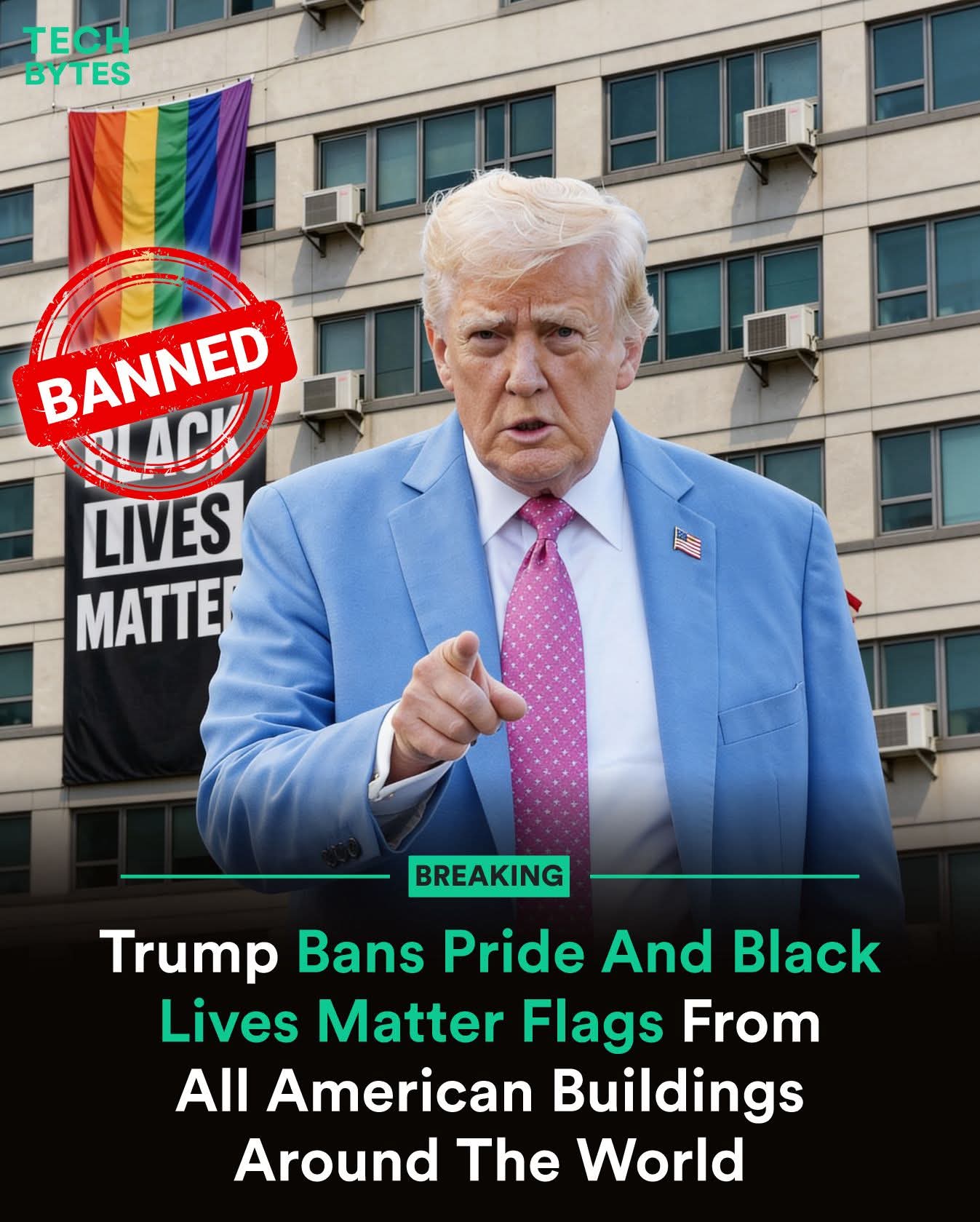
A recent policy shift under the administration of Donald Trump has sparked a heated debate across the United States over how national symbols are used at American government buildings worldwide. Reports indicate the White House has tightened rules governing which flags may fly at U.S. embassies, consulates, and federal facilities abroad—emphasizing that only the official U.S. flag and a limited set of federally authorized flags should be displayed.
A Move Toward Uniformity — or Exclusion?
Supporters of the policy frame it as a common-sense effort to emphasize neutrality and national unity. In their view, federal facilities should represent the entire nation and avoid showing support for specific causes or movements, no matter how well-intentioned. Proponents argue this helps safeguard the dignity of official U.S. symbols and prevents government spaces from being perceived as endorsing political or social agendas.
“Government buildings shouldn’t become platforms for groups or messages that could divide people,” one administration supporter said. “This policy simply restores focus on the American flag as the unifying standard for all citizens.”
A Symbolic Shift That Matters
Critics, however, see the move very differently. For many activists and community leaders, the decision to limit flag displays goes beyond administrative procedure—it’s a symbolic rollback of inclusivity and representation.
In recent years, some U.S. embassies and federal locations chose to fly flags associated with specific causes, such as the Pride flag during LGBTQ+ History Month or Black Lives Matter flags to show solidarity with racial justice efforts. These gestures were seen by many as visible acknowledgments of the diversity that makes up the United States.
“Removing these flags sends a clear message: certain communities are less welcome in official spaces,” one critic argued. “Symbols matter. What’s being communicated here isn’t just about policy—it’s about values.”
Flags, Identity, and the American Story
The controversy highlights how national symbols—especially flags—carry deep cultural meaning. For some, the U.S. flag is a singular emblem of freedom, unity, and shared identity. For others, the presence of additional flags in official spaces has been a powerful gesture of recognition and inclusion.
The debate has also sparked broader questions about the role of government in representing the people it serves. Should official spaces reflect the nation’s diversity, or should they remain strictly neutral, showcasing only symbols sanctioned by federal policy?.
What Comes Next?
As conversations continue online and in communities across the country, Americans are sharply divided. Supporters insist the policy reinforces the core principle that government represents all people equally. Critics counter that it diminishes the visibility of communities whose voices have historically been marginalized.
One thing is clear: decisions about flags, heritage, and representation carry weight far beyond cloth and color. They touch on identity, belonging, and the ongoing story of what it means to be American.


Fans Are Not Ready for These 7 Oiled and Drenched Serena Williams Private Beach Photos – No One Could Believe the Moment Ocean Waves Tore Her Top Off, Revealing Nothing Worn Underneath, but What Fans Could Not Stop Staring At Is the Photo of When the Waves Hit Her Backside and Shifted the Underwear Revealing a Big…

The Queen is back. A special moment as Vicky Mboko shares the court with Serena Williams at Queen’s Club. From inspiration to partnership, they’ll team up in doubles as Serena begins her long-awaited comeback journey.

Serena Williams Retires But The Court Calls Her Back Four Years Later At Age 44 The Tennis Legend Returns To Queen’s Club And Fans Everywhere Are Losing It Click the link To See Why This Comeback Has The World Talking

Serena and Simone Did What No One Thought Possible. The Last One Will Give You Chills

Serena Williams holding a bold sign: Do you still love me? Yes? Click below to check her stunning picture

Serena Williams is done with tennis, but she’s just getting started — and her next chapter might be even more powerful than her last.

Country music icons have teamed up in an unprecedented “super legend alliance” to bring back the heart, soul, and future of authentic country music.

Country music icons Willie Nelson, Dolly Parton, George Strait, Alan Jackson, Blake Shelton, Luke Bryan, and Trace Adkins have teamed up in an unprecedented “super legend alliance” to bring back the heart, soul, and future of authentic country music.

Serena Williams just broke the internet AGAIN – fans can’t stop talking and the comments are WILD. You won’t believe what has everyone obsessed. Tap to see why this post is blowing up right now – you’ll want to weigh in!

Look at 4 Serena Williams’ private video that dazzled everyone – goat Serena Williams Forgot to Turn It Off Revealing What She Does to Herself Without Underwear Before Sleeping, See Video before it is Completely gone

Serena and Venus Williams didn’t just win 30 Grand Slams—they broke barriers, changed tennis forever, and inspired millions to believe that no court, no rule, no doubt can stop a legacy built on power and sisterhood.
