CELEBRITY
Serena Williams Stuns in Nearly Nude Harper’s Bazaar Cover, Opens Up About Controversy, Growth, and Raw Power

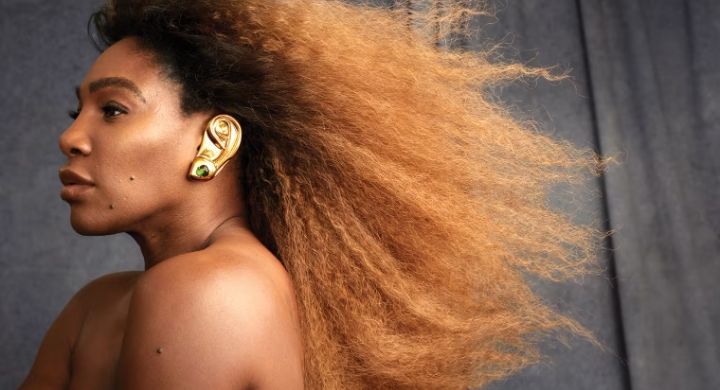
When Serena Williams appears on the August cover of Harper’s Bazaar, she does more than pose for a camera — she makes a cultural statement. As part of the magazine’s “Real Beauty” issue, the 23-time Grand Slam champion chose to be photographed completely unretouched, embracing every curve, every muscle, every mark that tells the story of a body built through dominance, discipline, and decades of excellence.
Draped in a shimmering gold gown by Stella McCartney and adorned with timeless pieces from Tiffany & Co., Serena radiates power. But the true statement isn’t the fashion — it’s the absence of Photoshop.
In an era where perfection is often manufactured, Serena’s decision to present herself exactly as she is feels revolutionary. This is the body that won 23 Grand Slam singles titles. The body that reshaped women’s tennis. The body that carried her through pregnancy complications and back to elite competition. And now, it stands unedited on one of fashion’s most prestigious covers.
More Than a Photoshoot
The feature goes beyond imagery. In a deeply personal essay, Serena reflects on one of the most controversial moments of her career — the 2018 U.S. Open final against Naomi Osaka.
During that match, a heated exchange with umpire Carlos Ramos led to code violations and a game penalty. The tension overshadowed Osaka’s historic victory, and the emotional aftermath lingered long after the final point was played.
In Harper’s Bazaar, Serena revisits that moment with honesty and vulnerability. She opens up about seeking therapy to process the pain and frustration. She writes about accountability. And most movingly, she shares the heartfelt apology email she sent to Osaka — a message filled with pride, remorse, and unwavering support.
“I would never, ever want the light to shine away from another female, specifically another Black female athlete,” she wrote.
Growth, Grace, and Legacy
For Serena, this cover represents more than confidence in her appearance. It symbolizes growth. It shows a champion who understands that strength is not only measured in trophies, but in self-awareness and empathy.
Three years after deleting a Photoshopped image of herself and reposting the unedited version, Serena is doubling down on authenticity. She is reclaiming her narrative — not as a flawless icon, but as a powerful, evolving woman.
Her Harper’s Bazaar feature is a reminder that real beauty is not airbrushed. Real power is not silent. And real legacy is built not just on victories, but on how you rise after controversy.
Serena Williams has never needed help to shine. And now, without a single digital touch, she proves that her greatest strength may be her willingness to stand exactly as she is — unapologetic, unfiltered, and undeniably powerful.


Fans Are Not Ready for These 7 Oiled and Drenched Serena Williams Private Beach Photos – No One Could Believe the Moment Ocean Waves Tore Her Top Off, Revealing Nothing Worn Underneath, but What Fans Could Not Stop Staring At Is the Photo of When the Waves Hit Her Backside and Shifted the Underwear Revealing a Big…

The Queen is back. A special moment as Vicky Mboko shares the court with Serena Williams at Queen’s Club. From inspiration to partnership, they’ll team up in doubles as Serena begins her long-awaited comeback journey.

Serena Williams Retires But The Court Calls Her Back Four Years Later At Age 44 The Tennis Legend Returns To Queen’s Club And Fans Everywhere Are Losing It Click the link To See Why This Comeback Has The World Talking

Serena and Simone Did What No One Thought Possible. The Last One Will Give You Chills

Serena Williams holding a bold sign: Do you still love me? Yes? Click below to check her stunning picture

Serena Williams is done with tennis, but she’s just getting started — and her next chapter might be even more powerful than her last.

Country music icons have teamed up in an unprecedented “super legend alliance” to bring back the heart, soul, and future of authentic country music.

Country music icons Willie Nelson, Dolly Parton, George Strait, Alan Jackson, Blake Shelton, Luke Bryan, and Trace Adkins have teamed up in an unprecedented “super legend alliance” to bring back the heart, soul, and future of authentic country music.

Serena Williams just broke the internet AGAIN – fans can’t stop talking and the comments are WILD. You won’t believe what has everyone obsessed. Tap to see why this post is blowing up right now – you’ll want to weigh in!

Look at 4 Serena Williams’ private video that dazzled everyone – goat Serena Williams Forgot to Turn It Off Revealing What She Does to Herself Without Underwear Before Sleeping, See Video before it is Completely gone

Serena and Venus Williams didn’t just win 30 Grand Slams—they broke barriers, changed tennis forever, and inspired millions to believe that no court, no rule, no doubt can stop a legacy built on power and sisterhood.
