CELEBRITY
At Dawn, Taylor Swift Quietly Opened a Free Community Care Center—No Cameras, No Press—Offering Help to Workers and Veterans in a Rare Act of Compassion That Redefined Celebrity Influence

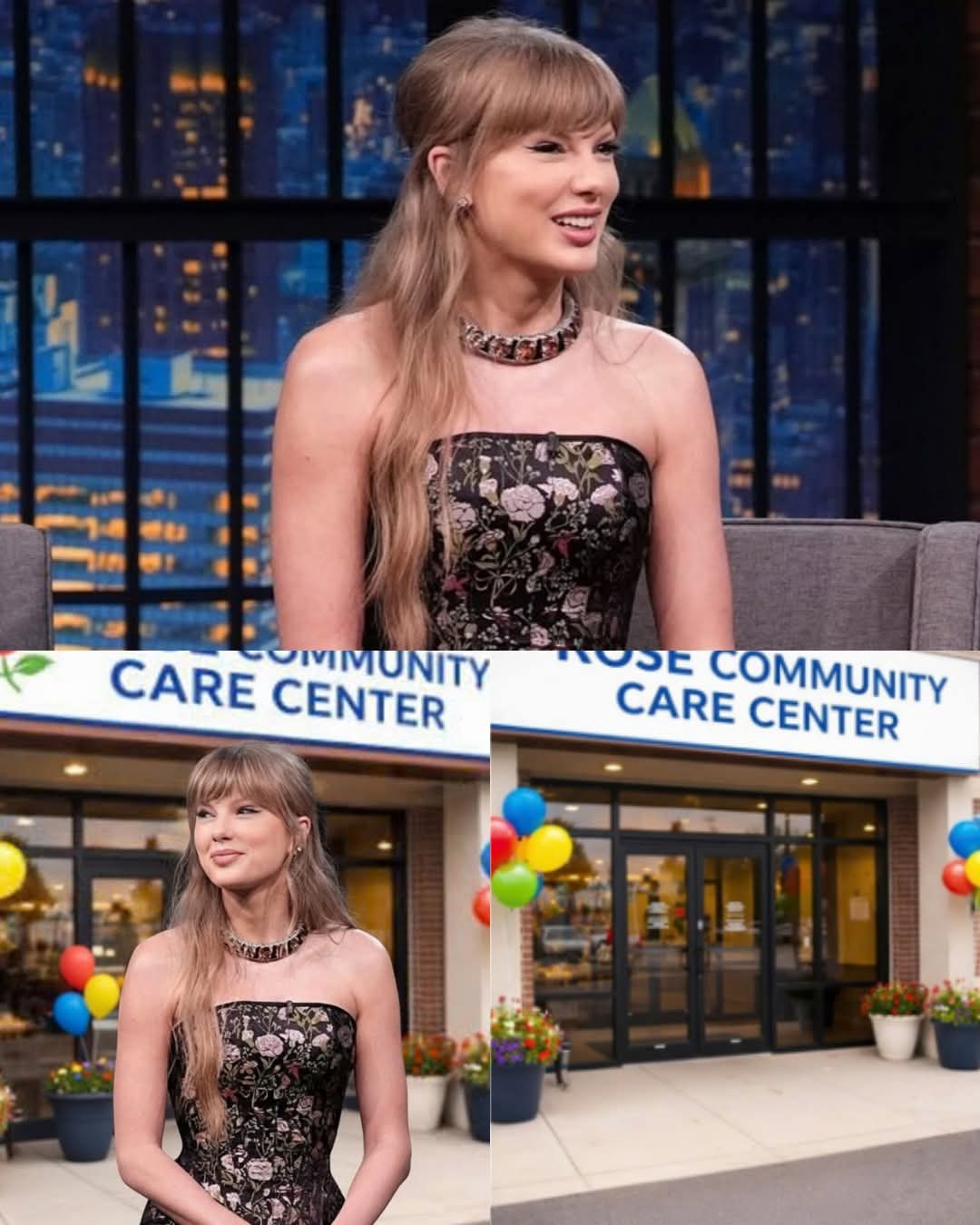
At Dawn, Taylor Swift Opened a Door—and Changed the Day for Hundreds
As the sun rose quietly over the city, there were no flashing cameras, no press releases, and no carefully staged announcements. Instead, there was only a door unlocking—softly, deliberately—marking the beginning of something few could have imagined from one of the world’s most famous artists.
While much of the city slept, Taylor Swift opened a fully free community care center, designed to serve workers, veterans, and people long overlooked by a system that often makes help feel out of reach. There were no fees, no complex paperwork meant to discourage participation, and no barriers that quietly tell people to give up. The goal was simple: provide help, without conditions.
According to those present, the first visitor arrived just after sunrise—someone who hadn’t seen a doctor in years. There was no assistant sent to greet them, no security maneuver, no orchestrated moment. Swift herself opened the door and walked the person inside. No photos were taken. No statements were issued. Only a quiet sentence lingered in the room:
“I’ve spent my life being heard. Now I want to hear you.”
Word spread quickly, not through social media posts or celebrity blogs, but through people telling people. By midday, a line stretched around the block. Not for autographs. Not for selfies. Those who came weren’t looking to meet a star—they came to volunteer, to donate supplies, and to protect something that felt unexpectedly rare: a space built on dignity rather than attention.
The center itself carried no visible branding. There were no logos, no merchandise, no promotional banners.
Swift did not livestream the opening or turn it into a headline-making spectacle. In an era where even charity is often packaged for maximum visibility, the absence of self-promotion was striking.
Staff members and early volunteers described the atmosphere as calm, focused, and deeply human. Conversations happened at eye level. Time was given freely. Needs were met without interrogation. It felt less like an event and more like a promise quietly being kept.
As afternoon approached and the sun dipped lower, Swift was heard saying one final line—almost to herself. Those who caught it say the room went silent, as if everyone understood they were witnessing something that wasn’t meant to trend, but to last.
She didn’t announce it.
She didn’t brand it.
She didn’t turn it into a moment.
She built it.
And for the hundreds who passed through that door on its very first day, the impact didn’t need a spotlight to be real.


Fans Weren’t Ready for What Serena Williams Revealed While Trying on a Bikini in Her Wardrobe…
Fans Weren’t Ready for What Serena Williams Revealed While Trying on a Bikini in Her Wardrobe…👇

These Serena Williams New 10 Mouth-Watering Wet Beach Moment Photos in a Barely There Dress Are the New Viral Talk on the Internet, and Fans Went Crazy to See the Moment the Dress Slipped Down and What Revealed Is That Serena Has a Big…

BREAKING: U.S President Donald Trump Has Just Been Confirmed…

Internet Buzz: 10 Private Photos of Serena xWilliams Allegedly Leaked Online,

Serena Williams’ Very Soaked Hot Body in 5 Private Photos Is Causing Fans to Lose Focus – Wives and Girlfriends Complain Their Men Are Distracted and Demand the Photos Be Deleted. See Them Before They’re Removed.

It was really painful, I thought I hurt my boobs popular Instagram celebs shares pictures of her hitting her boobs on the…

These 5 private Serena Williams mouth-watering beach photos are causing serious damage to fans, see them before it deleted

5 private Serena Williams mouth-watering beach photos are causing serious damage to fans

Serena Williams shocks the internet after stepping out in an ultra-revealing outfit, igniting fierce debate, viral reactions, and headlines as fans argue fashion freedom versus public shock worldwide. See more here…

Serena William Turns Heads in a sexy white gown — The photos Are breaking the internet
