NEWS
“Chagos Islands Offer to Honor Trump Sparks Global Security Debate as Exiled Leaders Urge U.S. Intervention to Block UK–Mauritius Deal, Warning of Chinese Influence and Risks to Diego Garcia’s Strategic Military Base.”

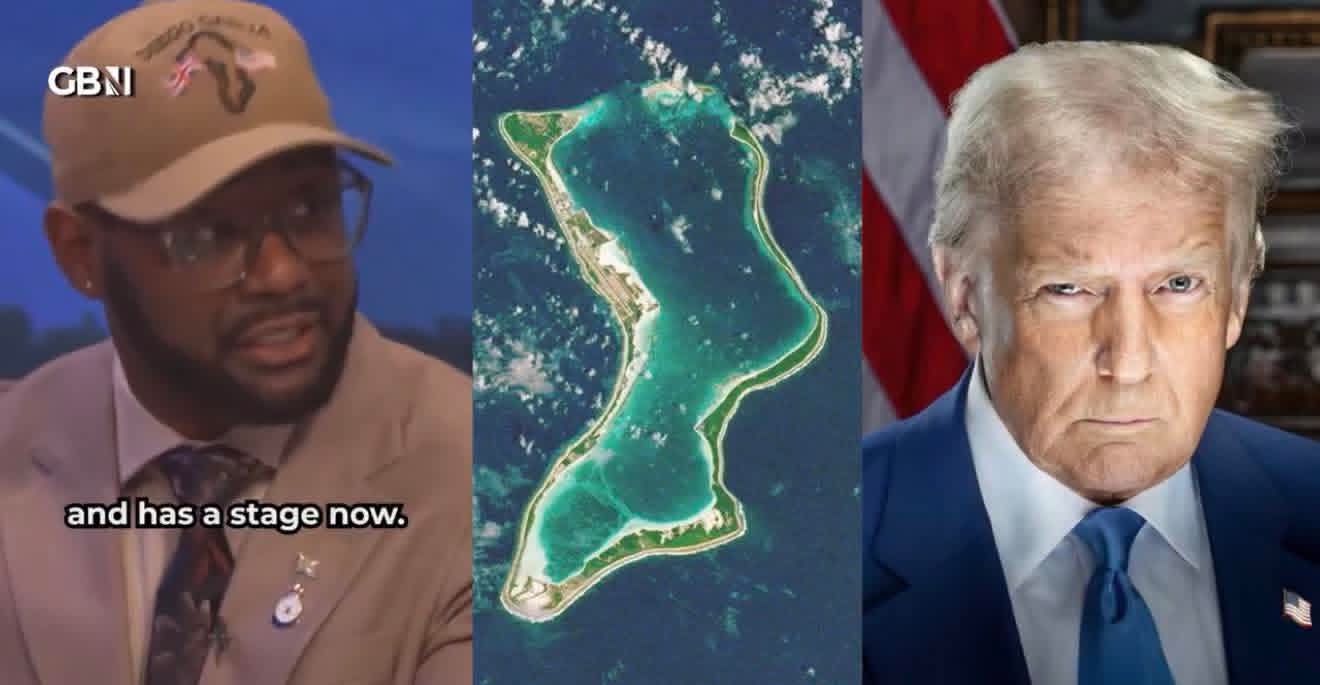
A dramatic geopolitical appeal is unfolding in the Indian Ocean, where representatives of the displaced Chagos Islander community have made an extraordinary offer to former U.S. President Donald Trump: stop the United Kingdom’s proposed transfer of the Chagos Islands to Mauritius, and an island could bear his name.
At the heart of the controversy is Diego Garcia, a remote but immensely strategic atoll that hosts one of the most important U.S. military bases in the world. The base has long been central to American operations across the Middle East, Africa, and the Indo-Pacific, making any change to its political or legal status a matter of global consequence.
A High-Stakes Deal Under Scrutiny
The British Labour Party has signaled support for finalizing a long-discussed agreement that would hand sovereignty of the Chagos Islands to Mauritius, while allowing the United States and the United Kingdom to continue operating the Diego Garcia base under a lease arrangement.
Critics argue that the deal is dangerously short-sighted.
According to Chagossian leaders, the transfer risks creating long-term legal uncertainty around the base, potentially weakening U.S. operational freedom and opening the door to Chinese diplomatic or economic influence in a region of growing strategic competition.
“This may look stable on paper,” one Chagossian representative warned, “but it could collapse under pressure in the real world.”
A Voice From Exile
Misley Mandarin, described as the exiled First Minister of the Chagos Islands, has emerged as a leading voice against the handover. In a direct appeal to Donald Trump, Mandarin framed the issue as both a national security threat and a moral failure.
The Chagossian people were forcibly removed from their homeland decades ago to make way for the military base, a displacement that remains unresolved. Mandarin argues that the current deal would cement injustice rather than correct it—handing control to Mauritius without restoring meaningful rights or self-determination to the original inhabitants.
“There is a better alternative,” Mandarin insisted. “One that strengthens the base, removes legal risk, defeats Chinese leverage, and finally resolves a historic injustice.”
Why Trump?
Supporters of the appeal believe Trump’s transactional approach to foreign policy makes him uniquely positioned to intervene. His allies often point to his skepticism of multilateral agreements and his emphasis on military strength and strategic leverage.
In the message addressed to him, Mandarin struck a familiar tone:
“You don’t accept deals that tie America’s hands. You don’t accept arrangements that look fine on paper but collapse under pressure.”
The implication is clear—blocking the deal would align with Trump’s long-standing rhetoric on China, national security, and rejecting what he views as weak or poorly structured international agreements.
Global Implications
The controversy surrounding the Chagos Islands extends far beyond Britain, Mauritius, or even the displaced islanders themselves. It touches on the future of U.S. power projection, the stability of military basing rights, and the intensifying competition between Washington and Beijing.
If Diego Garcia’s status were ever challenged or constrained, defense analysts warn it could ripple across U.S. operations worldwide.
A Decision With Lasting Consequences
Whether Trump responds or not, the appeal has reignited global debate over who should control the Chagos Islands—and at what cost. Is the proposed handover a long-overdue correction of colonial history, or a strategic miscalculation that could weaken Western security in a critical region?
For the Chagossian people, the question is even more fundamental: will their future finally be decided with them, rather than for them?
As global attention turns once again to this remote archipelago, one thing is clear—the fate of the Chagos Islands is no longer a quiet diplomatic matter. It is a flashpoint where history, power, and geopolitics collide.


BREAKING NEWS: Do Americans Approve of Trump’s Way of Ruling? Public Opinion Splits as Debate Over His Leadership Style Resurfaces

‘WE GOT HIM!’: President Trump announced on Truth Social that U.S. forces carried out one of the most daring search-and-rescue missions in history, successfully recovering a senior officer who had been behind enemy lines in Iran.

“Andy Reid: ‘I Would Never Bet Against’ Patrick Mahomes Returning for Week 1 of 2026 Season”

Serena Williams shares a deep message for fans worldwide… Now people everywhere are reacting in a big way….

BREAKING: Trump Fires Attorney General Pam Bondi in Major Cabinet Shakeup Amid Iran War Tensions

See Serena Williams in Spicy Wet Red Barely-There Never-Before-Seen Mouth-Watering Photos: Fans Lose It When the Red Dress Couldn’t Hold Her Melons and Dropped and Revealed Her Giant…

See Serena Williams in Spicy Wet Red Barely-There Never-Before-Seen Mouth-Watering Photos: Fans Lose It When the Red Dress Couldn’t Hold Her Melons and Dropped and Revealed Her Giant…

The Goat ! Serena Williams at the vanity fair Oscar party …..

Fans have to check in : New 17 Serena Williams hot bikinis pictures
Hot Serena Williams bikini photos: 🎾 Serena Williams is embracing her new look and shutting down the noise. The tennis legend recently shared photos in bikinis

Fans Weren’t Ready for What Serena Williams Revealed While Trying on a Bikini in Her Wardrobe…