NEWS
Elon Musk has confirmed he is fully committed to funding the GOP ahead of the upcoming midterm elections. Musk said his support will help Republican candidates compete nationwide and strengthen their chances of winning key seats in Congress. Supporters say his backing could give Republicans a financial edge.

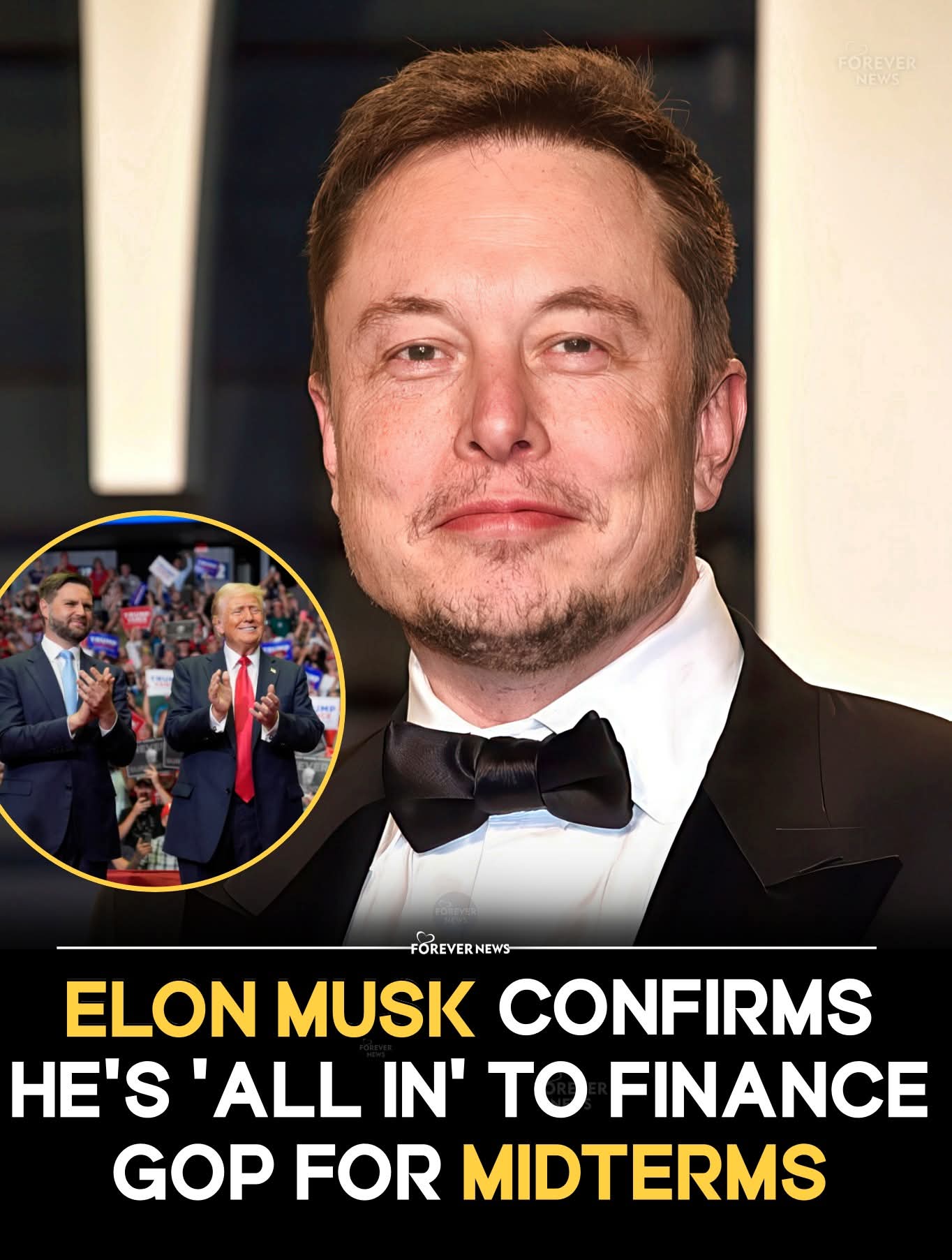
Elon Musk’s confirmation that he is fully committed to funding Republican candidates ahead of the upcoming midterm elections has injected new energy—and controversy—into an already high-stakes political season. As one of the world’s most influential entrepreneurs, Musk’s political involvement is being closely watched by supporters, critics, and candidates on both sides of the aisle.
According to Musk, his financial backing is intended to help Republican candidates compete nationwide and strengthen their chances of winning key congressional seats. In an era where elections are increasingly expensive and media-driven, such support could prove decisive in close races, particularly in battleground districts where margins are slim and turnout is unpredictable.
Supporters argue that Musk’s involvement levels the playing field. They point out that Democrats have long benefited from strong support among wealthy donors, major institutions, and tech-aligned fundraising networks.
From this perspective, Musk’s commitment represents a counterbalance—one that could provide Republicans with the resources needed to expand their message, improve ground operations, and challenge incumbents in districts previously considered out of reach.
Political strategists note that funding does more than pay for advertisements. It fuels voter outreach, data analytics, legal teams, and rapid-response communications—tools that can shape narratives and mobilize supporters at scale.
With control of Congress potentially hinging on a handful of races, even incremental advantages could tip the balance of power.
Beyond dollars, Musk’s support carries symbolic weight. As a figure associated with innovation, disruption, and independence from traditional political structures, his backing may resonate with voters who feel disillusioned by establishment politics. For some Republicans, Musk embodies a message of resistance to regulation, defense of free speech, and a business-first approach to governance.
However, the move has also reignited debate over the role of billionaires in American democracy. Critics warn that concentrated wealth exerting outsized political influence undermines the principle of equal representation. They argue that while Musk has the right to support candidates of his choice, his financial power could distort policy priorities and amplify the voices of the wealthy over everyday voters.
Others raise questions about polarization, suggesting that high-profile endorsements can deepen political divides rather than encourage consensus. Musk’s critics also point to his past statements and online presence as evidence that his involvement may further inflame already tense political discourse.
Still, there is little doubt that Musk’s confirmation has changed the political calculus.
Republican candidates now face increased expectations to capitalize on the opportunity, while Democrats are preparing to counter both the funding and the attention his support brings. Campaigns are recalibrating strategies, donors are reassessing contributions, and voters are paying closer attention.
As the midterm elections approach, one thing is clear: Elon Musk’s entry into the funding arena has raised the stakes.
Whether his support proves decisive—or controversial enough to motivate opposition—will be determined at the ballot box. What cannot be disputed is that the race for Congress has entered a new, more intense phase, with power, money, and influence colliding in the fight to shape America’s political future.




BREAKING NEWS: Do Americans Approve of Trump’s Way of Ruling? Public Opinion Splits as Debate Over His Leadership Style Resurfaces

‘WE GOT HIM!’: President Trump announced on Truth Social that U.S. forces carried out one of the most daring search-and-rescue missions in history, successfully recovering a senior officer who had been behind enemy lines in Iran.

“Andy Reid: ‘I Would Never Bet Against’ Patrick Mahomes Returning for Week 1 of 2026 Season”

Serena Williams shares a deep message for fans worldwide… Now people everywhere are reacting in a big way….

BREAKING: Trump Fires Attorney General Pam Bondi in Major Cabinet Shakeup Amid Iran War Tensions

See Serena Williams in Spicy Wet Red Barely-There Never-Before-Seen Mouth-Watering Photos: Fans Lose It When the Red Dress Couldn’t Hold Her Melons and Dropped and Revealed Her Giant…

See Serena Williams in Spicy Wet Red Barely-There Never-Before-Seen Mouth-Watering Photos: Fans Lose It When the Red Dress Couldn’t Hold Her Melons and Dropped and Revealed Her Giant…

The Goat ! Serena Williams at the vanity fair Oscar party …..

Fans have to check in : New 17 Serena Williams hot bikinis pictures
Hot Serena Williams bikini photos: 🎾 Serena Williams is embracing her new look and shutting down the noise. The tennis legend recently shared photos in bikinis

Fans Weren’t Ready for What Serena Williams Revealed While Trying on a Bikini in Her Wardrobe…