CELEBRITY
Elon Musk’s High-Stakes Robotics Gamble: How Tesla’s Bold Push Into Automation Could Redefine Innovation—or Trigger Serious Financial Risk

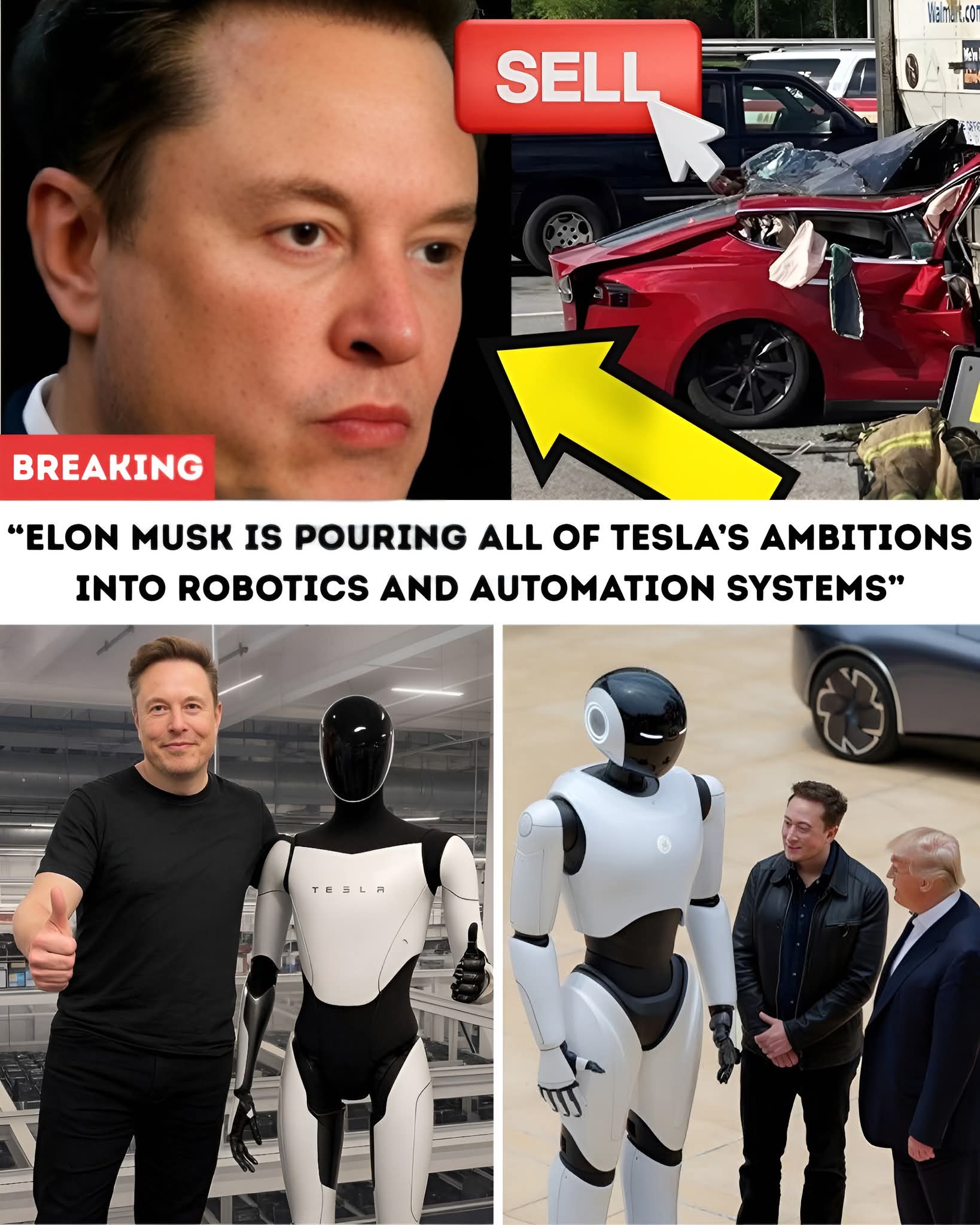
Elon Musk has built his career on daring bets that many once dismissed as unrealistic or even reckless. Electric cars were supposed to be a niche product. Reusable rockets were called impossible. Yet again and again, Musk proved critics wrong by pushing technology faster than the market believed possible. Today, Tesla stands at another defining moment as Musk pours the company’s long-term ambitions into robotics and advanced automation systems—an effort he claims could ultimately eclipse Tesla’s electric vehicle business in value and impact.
The vision is nothing short of transformative. Tesla’s robotics initiative, most visibly represented by its humanoid robot project, aims to create machines capable of performing repetitive, dangerous, or labor-intensive tasks. Musk has suggested these robots could eventually work in factories, warehouses, hospitals, construction sites, and even private homes. In a world facing aging populations and labor shortages, the potential demand for such technology is enormous. Musk believes Tesla’s strength in artificial intelligence, computer vision, and large-scale manufacturing gives it a unique advantage in making this vision a reality.
If successful, robotics could mark a historic pivot for Tesla. The company would no longer be defined primarily as an automaker but as a global leader in AI-powered automation. Supporters argue this could unlock trillions of dollars in economic value and permanently place Tesla at the center of the next industrial revolution. For Musk, robotics is not a side project—it is the future.
Yet behind the excitement and futuristic promises lies a growing sense of unease among investors and industry analysts. The financial risks tied to this shift are substantial, and the timing could not be more delicate.
Tesla’s core electric vehicle business, while still powerful, is under increasing pressure. Competition from established automakers and low-cost international manufacturers is intensifying. Price cuts, once a strategic weapon, have begun to squeeze profit margins. At the same time, global economic uncertainty, high interest rates, and changing consumer demand patterns have made the automotive market less predictable than in previous years.
Against this backdrop, robotics represents a massive financial commitment with no guaranteed payoff.
Developing advanced robots requires enormous investment in research and development, custom chips, sensors, software, and specialized talent. Unlike cars, which generate immediate revenue once sold, robotics products may take years—or even decades—to reach mass adoption and profitability. During that time, Tesla must continue to fund the effort while maintaining its existing businesses.
There is also the challenge of execution. Robotics is among the most complex fields in modern technology.
Creating a machine that can safely operate in unpredictable human environments requires breakthroughs in AI reasoning, motor control, energy efficiency, and safety assurance. Even small failures could have serious legal and reputational consequences. Regulators, labor groups, and the public will closely scrutinize how such machines are deployed and controlled.
Musk’s track record adds another layer of complexity. While his bold timelines inspire confidence and excitement, they have often proven overly optimistic. Delays in development could significantly increase costs and test investor patience.
If robotics progress stalls while competitors make faster advances, Tesla could lose its perceived technological edge.
Critics argue that Tesla may be spreading itself too thin at a critical moment. They warn that focusing heavily on futuristic projects could divert attention from improving manufacturing efficiency, strengthening vehicle quality, and defending market share. In their view, innovation must be balanced with financial discipline, especially as competition grows fiercer each year.
Supporters counter that Tesla has always thrived by thinking long-term. They believe short-term pain is a necessary price for long-term dominance and that robotics could become the company’s most valuable business. To them, Musk’s willingness to take enormous risks is precisely what sets Tesla apart from traditional corporations.
Ultimately, Tesla now stands at a crossroads. The robotics push could propel the company into a new era of technological leadership, redefining how humans work and live. But if the gamble fails—or arrives too late—the financial strain could leave Tesla vulnerable in a rapidly changing market.
The stakes have rarely been higher. Elon Musk is betting that the future belongs to intelligent machines, and that Tesla will be the company to build them.
Whether this vision becomes Tesla’s greatest triumph or its most dangerous gamble remains one of the most consequential questions in modern technology and business.


BREAKING NEWS: Do Americans Approve of Trump’s Way of Ruling? Public Opinion Splits as Debate Over His Leadership Style Resurfaces

‘WE GOT HIM!’: President Trump announced on Truth Social that U.S. forces carried out one of the most daring search-and-rescue missions in history, successfully recovering a senior officer who had been behind enemy lines in Iran.

“Andy Reid: ‘I Would Never Bet Against’ Patrick Mahomes Returning for Week 1 of 2026 Season”

Serena Williams shares a deep message for fans worldwide… Now people everywhere are reacting in a big way….

BREAKING: Trump Fires Attorney General Pam Bondi in Major Cabinet Shakeup Amid Iran War Tensions

See Serena Williams in Spicy Wet Red Barely-There Never-Before-Seen Mouth-Watering Photos: Fans Lose It When the Red Dress Couldn’t Hold Her Melons and Dropped and Revealed Her Giant…

See Serena Williams in Spicy Wet Red Barely-There Never-Before-Seen Mouth-Watering Photos: Fans Lose It When the Red Dress Couldn’t Hold Her Melons and Dropped and Revealed Her Giant…

The Goat ! Serena Williams at the vanity fair Oscar party …..

Fans have to check in : New 17 Serena Williams hot bikinis pictures
Hot Serena Williams bikini photos: 🎾 Serena Williams is embracing her new look and shutting down the noise. The tennis legend recently shared photos in bikinis

Fans Weren’t Ready for What Serena Williams Revealed While Trying on a Bikini in Her Wardrobe…