NEWS
Naming a street “Donald J. Trump Blvd” would require going through formal local government procedures, such as city council votes, public notices, and updates to municipal records. Without that process, any signs would be purely ceremonial or promotional. 🤔

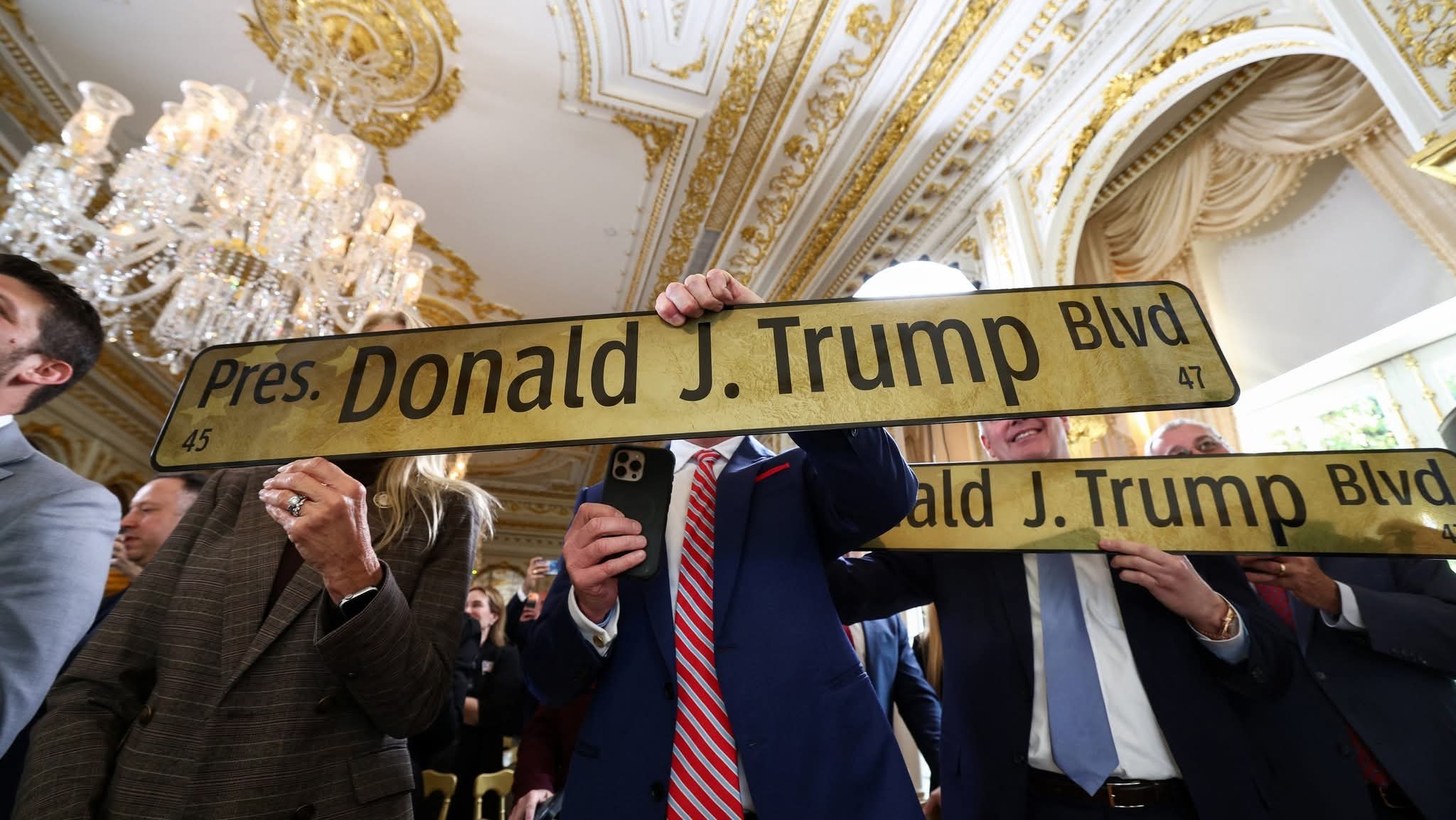
The Truth Behind Naming a Street “Donald J. Trump Blvd”
In recent days, images and claims of streets being named “Donald J. Trump Blvd” have circulated widely online, igniting passionate reactions from supporters and critics alike. For many, the question isn’t just whether the former president deserves such an honor—it’s whether the naming is even legitimate.
The answer lies not in political opinion, but in local government law and civic process.
Street Names Are Not Decided by Popularity or Promotion
In the United States, naming or renaming a public street is a formal municipal action. It cannot be done by individuals, political groups, or event organizers acting on their own. Regardless of who the honoree is, the process typically requires:
A formal proposal submitted to the city or county
Review by planning or transportation departments
Public notice and community hearings
A vote by the city council or governing body
Official updates to municipal maps, emergency services, and postal records
Without these steps, a street name has no legal standing, even if signage appears convincing or widely shared on social media.
Ceremonial Signs vs. Legal Recognition
Temporary or unofficial street signs are sometimes installed for rallies, celebrations, or symbolic gestures. These signs may appear authentic, but they are often placed on existing streets without changing the official name.
While ceremonial signage can be a form of political expression, it does not carry legal authority. Emergency responders, postal services, and city databases continue to recognize only the officially approved street names.
Why the Process Matters
Street names are more than labels—they are part of a community’s shared identity. They affect residents, businesses, navigation systems, and public records. That’s why local governments require transparency, public participation, and legal approval before making changes.
Skipping these steps undermines public trust and creates confusion, especially when political figures are involved. The rules exist to ensure that no single group—regardless of influence—can unilaterally redefine public spaces.
A Broader Debate About Politics and Public Space
The controversy surrounding “Donald J. Trump Blvd” highlights a larger national debate:
Should political figures have public streets named after them while they are still living?
Should communities require overwhelming public consensus before honoring divisive figures?
And how do we balance free expression with civic responsibility?
These are questions that extend beyond one name or one moment.
Conclusion
Whether one admires or opposes Donald Trump, the facts remain clear: naming a street requires lawful local action, not viral momentum. Without city approval, public notice, and official documentation, any such signage remains symbolic—nothing more.


Fans Weren’t Ready for What Serena Williams Revealed While Trying on a Bikini in Her Wardrobe…
Fans Weren’t Ready for What Serena Williams Revealed While Trying on a Bikini in Her Wardrobe…👇

These Serena Williams New 10 Mouth-Watering Wet Beach Moment Photos in a Barely There Dress Are the New Viral Talk on the Internet, and Fans Went Crazy to See the Moment the Dress Slipped Down and What Revealed Is That Serena Has a Big…

BREAKING: U.S President Donald Trump Has Just Been Confirmed…

Internet Buzz: 10 Private Photos of Serena xWilliams Allegedly Leaked Online,

Serena Williams’ Very Soaked Hot Body in 5 Private Photos Is Causing Fans to Lose Focus – Wives and Girlfriends Complain Their Men Are Distracted and Demand the Photos Be Deleted. See Them Before They’re Removed.

It was really painful, I thought I hurt my boobs popular Instagram celebs shares pictures of her hitting her boobs on the…

These 5 private Serena Williams mouth-watering beach photos are causing serious damage to fans, see them before it deleted

5 private Serena Williams mouth-watering beach photos are causing serious damage to fans

Serena Williams shocks the internet after stepping out in an ultra-revealing outfit, igniting fierce debate, viral reactions, and headlines as fans argue fashion freedom versus public shock worldwide. See more here…

Serena William Turns Heads in a sexy white gown — The photos Are breaking the internet
