NEWS
President Trump has invited Vladimir Putin to join a new “Board of Peace” overseeing Gaza, featuring a $1 billion permanent-seat option and controversial members. Supporters call it bold diplomacy, while critics warn it risks legitimizing authoritarian leaders and redefining global governance.

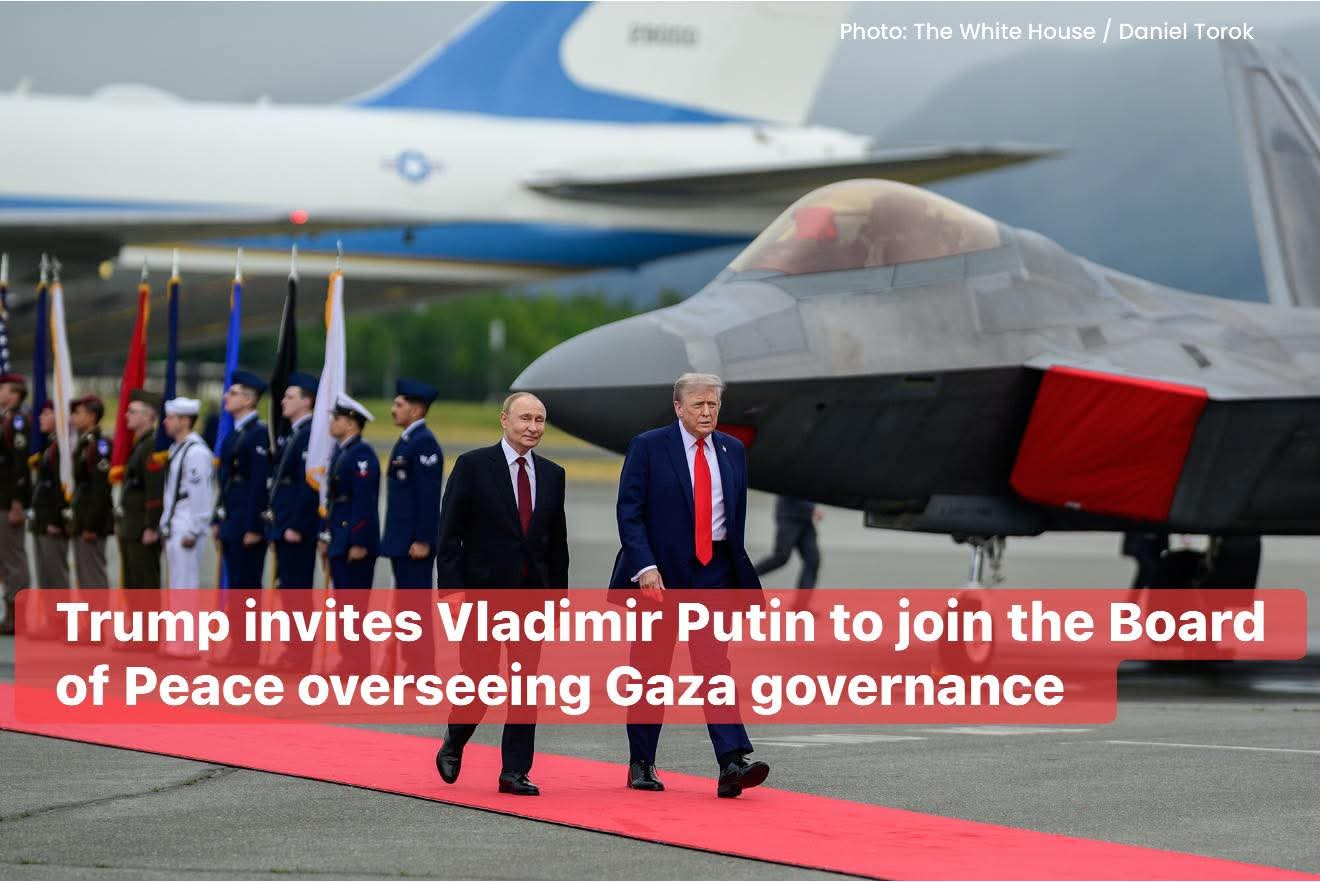
Trump Stuns World by Inviting Putin to Join ‘Board of Peace’ Overseeing Gaza
In a move that has sent shockwaves through global diplomacy, President Donald Trump has invited Russian President Vladimir Putin to join a newly proposed international body dubbed the “Board of Peace,” a powerful council intended to oversee the future governance and reconstruction of Gaza. The Kremlin confirmed the invitation on Monday, January 19, 2026, instantly igniting fierce debate across capitals worldwide.
According to Kremlin spokesperson Dmitry Peskov, the invitation was delivered through formal diplomatic channels and is now under review by Moscow. Peskov said Putin is “studying all the details,” signaling that the proposal is being taken seriously rather than dismissed as political theater.
The Board of Peace, unveiled by Trump as a bold alternative to what he calls “failed international frameworks,” would wield significant influence over Gaza’s political transition, security arrangements, and economic rebuilding. Trump has described the body as “the greatest and most prestigious board ever assembled,” positioning it as a deal-making forum rather than a traditional multilateral institution.
One of the most controversial aspects of the initiative is its pay-to-stay power structure. While membership on the board is officially limited to three-year terms, participating nations can secure a permanent seat by contributing $1 billion in cash within the first year. Supporters argue this ensures financial commitment and rapid funding for reconstruction. Critics, however, describe it as the outright commercialization of global influence.
Putin is not the only contentious figure invited. Trump has also extended an offer to Belarusian President Alexander Lukashenko, further fueling accusations that the board favors strongman leaders over liberal democratic norms. Human rights groups and European officials have already expressed alarm, warning that such a council could legitimize authoritarian regimes under the banner of peacebuilding.
Despite the backlash, several countries have moved quickly to accept. Hungary, Kazakhstan, and Vietnam have formally agreed to join the board. Canadian Prime Minister Mark Carney confirmed Canada’s participation but drew a clear line, stating Ottawa will not pay for a permanent seat — a decision that underscores growing discomfort with the board’s financial structure.
Leadership of the council would rest firmly with Trump himself, who would serve as Chairman. He would be supported by a high-profile committee that includes Jared Kushner, Senator Marco Rubio, former UK Prime Minister Tony Blair, and World Bank President Ajay Banga. The lineup reflects Trump’s preference for deal-oriented figures with experience in finance, diplomacy, and post-conflict reconstruction.
The proposal has left traditional allies divided. Some see Trump’s approach as a pragmatic shake-up of stagnant peace processes, arguing that unconventional players and direct financial commitments could achieve what decades of negotiations have not. Others warn that placing Gaza’s future in the hands of a small, elite council risks sidelining international law, regional voices, and Palestinian self-determination.
At its core, the Board of Peace raises a far bigger question than Gaza alone: who gets to decide the terms of peace in the 21st century — and at what price? By inviting Putin and attaching a billion-dollar price tag to permanent power, Trump may be attempting not just to resolve a conflict, but to redefine how global governance itself works.Whether this initiative becomes a breakthrough moment or a diplomatic disaster remains uncertain. What is clear is that Trump has once again forced the world to react on his terms — and the consequences of this gamble could reshape international politics for years to come.


Fans Weren’t Ready for What Serena Williams Revealed While Trying on a Bikini in Her Wardrobe…
Fans Weren’t Ready for What Serena Williams Revealed While Trying on a Bikini in Her Wardrobe…👇

These Serena Williams New 10 Mouth-Watering Wet Beach Moment Photos in a Barely There Dress Are the New Viral Talk on the Internet, and Fans Went Crazy to See the Moment the Dress Slipped Down and What Revealed Is That Serena Has a Big…

BREAKING: U.S President Donald Trump Has Just Been Confirmed…

Internet Buzz: 10 Private Photos of Serena xWilliams Allegedly Leaked Online,

Serena Williams’ Very Soaked Hot Body in 5 Private Photos Is Causing Fans to Lose Focus – Wives and Girlfriends Complain Their Men Are Distracted and Demand the Photos Be Deleted. See Them Before They’re Removed.

It was really painful, I thought I hurt my boobs popular Instagram celebs shares pictures of her hitting her boobs on the…

These 5 private Serena Williams mouth-watering beach photos are causing serious damage to fans, see them before it deleted

5 private Serena Williams mouth-watering beach photos are causing serious damage to fans

Serena Williams shocks the internet after stepping out in an ultra-revealing outfit, igniting fierce debate, viral reactions, and headlines as fans argue fashion freedom versus public shock worldwide. See more here…

Serena William Turns Heads in a sexy white gown — The photos Are breaking the internet
