NEWS
Proof of Citizenship and the Future of American Elections: A Nation at a Crossroads 🇺🇸

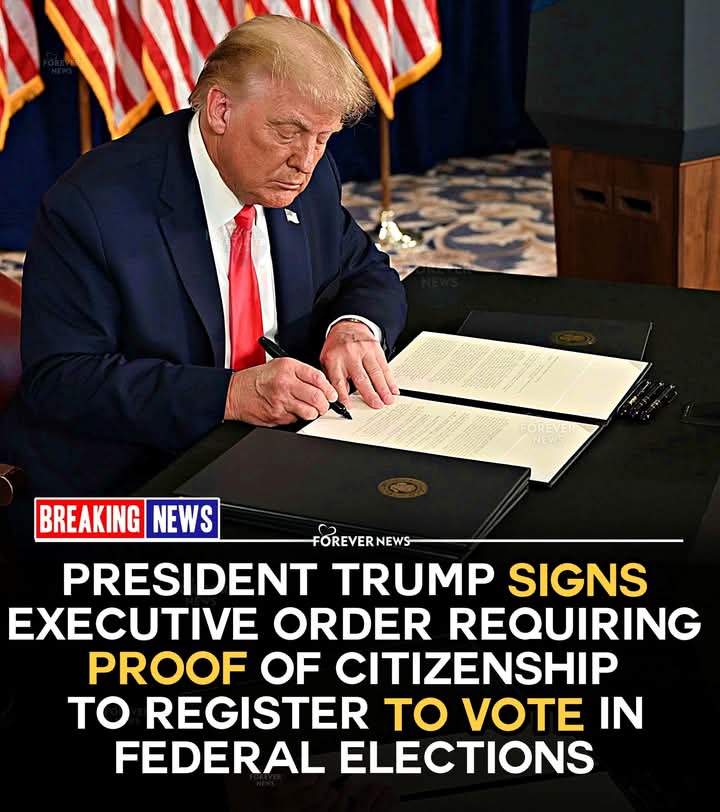
In a move that has instantly reshaped the national conversation, President Donald Trump signed an executive order requiring proof of U.S. citizenship to register to vote in federal elections. Supporters hail the decision as a bold defense of democracy, while critics warn it could alter access to the ballot box for millions of eligible voters. One thing is certain: the debate over election integrity versus voter access has entered a new and decisive chapter.
A Push for Election Integrity
The Trump administration argues that the executive order is rooted in a fundamental democratic principle—only American citizens should determine America’s future. By requiring documentation such as passports or citizenship certificates, the order aims to close potential loopholes and reinforce confidence in federal elections.
Advocates say that trust in elections is the backbone of any republic.
When citizens doubt the system, faith in government erodes. From this perspective, the order is seen as a preventative safeguard—one designed not to accuse, but to protect. Supporters believe that stronger verification measures will ensure transparency, deter fraud, and restore confidence among voters who feel the system has grown too vulnerable.
Concerns Over Access and Equity
Opponents, however, argue that the policy risks creating new barriers for lawful voters, particularly low-income individuals, seniors, rural residents, and minorities who may not easily access citizenship documents.
Civil rights groups warn that even well-intentioned rules can have unintended consequences, potentially discouraging participation and narrowing the electorate.
Critics also question whether executive authority is the appropriate vehicle for such a sweeping change, suggesting that election law reforms should be debated and passed through Congress. For them, the concern isn’t just documentation—it’s the broader issue of who gets to participate and how easily.
A Nationwide Debate Ignites
From cable news panels to kitchen-table conversations, the country is now wrestling with hard questions:
How do we balance security and accessibility?
Should preventing potential fraud outweigh the risk of discouraging eligible voters?
What does a fair and trustworthy election system truly look like?
This executive order has become more than a policy decision—it’s a symbol of deeper divisions about democracy, governance, and national identity.
What Happens Next
Legal challenges are expected, and states will likely respond differently as the order moves toward implementation. Meanwhile, the American public remains at the center of the conversation. Elections are not just about laws and procedures—they are about participation, trust, and legitimacy.
The Bottom Line
At its core, the proof-of-citizenship order forces the nation to confront a crucial reality: democracy depends both on secure elections and on broad civic participation. Striking that balance may define the future of U.S. elections for generations to come.
🗳️ Now it’s your turn.
Do you believe this order strengthens American democracy—or threatens access to it?
💬 Share your thoughts in the comments
🔁 Spread this article to keep the conversation alive
📢 Engage, debate, and make your voice heard—because democracy only works when the people participate.


BREAKING NEWS: Do Americans Approve of Trump’s Way of Ruling? Public Opinion Splits as Debate Over His Leadership Style Resurfaces

‘WE GOT HIM!’: President Trump announced on Truth Social that U.S. forces carried out one of the most daring search-and-rescue missions in history, successfully recovering a senior officer who had been behind enemy lines in Iran.

“Andy Reid: ‘I Would Never Bet Against’ Patrick Mahomes Returning for Week 1 of 2026 Season”

Serena Williams shares a deep message for fans worldwide… Now people everywhere are reacting in a big way….

BREAKING: Trump Fires Attorney General Pam Bondi in Major Cabinet Shakeup Amid Iran War Tensions

See Serena Williams in Spicy Wet Red Barely-There Never-Before-Seen Mouth-Watering Photos: Fans Lose It When the Red Dress Couldn’t Hold Her Melons and Dropped and Revealed Her Giant…

See Serena Williams in Spicy Wet Red Barely-There Never-Before-Seen Mouth-Watering Photos: Fans Lose It When the Red Dress Couldn’t Hold Her Melons and Dropped and Revealed Her Giant…

The Goat ! Serena Williams at the vanity fair Oscar party …..

Fans have to check in : New 17 Serena Williams hot bikinis pictures
Hot Serena Williams bikini photos: 🎾 Serena Williams is embracing her new look and shutting down the noise. The tennis legend recently shared photos in bikinis

Fans Weren’t Ready for What Serena Williams Revealed While Trying on a Bikini in Her Wardrobe…