CELEBRITY
Some say Melania is doing a great job as a first lady than Michelle Obama

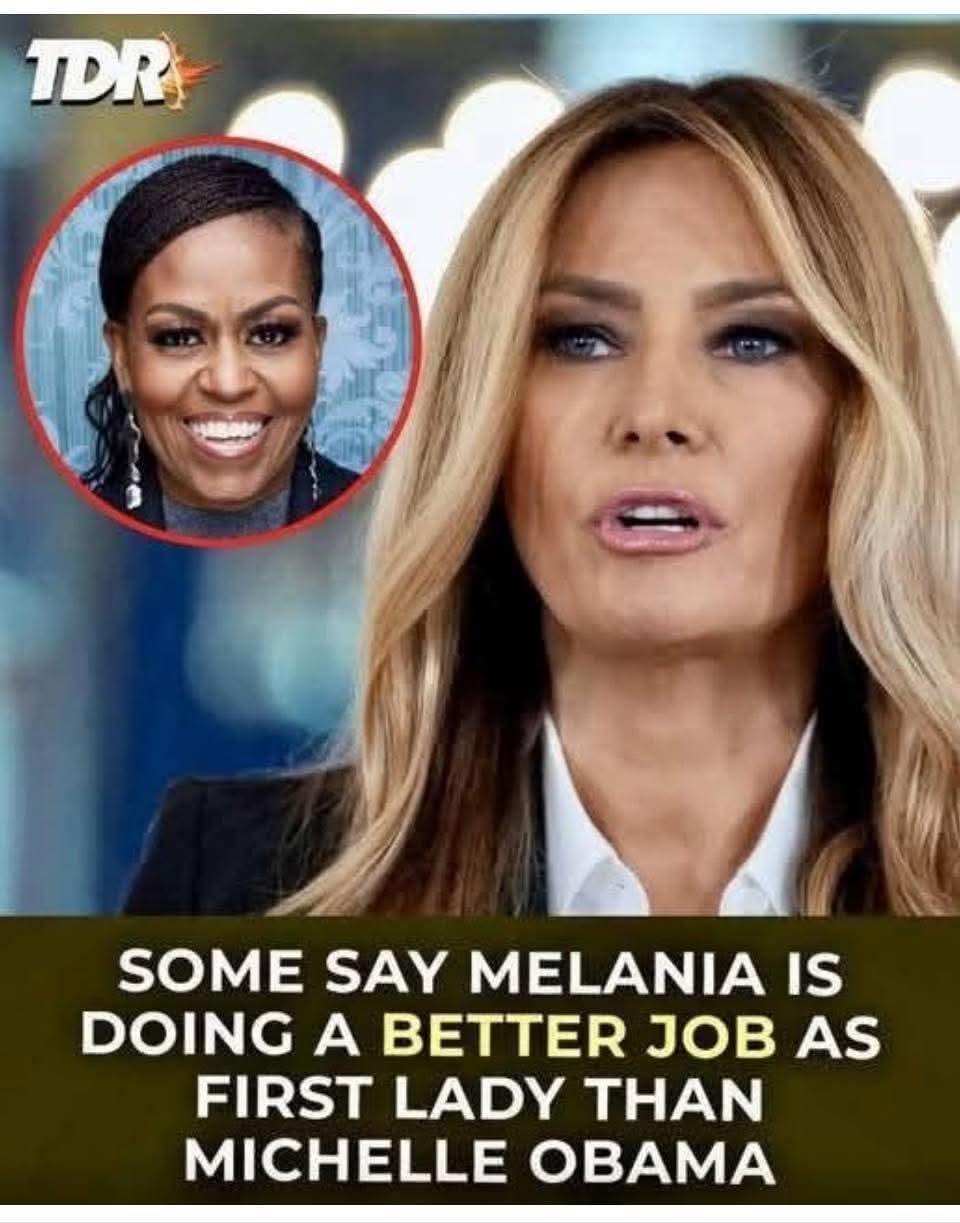
Few roles in American public life generate as much fascination—and controversy—as that of the First Lady. Unofficial, unelected, yet globally influential, the position reflects not only the woman who holds it but the era she represents. Today, a growing debate has taken hold across social media and political circles alike: Was Melania Trump a better First Lady than Michelle Obama?
For some, the answer is an emphatic yes.
For others, it’s unthinkable. And that sharp divide reveals far more than a preference between two women—it exposes America’s deeper disagreement over what a First Lady should be.
Two Women, Two Eras, Two Visions
Michelle Obama and Melania Trump could not be more different in background, temperament, or public approach.
Michelle Obama entered the White House in 2009 as a highly accomplished professional: a Princeton and Harvard Law graduate, former lawyer, hospital executive, and outspoken advocate.
She embraced the spotlight, becoming one of the most visible and vocal First Ladies in history.
Melania Trump, by contrast, arrived in 2017 as a former model and immigrant who spoke multiple languages fluently but preferred privacy over publicity. She was reserved, deliberate, and often misunderstood—yet deeply intentional in how she carried herself.
These contrasting styles are the foundation of today’s debate.
The Case for Melania Trump: Grace, Discipline, and Quiet Strength
Supporters of Melania Trump argue that she restored dignity and restraint to the role of First Lady—qualities they believe had been replaced by activism and celebrity.
1. Elegance as Representation
Melania Trump was widely praised internationally for her poise, fashion diplomacy, and composure. In foreign capitals, she was often described as regal, polished, and respectful of protocol. Her presence conveyed an image of American sophistication without theatrics.
To her supporters, this mattered deeply. They argue that a First Lady represents the nation visually and symbolically—and Melania did so with unmistakable class.
2. “Be Best”: A Targeted, Purposeful Initiative
Melania’s Be Best campaign focused on three areas:
Children’s well-being
Online safety
Combating opioid abuse
Critics dismissed it as understated. Supporters saw it as focused and apolitical, intentionally avoiding divisive rhetoric while addressing real problems affecting families.
Rather than lecturing Americans, Melania worked quietly with hospitals, foster care centers, and anti-cyberbullying initiatives. Her defenders argue that impact does not require constant media attention.
3. Strength Without Noise
Perhaps Melania’s most cited quality is her restraint.
She endured relentless media scrutiny, harsh criticism, and personal attacks—often remaining silent. To many, this silence was not weakness but discipline. In an age of outrage culture, Melania’s refusal to engage publicly became a form of resistance.
Her supporters believe this self-control modeled emotional strength and maturity rarely seen in modern politics.
The Case for Michelle Obama: Visibility, Advocacy, and Cultural Power
Michelle Obama’s supporters counter with equal passion, arguing she redefined the First Lady role for the modern era.
1. A Voice for Millions
Michelle Obama used her platform boldly—championing education, healthy living, military families, and women’s empowerment. Her Let’s Move campaign addressed childhood obesity nationwide, influencing school lunch programs and public awareness.
For her admirers, Michelle didn’t just represent Americans—she spoke for them.
2. Cultural and Historical Impact
As the first Black First Lady, Michelle Obama carried historic significance. Her visibility inspired countless young people, particularly women and minorities, who saw themselves reflected in the White House for the first time.
Her speeches, interviews, and memoir Becoming elevated her influence far beyond the East Wing, making her one of the most admired women in the world.
3. Relatability and Authenticity
Michelle’s warmth, humor, and openness helped humanize the presidency. From dancing on talk shows to candid discussions about marriage and motherhood, she connected with Americans on a personal level.
Supporters argue this connection strengthened trust in leadership during a turbulent time.
The Real Divide: What Should a First Lady Be?
At the heart of this debate is not Melania versus Michelle—it’s philosophy versus philosophy.
Should a First Lady:
Speak loudly on social issues?
Shape policy conversations?
Act as a public activist?
Or should she:
Represent the nation with dignity and restraint?
Focus quietly on humanitarian causes?
Remain above political combat?
Those who favor Melania Trump believe the role should be symbolic, refined, and non-confrontational.
Those who favor Michelle Obama believe the role should be engaged, vocal, and transformative.
Neither view is inherently wrong—but they are fundamentally different.
Media, Bias, and Perception
Another layer fueling the controversy is media treatment.
Melania Trump’s supporters argue she faced unfair, hostile coverage, with her work minimized or ignored while her appearance and personal life were scrutinized.
Michelle Obama, by contrast, received overwhelmingly positive media portrayal, often shielded from criticism.
Whether one agrees or not, perception matters—and it has shaped how history is being written in real time.
Legacy Will Decide
History often softens opinions.
Today, Melania Trump is being reassessed by many who once dismissed her. Her restraint, independence, and composure are gaining renewed appreciation in hindsight.
Michelle Obama’s legacy remains powerful and deeply rooted in cultural memory.
Ultimately, both women left indelible marks, just in radically different ways.
Final Question for America
So now the question returns—stronger than ever:
Is a great First Lady one who speaks loudly… or one who leads quietly?
Is influence measured by applause—or by discipline?


BREAKING NEWS: Do Americans Approve of Trump’s Way of Ruling? Public Opinion Splits as Debate Over His Leadership Style Resurfaces

‘WE GOT HIM!’: President Trump announced on Truth Social that U.S. forces carried out one of the most daring search-and-rescue missions in history, successfully recovering a senior officer who had been behind enemy lines in Iran.

“Andy Reid: ‘I Would Never Bet Against’ Patrick Mahomes Returning for Week 1 of 2026 Season”

Serena Williams shares a deep message for fans worldwide… Now people everywhere are reacting in a big way….

BREAKING: Trump Fires Attorney General Pam Bondi in Major Cabinet Shakeup Amid Iran War Tensions

See Serena Williams in Spicy Wet Red Barely-There Never-Before-Seen Mouth-Watering Photos: Fans Lose It When the Red Dress Couldn’t Hold Her Melons and Dropped and Revealed Her Giant…

See Serena Williams in Spicy Wet Red Barely-There Never-Before-Seen Mouth-Watering Photos: Fans Lose It When the Red Dress Couldn’t Hold Her Melons and Dropped and Revealed Her Giant…

The Goat ! Serena Williams at the vanity fair Oscar party …..

Fans have to check in : New 17 Serena Williams hot bikinis pictures
Hot Serena Williams bikini photos: 🎾 Serena Williams is embracing her new look and shutting down the noise. The tennis legend recently shared photos in bikinis

Fans Weren’t Ready for What Serena Williams Revealed While Trying on a Bikini in Her Wardrobe…