NEWS
The Trump administration has announced a new “One Flag Policy” that would require U.S. government buildings, both domestic and overseas, to display only the American flag. The policy emphasizes the U.S. flag as a unifying national symbol of freedom, justice, and shared civic values, while barring flags linked to social movements. 🇺🇸

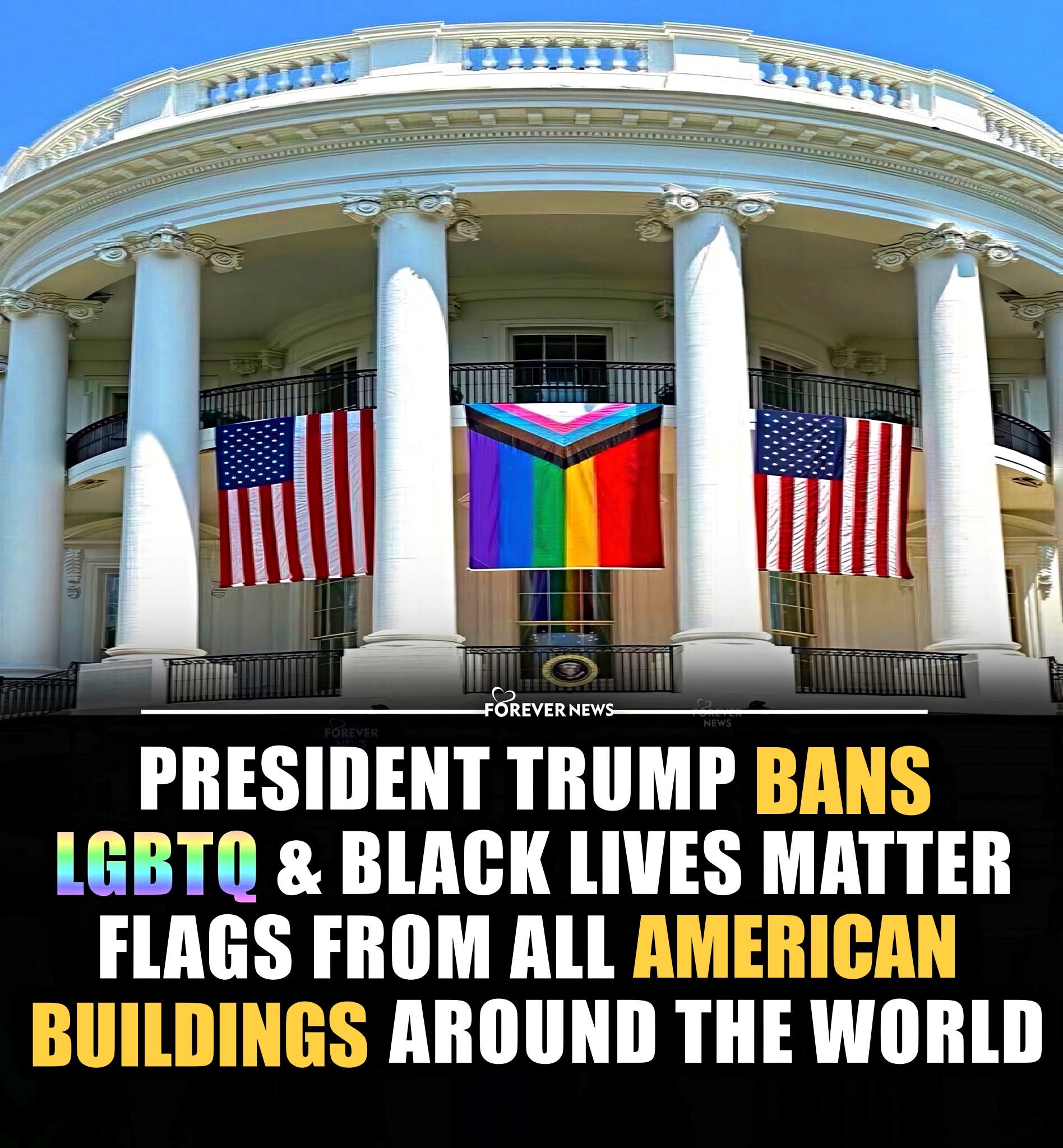
The Trump administration has announced a new directive known as the “One Flag Policy,” requiring all U.S. government buildings—both within the United States and at diplomatic facilities overseas—to display only the American flag. The policy bars the display of flags associated with social, political, or ideological movements on official government property.
According to administration officials, the policy is intended to reinforce the American flag as a unifying national symbol, representing freedom, justice, equality under the law, and shared civic values. Supporters argue that government buildings should remain politically neutral and reflect the sovereignty of the United States rather than endorse particular causes or movements.
“The U.S. flag stands for all Americans,” an administration spokesperson said. “Government spaces should unite citizens, not divide them. This policy ensures that federal buildings represent the nation as a whole.”
The directive applies to federal offices, embassies, military installations, and other government-controlled facilities. While individuals are still free to express their views privately, the administration emphasizes that official government spaces are meant to symbolize national unity rather than individual or group advocacy.
Critics of the policy argue that it may limit symbolic expressions of inclusion and recognition that have previously appeared on government buildings. Some advocacy groups say the move could be interpreted as dismissive of social causes that many Americans support. Legal experts note, however, that the government has broad authority to regulate displays on its own property.
The announcement has sparked widespread debate across political and social lines, with supporters praising the policy as a return to tradition and critics questioning its broader implications. As the policy begins to take effect, it is likely to remain a focal point in ongoing discussions about national identity, civic unity, and the role of government symbolism in public life.
Whether seen as a strong affirmation of national values or a controversial limitation on expression, the One Flag Policy underscores the administration’s emphasis on patriotism and a singular national identity centered on the American flag.


BREAKING NEWS: Do Americans Approve of Trump’s Way of Ruling? Public Opinion Splits as Debate Over His Leadership Style Resurfaces

‘WE GOT HIM!’: President Trump announced on Truth Social that U.S. forces carried out one of the most daring search-and-rescue missions in history, successfully recovering a senior officer who had been behind enemy lines in Iran.

“Andy Reid: ‘I Would Never Bet Against’ Patrick Mahomes Returning for Week 1 of 2026 Season”

Serena Williams shares a deep message for fans worldwide… Now people everywhere are reacting in a big way….

BREAKING: Trump Fires Attorney General Pam Bondi in Major Cabinet Shakeup Amid Iran War Tensions

See Serena Williams in Spicy Wet Red Barely-There Never-Before-Seen Mouth-Watering Photos: Fans Lose It When the Red Dress Couldn’t Hold Her Melons and Dropped and Revealed Her Giant…

See Serena Williams in Spicy Wet Red Barely-There Never-Before-Seen Mouth-Watering Photos: Fans Lose It When the Red Dress Couldn’t Hold Her Melons and Dropped and Revealed Her Giant…

The Goat ! Serena Williams at the vanity fair Oscar party …..

Fans have to check in : New 17 Serena Williams hot bikinis pictures
Hot Serena Williams bikini photos: 🎾 Serena Williams is embracing her new look and shutting down the noise. The tennis legend recently shared photos in bikinis

Fans Weren’t Ready for What Serena Williams Revealed While Trying on a Bikini in Her Wardrobe…