NEWS
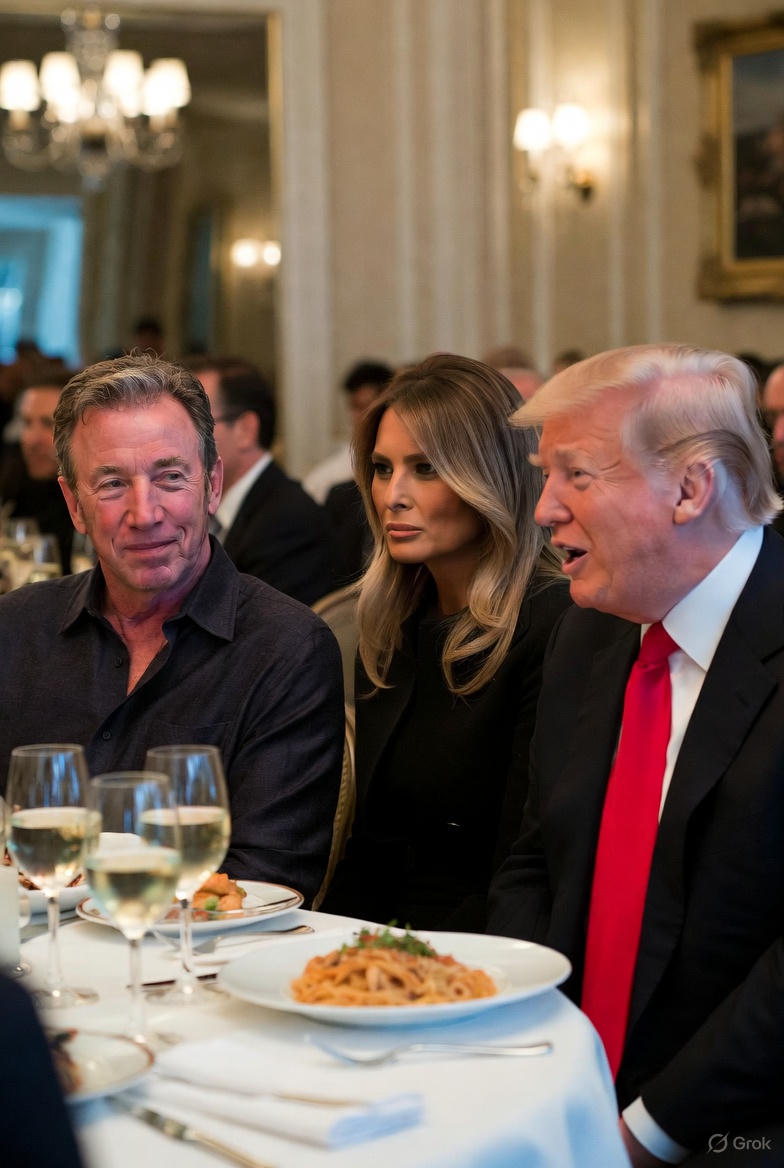
Tim Allen recently recalled sharing a memorable dinner with Donald Trump, the now-president, along with Melania, well before Trump made his surprising transition from business and entertainment into the world of politics.

In the ever-evolving tapestry of American pop culture and politics, few stories capture the imagination quite like the “what if” scenarios involving larger-than-life figures. On a recent episode of Bill Maher’s unfiltered podcast, Club Random, comedian and actor Tim Allen dropped a bombshell that has sent ripples through both Hollywood and Washington circles.
Allen, best known for his roles in Home Improvement, The Santa Clause franchise, and Toy Story as the voice of Buzz Lightyear, recounted a private dinner with Donald Trump years before the real estate mogul turned reality TV star entered the political arena. According to Allen, Trump was seriously contemplating a pivot to Hollywood as a movie producer—a path that could have reshaped the entertainment industry instead of the White House.533baa34d56e
This revelation, shared during a candid conversation with Maher, has ignited discussions about alternate histories, Trump’s multifaceted ambitions, and the unlikely intersections between comedy, business, and power.
As the nation grapples with Trump’s second term in office—inaugurated just a year ago in this timeline of January 2026—the story serves as a reminder of how personal encounters can influence monumental decisions. In this in-depth article, we’ll explore the details of Allen’s account, delve into Trump’s long-standing flirtations with Tinseltown, examine the podcast episode’s broader context, analyze public reactions, and ponder the implications for both entertainment and politics.
Buckle up; this is no short tale—it’s a deep dive into a moment that might have changed everything.
The Podcast That Started It All: Club Random and Its Free-Wheeling Vibe
Bill Maher’s Club Random podcast, launched in 2022, has become a staple for those seeking unscripted, often irreverent discussions with celebrities, politicians, and thinkers. Unlike Maher’s more structured HBO show Real Time with Bill Maher, Club Random takes place in a relaxed setting—often involving cigars, drinks, and tangents that veer from the profound to the profane.
The format allows guests to let their guard down, leading to revelations that might never surface in a traditional interview.
The episode featuring Tim Allen, released just days ago, exemplifies this ethos. Clocking in at over an hour, the conversation meanders through topics like RV life (including the unglamorous realities of waste management), UFOs, the state of sitcoms in a “woke” era, and Hollywood’s diversity practices. Allen, at 72, comes across as reflective yet sharp, critiquing what he sees as overly restrictive creative environments in modern television.
“Not everything has to be diverse,” Allen quipped, echoing sentiments that have made him a polarizing figure in liberal-leaning Hollywood.349ede
Maher, a self-described libertarian with a history of challenging both sides of the political aisle, provides the perfect foil. Their rapport is evident, built on mutual respect despite differing ideologies—Maher is famously critical of Trump, while Allen has been more sympathetic. It’s in this comfortable space that Allen shares his Trump story, catching even the typically unflappable Maher off guard.
The Dinner Story: A Pivotal Moment at the Table
The crux of Allen’s anecdote unfolds around the 14th or 15th season of The Apprentice, Trump’s hit NBC reality show that ran from 2004 to 2017. At that time, Trump was at a career crossroads. His real estate empire was well-established, and The Apprentice had catapulted him into celebrity status, but he was eyeing new horizons. According to Allen, Trump confided during a private dinner that he was considering relocating to Los Angeles to pursue a career as a movie producer, with a particular passion for comedy films.
“I met the dude at a dinner with his wife, who was genuinely a wonderful person,” Allen recalled, referring to Melania Trump. The setting was intimate, allowing for unguarded conversation. Allen, known for his quick wit, was “killing at the table,” cracking jokes that had everyone in stitches. Trump, impressed, marveled at Allen’s comedic talent. “What a gift, what a gift to do that,” Trump reportedly said, laughing along and engaging deeply with the discussion.c6f6b273acb7
Allen painted a picture of Trump as “a genuine one of the guys”—energetic, hands-on, and surprisingly attentive.
“He’s a good listener,” Allen emphasized, a trait that Maher echoed from his own White House visit with Trump. The conversation touched on Trump’s ideas for films, his love for the business, and even practical matters like infrastructure. Allen suggested Trump could “fix the roads and sidewalks in D.C.” for pennies on the dollar, highlighting the future president’s problem-solving mindset.
But here’s the twist: Allen believes this encounter may have dissuaded Trump from Hollywood. Watching Allen’s effortless comedy, Trump realized the industry’s challenges—perhaps the cutthroat nature, the reliance on innate talent, or the fickle audience. Instead of chasing scripts and stars, Trump turned his sights to politics, announcing his presidential bid in 2015. “Imagine if he became a film mogul instead,” Allen mused, leaving listeners to ponder blockbusters like a Trump-produced action-comedy or remake of The Art of the Deal as a feature film.
This isn’t just idle speculation. Transcripts and clips from the podcast confirm the story’s authenticity, with Allen’s delivery sincere and unembellished.1e96c0 Maher’s reaction—”Really?!”—underscores the surprise, as even he, a Trump critic, acknowledged the president’s personal charm. “You got to deal with him on a personal level,” Maher said, defending his own interactions against left-wing backlash.
Trump’s Hollywood Ambitions: A Long-Held Dream
Allen’s story doesn’t exist in a vacuum; it aligns with Trump’s documented fascination with the film industry.
As far back as the 1980s, Trump expressed envy for Hollywood moguls. In a 1989 interview, he lamented not running MGM in its golden era, calling it “the ultimate job.”7928f1 His cameos in films like Home Alone 2 (1992) and Zoolander (2001) were more than vanity appearances—they hinted at deeper aspirations.
In the mid-2010s, around the time of Allen’s dinner, Trump reportedly explored buying a stake in a film studio.
A 2016 Hollywood Reporter piece detailed a failed plan to partner with a producer for a TV and film venture, which collapsed amid Trump’s ego and unrealistic expectations.df4a07 More recently, in 2025, reports emerged of Trump influencing Hollywood through allies like Oracle’s Larry Ellison, pushing for “macho” action films like Rush Hour 4.d246aa90040d He’s leaned on Paramount executives for movies emphasizing “mental toughness,” reflecting his vision for a less “woke” cinema.
Trump’s college dreams even pointed this way. As a young man, he wanted to be a movie producer, but his father steered him toward business.f5311e The Apprentice itself was a Hollywood-adjacent triumph, blending reality TV with dramatic flair. Had Trump pursued production full-time, we might have seen Trump-branded studios churning out deal-making dramas or patriotic epics. Instead, his political turn led to two presidencies, reshaping global affairs.
Public Reactions: From X to Mainstream Media
The story exploded on social media, particularly X (formerly Twitter), where clips from the podcast racked up millions of views within hours.
Conservative influencers like David J. Harris Jr. praised it as evidence of Trump’s likability, countering media narratives. “The mainstream media knows this! That’s why they’re constantly demonizing him,” Harris posted, sharing a video clip that garnered over 86,000 views.6cecbe
Journalist Jason Cohen highlighted the anecdote’s warmth: “Tim Allen recounts his own dinner with TRUMP to Bill Maher… ‘He’s a good listener!'” with nearly 27,000 views.65d20e Overton News amplified the surprise element, noting Maher’s stunned response and accumulating 1.3 million views.c2dcc1
Mainstream outlets picked it up quickly.
Yahoo Entertainment headlined “Tim Allen Reveals to Bill Maher the Job Donald Trump Actually Wanted,” while The Daily Beast quipped “Tim Allen Says He Talked Trump Out of Choosing Movies Over Politics.”a5a6f1ba1363 The Independent and The Wrap delved into the “moment Trump realized he didn’t want to be a movie producer,” sparking debates on Reddit and Facebook.21818695f728
Critics, however, dismissed it as puffery. Some on the left accused Allen of whitewashing Trump’s image, while others saw it as harmless nostalgia. Overall, the buzz underscores America’s enduring fascination with Trump’s persona—equal parts showman and statesman.
Broader Implications: Comedy, Politics, and Alternate Realities
Allen’s tale invites speculation: What if Trump had gone Hollywood? We might have avoided the divisiveness of his presidencies, but lost films infused with his bombastic style. Perhaps a Trump-produced comedy could have rivaled The Hangover or Borat. On the flip side, his political entry brought policies like tax reforms and trade deals that supporters credit with economic booms.
The story also highlights the human side of public figures. Allen and Maher, despite political differences, agree on Trump’s interpersonal appeal—a rarity in polarized times. It challenges caricatures, urging nuance in discourse.
In Hollywood, where Trump remains a bogeyman, this could signal shifts.
With allies in high places, Trump might yet influence content, pushing back against perceived liberalism. For Allen, it’s a boost to his career narrative as a straight-talking everyman, especially with his new sitcom Shifting Gears.
Conclusion: A Dinner That Echoes Through Time
Tim Allen’s recollection of that fateful dinner isn’t just gossip—it’s a window into the contingencies of history. In a world where one conversation can pivot a life, this one may have redirected a tycoon from studios to the Oval Office. As we reflect in 2026, amid Trump’s ongoing term, the story reminds us:
behind the headlines are real people, laughs, and “what ifs” that make life endlessly fascinating. Whether you view Trump as hero or villain, Allen’s anecdote humanizes him, inviting us all to listen a little better.


BREAKING NEWS: Do Americans Approve of Trump’s Way of Ruling? Public Opinion Splits as Debate Over His Leadership Style Resurfaces

‘WE GOT HIM!’: President Trump announced on Truth Social that U.S. forces carried out one of the most daring search-and-rescue missions in history, successfully recovering a senior officer who had been behind enemy lines in Iran.

“Andy Reid: ‘I Would Never Bet Against’ Patrick Mahomes Returning for Week 1 of 2026 Season”

Serena Williams shares a deep message for fans worldwide… Now people everywhere are reacting in a big way….

BREAKING: Trump Fires Attorney General Pam Bondi in Major Cabinet Shakeup Amid Iran War Tensions

See Serena Williams in Spicy Wet Red Barely-There Never-Before-Seen Mouth-Watering Photos: Fans Lose It When the Red Dress Couldn’t Hold Her Melons and Dropped and Revealed Her Giant…

See Serena Williams in Spicy Wet Red Barely-There Never-Before-Seen Mouth-Watering Photos: Fans Lose It When the Red Dress Couldn’t Hold Her Melons and Dropped and Revealed Her Giant…

The Goat ! Serena Williams at the vanity fair Oscar party …..

Fans have to check in : New 17 Serena Williams hot bikinis pictures
Hot Serena Williams bikini photos: 🎾 Serena Williams is embracing her new look and shutting down the noise. The tennis legend recently shared photos in bikinis

Fans Weren’t Ready for What Serena Williams Revealed While Trying on a Bikini in Her Wardrobe…