NFL
Trump Calls for National Spiritual Renewal, Urging America to Rededicate Itself as One Nation Under God at Prayer Breakfast

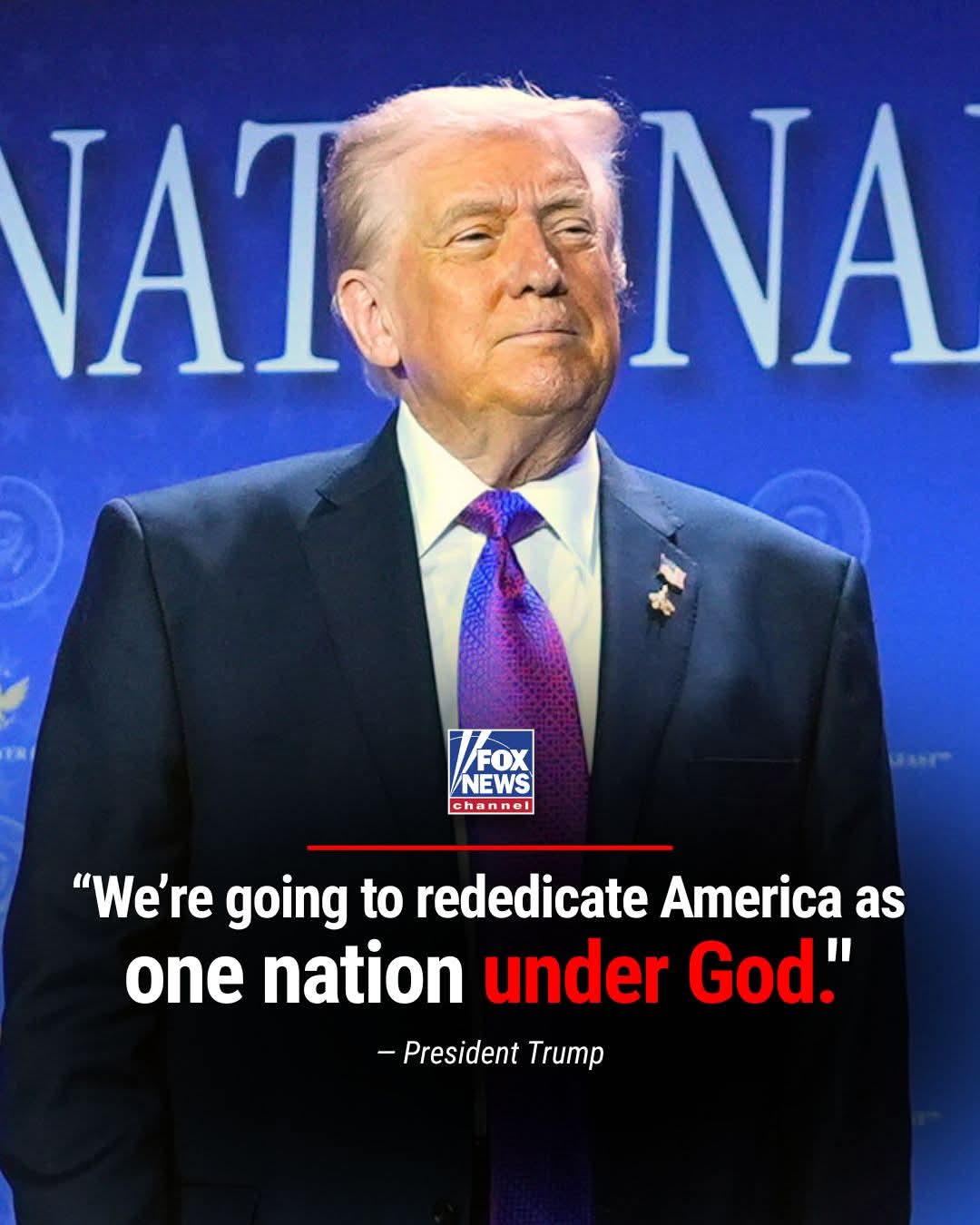
Trump Calls for a Spiritual Reset as He Urges America to Rededicate Itself “Under God”
Speaking before lawmakers, faith leaders, and dignitaries at the 74th Annual National Prayer Breakfast on Capitol Hill, President Donald Trump delivered a message that immediately ignited national conversation: a call to “rededicate America as one nation under God.”
.
.
The annual event, traditionally marked by bipartisan reflection and prayer, took on a sharper political and cultural edge as Trump framed faith not only as a personal value, but as a cornerstone of national identity. Standing beneath the Capitol’s historic dome, the president argued that America’s strength, unity, and resilience are inseparable from its spiritual foundations.
“From the beginning, our nation has relied on God’s guidance,” Trump said, urging Americans to return to what he described as the moral compass that shaped the country’s founding. He spoke of faith as a unifying force capable of healing political divides, restoring purpose, and grounding leadership in humility and accountability.
Supporters quickly praised the remarks, viewing them as a reaffirmation of values they believe have been sidelined in modern public life.
For many religious conservatives, the speech signaled a renewed commitment to protecting religious expression in schools, government, and civic spaces. They see Trump’s message as a response to cultural shifts that, in their view, have weakened shared moral standards.
Critics, however, raised concerns just as swiftly. Civil liberties advocates and secular groups warned that such rhetoric risks blurring the constitutional line between church and state.
Some lawmakers argued that while faith plays an important role in many Americans’ lives, government-led calls for spiritual “rededication” could alienate non-religious citizens and religious minorities.
The speech comes at a moment of deep national polarization, with debates raging over identity, values, and the role of religion in public life. By invoking faith so directly, Trump has once again positioned himself at the center of those cultural fault lines — energizing his base while challenging opponents to respond.
Whether viewed as a heartfelt appeal for unity or a calculated political statement, the address ensured one thing: the National Prayer Breakfast would not fade quietly into the background of Washington tradition. Instead, it became a flashpoint in the broader conversation about what binds Americans together — and who gets to define that bond.
As the nation reacts, the question lingers: Is this a call for spiritual renewal, or a redefining of America’s civic identity? The answer may shape not only political debate, but the cultural direction of the country in the years ahead.


SILENT HERO: Patrick Mahomes and the gift of a second chance. Before the hospital staff shared the story, few knew that Patrick Mahomes had quietly stepped in to cover the total cost of a life-saving brain tumor surgery for a 9-year-old fan.

BREAKING NEWS: Do Americans Approve of Trump’s Way of Ruling? Public Opinion Splits as Debate Over His Leadership Style Resurfaces

‘WE GOT HIM!’: President Trump announced on Truth Social that U.S. forces carried out one of the most daring search-and-rescue missions in history, successfully recovering a senior officer who had been behind enemy lines in Iran.

“Andy Reid: ‘I Would Never Bet Against’ Patrick Mahomes Returning for Week 1 of 2026 Season”

Serena Williams shares a deep message for fans worldwide… Now people everywhere are reacting in a big way….

BREAKING: Trump Fires Attorney General Pam Bondi in Major Cabinet Shakeup Amid Iran War Tensions

See Serena Williams in Spicy Wet Red Barely-There Never-Before-Seen Mouth-Watering Photos: Fans Lose It When the Red Dress Couldn’t Hold Her Melons and Dropped and Revealed Her Giant…

See Serena Williams in Spicy Wet Red Barely-There Never-Before-Seen Mouth-Watering Photos: Fans Lose It When the Red Dress Couldn’t Hold Her Melons and Dropped and Revealed Her Giant…

The Goat ! Serena Williams at the vanity fair Oscar party …..

Fans have to check in : New 17 Serena Williams hot bikinis pictures
Hot Serena Williams bikini photos: 🎾 Serena Williams is embracing her new look and shutting down the noise. The tennis legend recently shared photos in bikinis
