NEWS
Trump Explodes Over “Fake Polls,” Accuses Media of Manipulation, Files Lawsuit—Says Americans Know the Truth Behind Economy and Border Claims

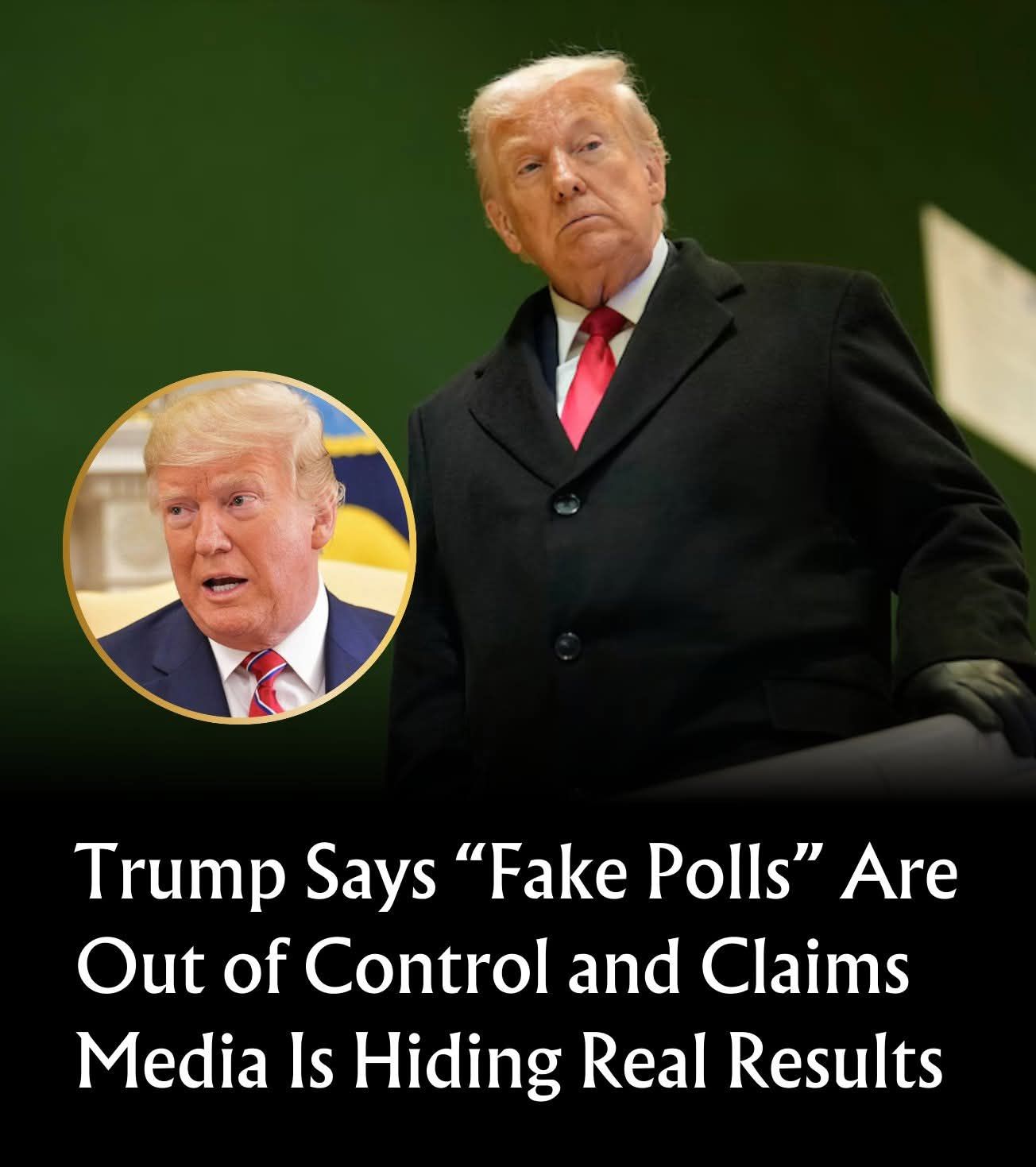
Trump Calls Low-Poll Numbers “Fake,” Accuses Media of Bias and Files Lawsuit
Former President Donald J. Trump is forcefully pushing back against recent opinion polls that place his public support in the low 40s, dismissing the figures as “fake” and accusing major media organizations of deliberately misleading the public.
In a series of remarks, Trump argued that the polling numbers being widely circulated do not reflect what he describes as strong and growing support for his record, particularly on the economy and border security. According to Trump, the polls portraying negative views of his performance are not simply inaccurate, but intentionally false.
“These numbers don’t match reality,” Trump claimed, insisting that Americans are experiencing economic conditions and border enforcement very differently from how they are portrayed in media surveys. He pointed to what he called “major success” during his time in office, arguing that voters remember lower inflation, stronger job growth, and stricter border policies.
Trump went further, alleging that favorable polls showing stronger approval ratings do exist but are being ignored or suppressed by mainstream media outlets. He accused large news organizations of selectively publishing only polls that cast him in a negative light, while refusing to report results that contradict that narrative.
According to Trump, this selective reporting reflects deep political bias within the media. He described the coverage as hostile and unfair, once again invoking the term “Trump Derangement Syndrome” to characterize what he believes is an obsessive and negative fixation on undermining him. In his view, polling has become a political weapon rather than a neutral measurement of public opinion.
The former president also warned that the publication of what he calls misleading polls is not merely unethical, but dangerous. He argued that repeated negative polling shapes public perception, influences voter behavior, and undermines trust in democratic institutions by creating a false sense of consensus.
Escalating the conflict, Trump revealed that he has filed a lawsuit over what he described as fake and fraudulent news reporting. While he did not publicly outline specific legal details, he stated that the case is already moving through the court system.
Trump said he believes media organizations will ultimately be held accountable if his claims are proven, adding that they will “pay a price” for what he alleges is deliberate misinformation.
Media organizations and polling firms have long defended their methodologies, arguing that reputable polls rely on established sampling techniques and statistical models. Critics of Trump’s claims counter that unfavorable polling results reflect genuine voter concerns rather than coordinated media manipulation. They also note that polling fluctuations are common and that individual surveys often vary based on timing, sample size, and methodology.
Supporters of Trump, however, echo his skepticism, arguing that polls in recent election cycles have underestimated his support. They point to past races in which Trump outperformed polling averages, reinforcing his argument that traditional polling methods fail to accurately capture his voter base.
The controversy highlights a broader debate over trust in media, polling, and institutions. In an era of political polarization, polls are increasingly viewed not just as data, but as narratives that can influence campaigns, fundraising, and voter enthusiasm.
Trump’s accusations tap into widespread distrust among his supporters, many of whom believe mainstream media outlets are openly hostile to him.
As the legal challenge unfolds and the election cycle continues, the clash between Trump and the media is likely to intensify. Whether the courts take up his claims or dismiss them, the dispute underscores a central issue in modern politics: who controls the narrative, and how much power polling and media coverage have in shaping public opinion.
For now, Trump remains defiant, rejecting unfavorable numbers and urging supporters to trust their own experiences over what they see in headlines. The battle over polls, perception, and credibility appears far from over.


Fans Weren’t Ready for What Serena Williams Revealed While Trying on a Bikini in Her Wardrobe…
Fans Weren’t Ready for What Serena Williams Revealed While Trying on a Bikini in Her Wardrobe…👇

These Serena Williams New 10 Mouth-Watering Wet Beach Moment Photos in a Barely There Dress Are the New Viral Talk on the Internet, and Fans Went Crazy to See the Moment the Dress Slipped Down and What Revealed Is That Serena Has a Big…

BREAKING: U.S President Donald Trump Has Just Been Confirmed…

Internet Buzz: 10 Private Photos of Serena xWilliams Allegedly Leaked Online,

Serena Williams’ Very Soaked Hot Body in 5 Private Photos Is Causing Fans to Lose Focus – Wives and Girlfriends Complain Their Men Are Distracted and Demand the Photos Be Deleted. See Them Before They’re Removed.

It was really painful, I thought I hurt my boobs popular Instagram celebs shares pictures of her hitting her boobs on the…

These 5 private Serena Williams mouth-watering beach photos are causing serious damage to fans, see them before it deleted

5 private Serena Williams mouth-watering beach photos are causing serious damage to fans

Serena Williams shocks the internet after stepping out in an ultra-revealing outfit, igniting fierce debate, viral reactions, and headlines as fans argue fashion freedom versus public shock worldwide. See more here…

Serena William Turns Heads in a sexy white gown — The photos Are breaking the internet
