NEWS
Trump says government fraud is a national crisis, with states like California, New York, and Illinois losing billions, and calls for stronger oversight, audits, and accountability to protect taxpayers.

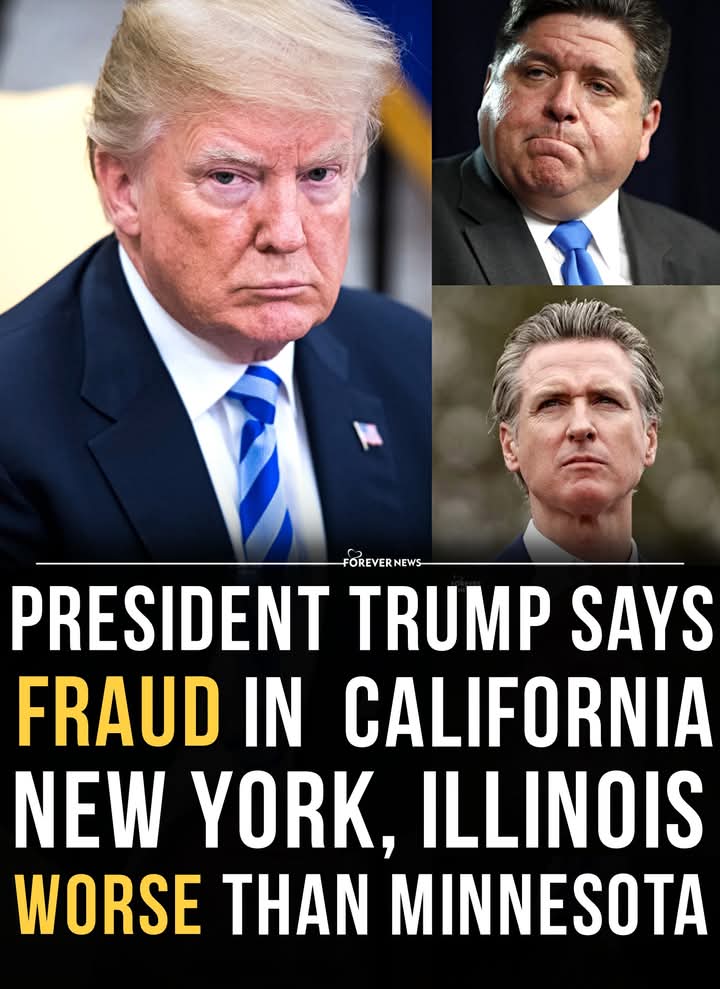
President Donald Trump has reignited a national debate over government accountability, warning that fraud within federal and state-run programs is far more widespread than many Americans realize. In recent remarks, Trump argued that problems uncovered in Minnesota are not isolated incidents but part of a much larger pattern affecting some of the nation’s biggest and longest-governed states, including California, New York, and Illinois.
According to Trump, repeated investigations, audits, and federal prosecutions over the years have revealed billions of dollars lost nationwide through mismanagement, fraud, and abuse in government programs. He emphasized that these losses span healthcare, unemployment benefits, social programs, and emergency funding—areas that involve enormous sums of taxpayer money and often lack rigorous oversight.
Trump’s central claim is that fraud thrives where accountability is weakest.
He pointed to large, high-spending states that manage massive federal funds, arguing that decades of one-party control in some jurisdictions have created bureaucratic systems with little incentive to self-police. In such environments, he says, poor controls and limited consequences make it easier for bad actors to exploit the system.
“This isn’t a regional issue or a partisan talking point,” Trump argued.
“It’s a national failure of oversight.” From his perspective, focusing on one state at a time misses the larger truth: the same vulnerabilities exist across the country, and taxpayers everywhere are paying the price.
Supporters of Trump’s stance say the evidence backs him up. Federal watchdog reports have repeatedly flagged improper payments and wasteful spending, particularly during periods of rapid government expansion, such as pandemic-era relief programs.
Critics, however, counter that fraud exists in every system—public and private—and warn against framing the issue in ways that could undermine legitimate aid programs or discourage people from seeking help.
Still, Trump insists that reform is both possible and necessary. He is calling for tougher enforcement mechanisms, stronger and more frequent audits, and real consequences for officials and contractors who allow fraud to flourish. Without these measures, he argues, even well-intentioned programs will continue to leak billions of dollars.
At its core, the debate comes down to trust. Can Americans trust that their tax dollars are being protected and used as intended? Trump says restoring that trust requires confronting uncomfortable truths about how government operates and refusing to accept fraud as an unavoidable cost of doing business.
As the issue gains attention, one thing is clear: concerns about waste, fraud, and abuse resonate far beyond any single state.
Whether policymakers act on Trump’s warnings may determine how seriously government accountability is treated in the years ahead—and how well American taxpayers are ultimately protected.


BREAKING NEWS: Do Americans Approve of Trump’s Way of Ruling? Public Opinion Splits as Debate Over His Leadership Style Resurfaces

‘WE GOT HIM!’: President Trump announced on Truth Social that U.S. forces carried out one of the most daring search-and-rescue missions in history, successfully recovering a senior officer who had been behind enemy lines in Iran.

“Andy Reid: ‘I Would Never Bet Against’ Patrick Mahomes Returning for Week 1 of 2026 Season”

Serena Williams shares a deep message for fans worldwide… Now people everywhere are reacting in a big way….

BREAKING: Trump Fires Attorney General Pam Bondi in Major Cabinet Shakeup Amid Iran War Tensions

See Serena Williams in Spicy Wet Red Barely-There Never-Before-Seen Mouth-Watering Photos: Fans Lose It When the Red Dress Couldn’t Hold Her Melons and Dropped and Revealed Her Giant…

See Serena Williams in Spicy Wet Red Barely-There Never-Before-Seen Mouth-Watering Photos: Fans Lose It When the Red Dress Couldn’t Hold Her Melons and Dropped and Revealed Her Giant…

The Goat ! Serena Williams at the vanity fair Oscar party …..

Fans have to check in : New 17 Serena Williams hot bikinis pictures
Hot Serena Williams bikini photos: 🎾 Serena Williams is embracing her new look and shutting down the noise. The tennis legend recently shared photos in bikinis

Fans Weren’t Ready for What Serena Williams Revealed While Trying on a Bikini in Her Wardrobe…