NEWS
Trump Signals Major Escalation in Drug War, Vowing to Strike Cartels on Land After Maritime Crackdown, Claiming Record Drug Seizures, Falling Death Rates, and Border Control Success, While Warning That Cartel Violence Has Devastated Families and Turned Mexico into a Criminal Stronghold nationwide security crisis

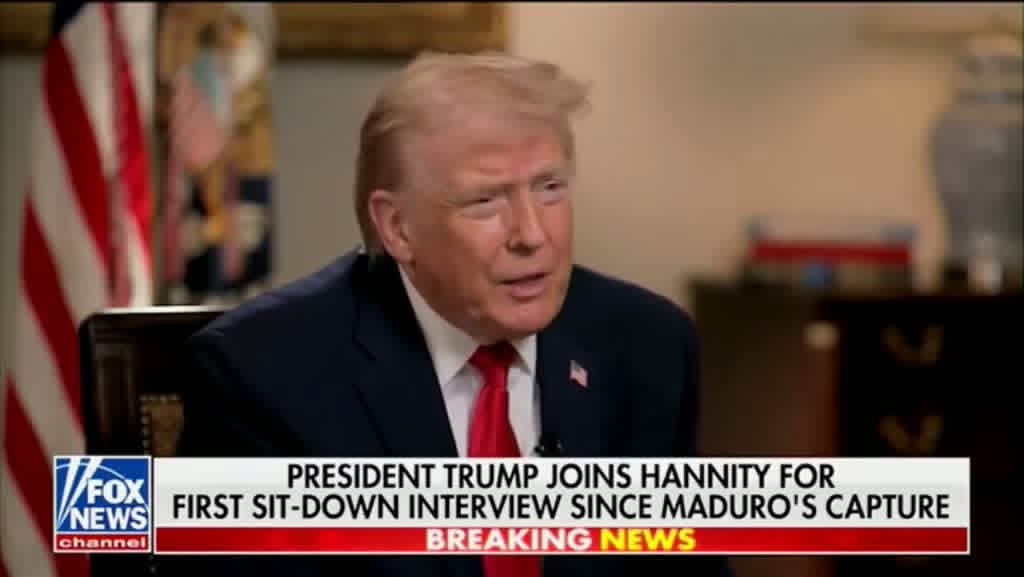
President Donald Trump has signaled a major escalation in the United States’ fight against international drug cartels, declaring that his administration is preparing to target cartel operations on land after what he described as near-total success at sea.
In his first wide-ranging interview since the capture of Venezuelan President Nicolás Maduro, Trump said the U.S. has “knocked out 97%” of drugs entering the country by water and is now shifting its focus to land-based cartel networks, which he claims are responsible for unprecedented levels of violence and drug-related deaths in the United States.
“We’re going to start hitting land with regard to the cartels,” Trump said. “The cartels are running Mexico. It’s very, very sad to watch what’s happened to that country.”
A Hardline Message on Drugs and Security
Trump framed the drug crisis as a national emergency, arguing that cartel-driven trafficking has devastated American families across generations. He claimed that between 250,000 and 300,000 people die each year in the U.S. due to drugs, describing the toll as “horrible” and “heartbreaking.”
“You lose a child or a parent. Parents are dying too with drugs,” Trump said. “It’s devastated families.”
The president asserted that his administration’s aggressive enforcement strategy is beginning to produce results, insisting that drug flow numbers are declining, even if they remain unacceptably high.
“They’re always going to be too high if you have one person,” he said, “but they’re going down.”
Border Enforcement Central to Strategy
Trump repeatedly tied the cartel crackdown to border security, portraying the southern border as the key battleground in the fight against drugs and organized crime. He contrasted the current situation with what he described as years of chaos before his return to office.
“The border was a total mess for years,” Trump said. “I did it the first time very quickly, and this time I did it even better.”
According to Trump, the scale of the problem he inherited was historic. “This was a border like no other probably in the history of the world,” he said. “There’s never been a border like that where anybody could just walk into your country.”
The administration has already expanded physical barriers, increased deportations, and boosted cooperation between federal agencies, while also floating more aggressive measures aimed directly at cartel infrastructure.
Regional and International Implications
Trump’s comments are likely to raise alarms among international leaders, particularly in Mexico and across Latin America. Describing cartels as effectively controlling large parts of Mexico, the president suggested that the situation justifies extraordinary measures to protect U.S. interests.
While Trump did not outline specific operational details, his language indicated a willingness to consider cross-border or land-based actions that go beyond traditional law enforcement cooperation. Such moves could strain diplomatic relations and raise legal and sovereignty concerns.
Critics argue that unilateral U.S. action on foreign soil risks destabilizing the region further and could inflame tensions with key partners. Supporters, however, say the scale of the drug crisis demands decisive action and that past approaches have failed to stop cartel violence and trafficking.
A Broader Pattern of Aggression
The interview comes amid a week of dramatic foreign policy moves and rhetoric from the White House. Trump has already drawn global attention for authorizing strikes in Venezuela, overseeing the capture of Maduro, and openly discussing the possibility of using military power to advance U.S. interests abroad.
Taken together, the comments suggest a presidency increasingly willing to use force, unpredictability, and pressure as tools of negotiation and control — a strategy Trump has openly embraced.
A Dividing Moment
Trump’s remarks have intensified an already polarized debate over how far the U.S. should go in combating drugs, illegal trafficking, and organized crime. To his supporters, the president is finally confronting a deadly problem with the urgency it deserves. To critics, he is pushing the boundaries of international law and risking dangerous escalation.


BREAKING NEWS: Do Americans Approve of Trump’s Way of Ruling? Public Opinion Splits as Debate Over His Leadership Style Resurfaces

‘WE GOT HIM!’: President Trump announced on Truth Social that U.S. forces carried out one of the most daring search-and-rescue missions in history, successfully recovering a senior officer who had been behind enemy lines in Iran.

“Andy Reid: ‘I Would Never Bet Against’ Patrick Mahomes Returning for Week 1 of 2026 Season”

Serena Williams shares a deep message for fans worldwide… Now people everywhere are reacting in a big way….

BREAKING: Trump Fires Attorney General Pam Bondi in Major Cabinet Shakeup Amid Iran War Tensions

See Serena Williams in Spicy Wet Red Barely-There Never-Before-Seen Mouth-Watering Photos: Fans Lose It When the Red Dress Couldn’t Hold Her Melons and Dropped and Revealed Her Giant…

See Serena Williams in Spicy Wet Red Barely-There Never-Before-Seen Mouth-Watering Photos: Fans Lose It When the Red Dress Couldn’t Hold Her Melons and Dropped and Revealed Her Giant…

The Goat ! Serena Williams at the vanity fair Oscar party …..

Fans have to check in : New 17 Serena Williams hot bikinis pictures
Hot Serena Williams bikini photos: 🎾 Serena Williams is embracing her new look and shutting down the noise. The tennis legend recently shared photos in bikinis

Fans Weren’t Ready for What Serena Williams Revealed While Trying on a Bikini in Her Wardrobe…