NEWS
Trump Vows Executive Order to Enforce Voter ID for Midterms, Igniting National Debate Over Election Integrity, Congressional Authority, and Constitutional Limits on Presidential Power

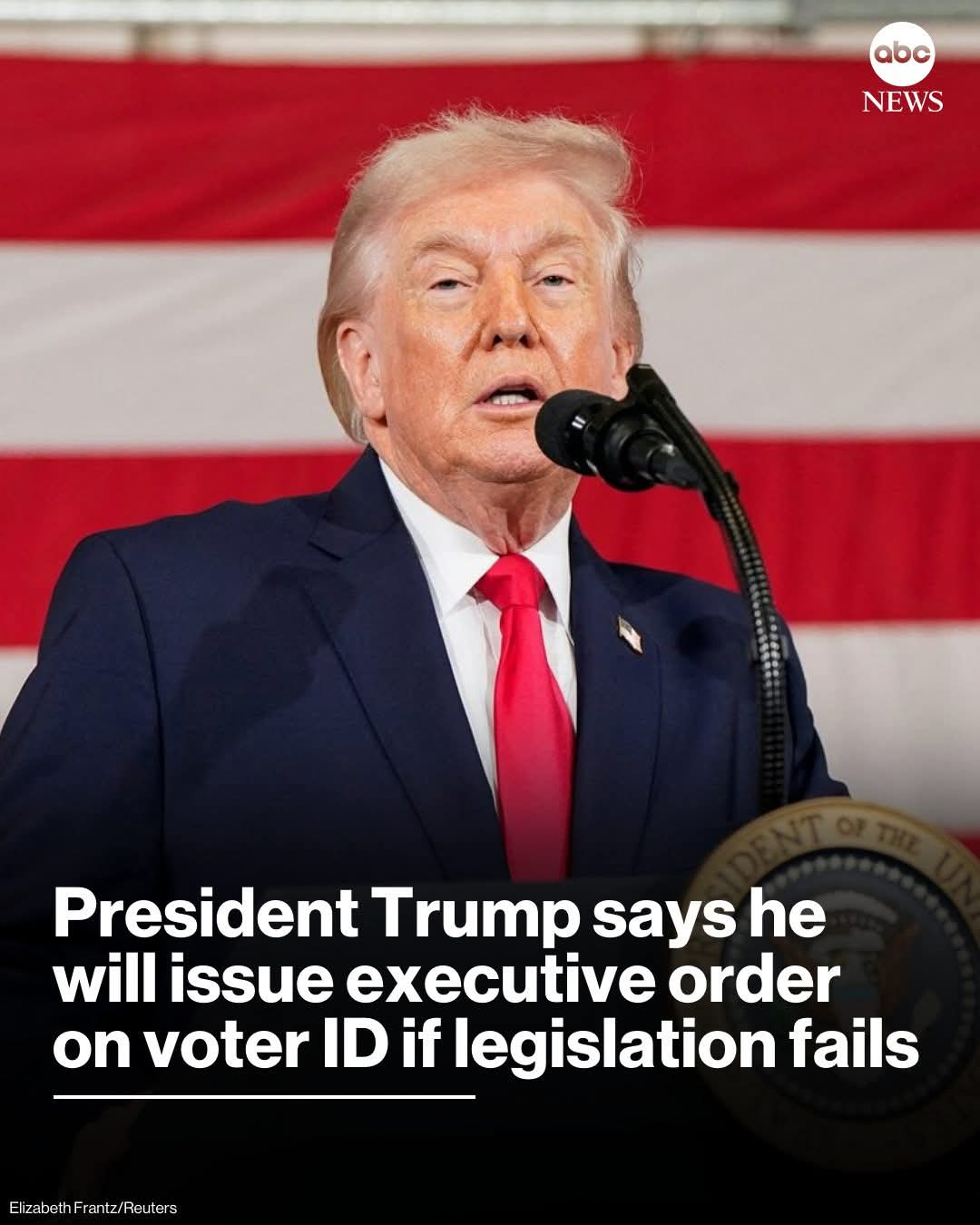
Donald Trump Vows Executive Action on Voter ID for Midterms, Setting Up High-Stakes Legal ShowdownPresident Donald Trump has ignited a new political firestorm after declaring that voter ID requirements will be implemented for the upcoming midterm elections — “whether approved by Congress or not.”
In a strongly worded post on his social media platform, Trump described the absence of strict voter identification laws as a “SCAM” and insisted that immediate action is necessary to protect election integrity. He pledged that if Congress does not pass voter ID legislation, he will move forward with an Executive Order, claiming there are legal pathways to justify such action.
“This is an issue that must be fought, and must be fought, NOW,” Trump wrote, signaling urgency and setting the stage for a potentially historic confrontation between the executive branch and lawmakers.A Battle Over Election IntegrityThe debate over voter ID laws has long divided the nation. Supporters argue that requiring government-issued identification at the polls strengthens public confidence in elections and prevents potential fraud. Many Republican leaders have championed voter ID policies as a common-sense safeguard similar to identification requirements for travel, banking, or purchasing age-restricted products.
Opponents, however, argue that strict voter ID laws can disproportionately affect elderly voters, low-income communities, and minority groups who may face barriers obtaining identification. Civil rights organizations have historically challenged such measures in court, arguing they risk suppressing legitimate votes.Trump’s declaration escalates the debate by introducing the possibility of unilateral executive action — a move that could trigger immediate legal challenges and constitutional scrutiny.
Constitutional Questions LoomElection laws are primarily administered at the state level, with Congress holding authority to regulate aspects of federal elections. Legal experts suggest that any attempt to impose nationwide voter ID requirements through Executive Order would face intense judicial review.Critics argue that bypassing Congress could test the limits of presidential authority, potentially sending the issue to federal courts — and possibly to the Supreme Court. Supporters counter that federal oversight is justified to ensure uniform standards and prevent irregularities.
Political Stakes Ahead of the MidtermsWith midterm elections approaching, the announcement adds fuel to an already charged political environment. The issue of election security remains a top priority for many conservative voters, while Democrats are expected to strongly oppose any executive action perceived as overreach.The coming weeks could determine whether Congress attempts to negotiate legislation — or whether the country braces for a legal battle that could reshape election policy nationwide.
One thing is certain: the fight over voter ID is no longer a distant policy discussion. It is now at the center of a national confrontation over executive power, voting rights, and the future of American elections.


These Serena Williams New 10 Mouth-Watering Wet Beach Moment Photos in a Barely There Dress Are the New Viral Talk on the Internet, and Fans Went Crazy to See the Moment the Dress Slipped Down and What Revealed Is That Serena Has a Big…

BREAKING: U.S President Donald Trump Has Just Been Confirmed…

Internet Buzz: 10 Private Photos of Serena xWilliams Allegedly Leaked Online,

Serena Williams’ Very Soaked Hot Body in 5 Private Photos Is Causing Fans to Lose Focus – Wives and Girlfriends Complain Their Men Are Distracted and Demand the Photos Be Deleted. See Them Before They’re Removed.

It was really painful, I thought I hurt my boobs popular Instagram celebs shares pictures of her hitting her boobs on the…

These 5 private Serena Williams mouth-watering beach photos are causing serious damage to fans, see them before it deleted

5 private Serena Williams mouth-watering beach photos are causing serious damage to fans

Serena Williams shocks the internet after stepping out in an ultra-revealing outfit, igniting fierce debate, viral reactions, and headlines as fans argue fashion freedom versus public shock worldwide. See more here…

Serena William Turns Heads in a sexy white gown — The photos Are breaking the internet

Fans Had to Zoom In Twice—Serena Williams’ Braless Look Sparked Instant Chaos…see …

Fans Had to Zoom In Twice—Serena Williams’ Braless Look Sparked Instant Chaos…see ….
