NEWS
Viral Power vs. Verified Truth: How One Image Sparked Global Claims of Maduro’s Capture

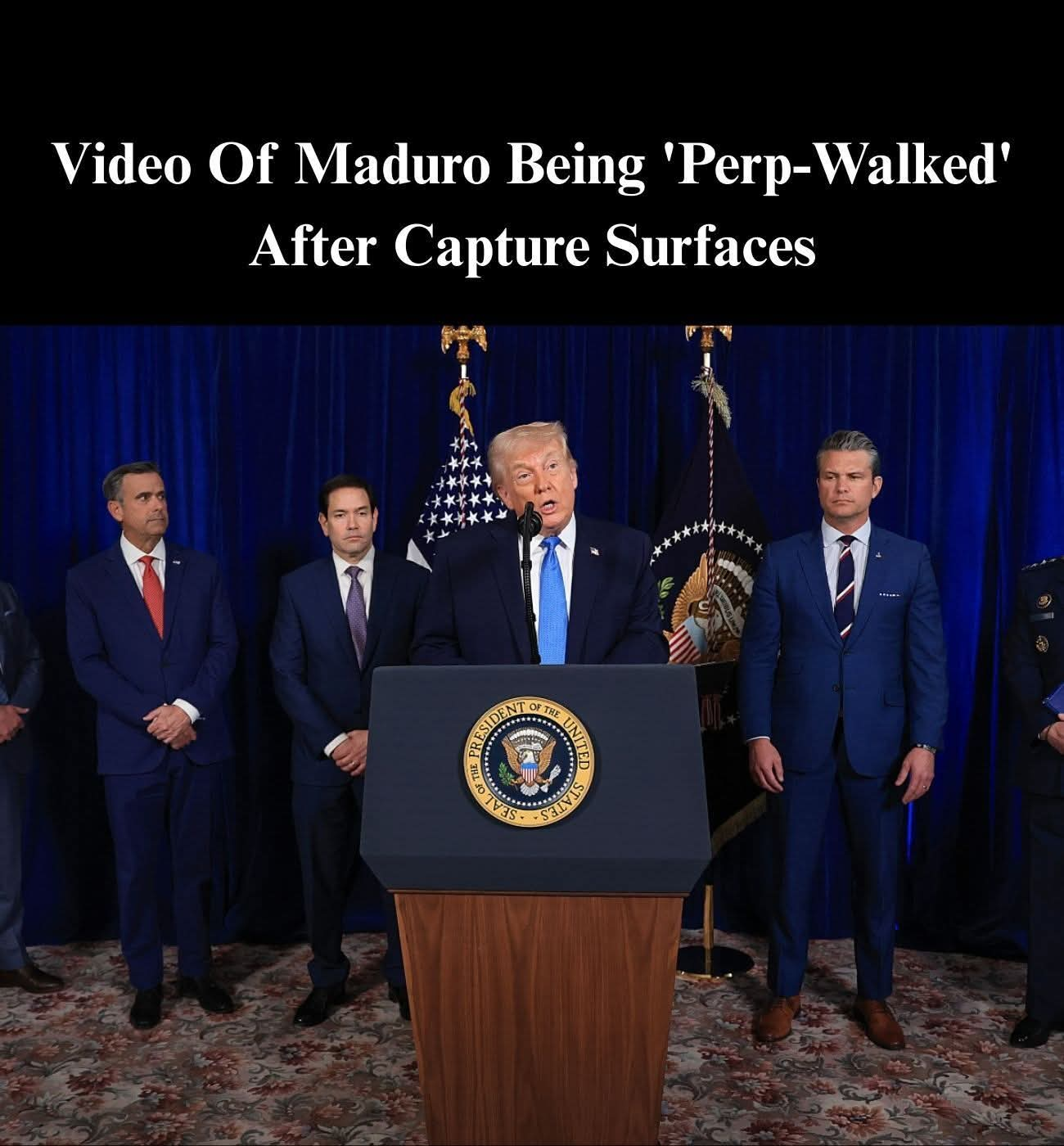
A striking image circulating online has ignited intense discussion after being paired with claims that Venezuelan President Nicolás Maduro was captured and “perp-walked” following a U.S.-led operation. The image, showing former U.S. President Donald Trump speaking at a formal podium flanked by senior officials, has been widely shared alongside headlines suggesting a dramatic turn in U.S.–Venezuela relations.
The claims, however, have quickly raised questions. No independent confirmation has emerged from Venezuelan authorities, international organizations, or major news agencies to substantiate reports of Maduro’s capture. Still, the speed at which the story spread underscores the power of visual imagery in shaping public perception—especially in an era where political narratives often travel faster than verified facts.
For years, Venezuela has been at the center of geopolitical tension. U.S. sanctions, allegations of human rights abuses, disputed elections, and the country’s vast oil reserves have kept Caracas in Washington’s crosshairs. Against this backdrop, any suggestion of direct action against Venezuela’s leadership is bound to draw global attention and provoke strong reactions across Latin America and beyond.
Supporters of a tougher stance argue that decisive action would represent accountability for alleged corruption and repression. Critics warn that such moves—if real—could destabilize the region, violate international law, and inflame already fragile diplomatic relationships. Others see the viral post as a cautionary tale about misinformation, noting how easily official-looking images and authoritative language can lend credibility to unverified claims.
As the debate continues, analysts urge the public to separate imagery from evidence. The image itself does not confirm the claims attached to it, and responsible reporting requires corroboration from multiple credible sources. Until that happens, the story remains a powerful example of how modern political discourse can be shaped by what people see—and what they are led to believe.
In a global media environment driven by speed and emotion, this moment serves as a reminder: extraordinary claims demand extraordinary proof.


BREAKING NEWS: Do Americans Approve of Trump’s Way of Ruling? Public Opinion Splits as Debate Over His Leadership Style Resurfaces

‘WE GOT HIM!’: President Trump announced on Truth Social that U.S. forces carried out one of the most daring search-and-rescue missions in history, successfully recovering a senior officer who had been behind enemy lines in Iran.

“Andy Reid: ‘I Would Never Bet Against’ Patrick Mahomes Returning for Week 1 of 2026 Season”

Serena Williams shares a deep message for fans worldwide… Now people everywhere are reacting in a big way….

BREAKING: Trump Fires Attorney General Pam Bondi in Major Cabinet Shakeup Amid Iran War Tensions

See Serena Williams in Spicy Wet Red Barely-There Never-Before-Seen Mouth-Watering Photos: Fans Lose It When the Red Dress Couldn’t Hold Her Melons and Dropped and Revealed Her Giant…

See Serena Williams in Spicy Wet Red Barely-There Never-Before-Seen Mouth-Watering Photos: Fans Lose It When the Red Dress Couldn’t Hold Her Melons and Dropped and Revealed Her Giant…

The Goat ! Serena Williams at the vanity fair Oscar party …..

Fans have to check in : New 17 Serena Williams hot bikinis pictures
Hot Serena Williams bikini photos: 🎾 Serena Williams is embracing her new look and shutting down the noise. The tennis legend recently shared photos in bikinis

Fans Weren’t Ready for What Serena Williams Revealed While Trying on a Bikini in Her Wardrobe…