NFL
“What Changed? Donald Trump Can’t Count on Congress to Protect Him Anymore, and the Political Fallout Is Growing”— Here’s Why It Matters More Than Ever”

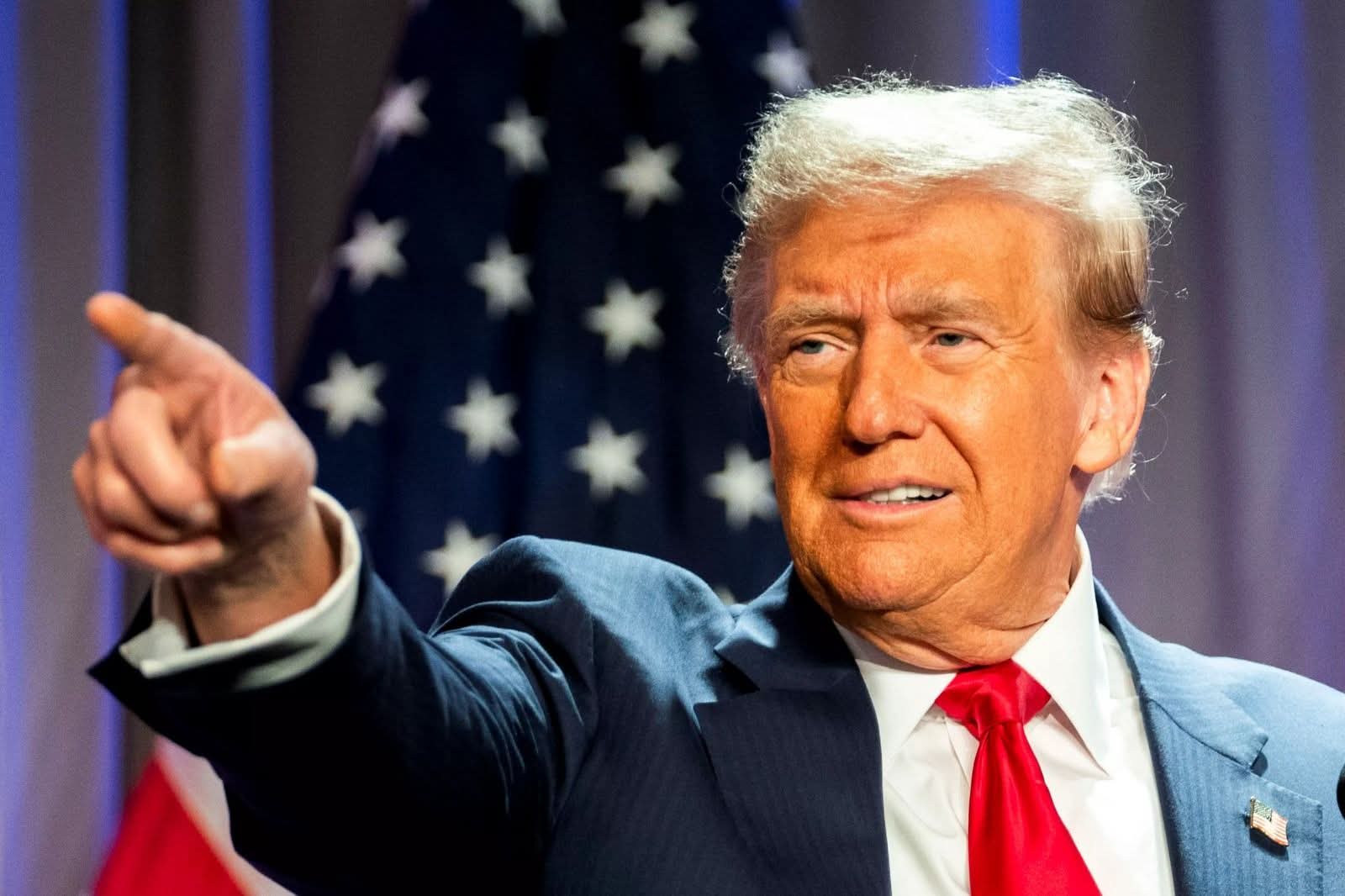
“President Trump campaigned against forever wars, and I strongly support him in that position,” Young said in a statement. “A drawn-out campaign in Venezuela involving the American military, even if unintended, would be the opposite of President Trump’s goal of ending foreign entanglements.”
Speaking at the White House after the Senate vote, Vice President JD Vance rejected the notion that Trump’s grip on Congress was slipping, saying the GOP opposition was “based more on a legal technicality than any disagreement on policy.”
But the internal GOP dissent came to the delight of Democratic leaders, who are growing jubilant over their ability to highlight the splits and hammer Republicans heading into the midterms.
House Minority Leader Hakeem Jeffries told reporters “Republicans need to get their act together in terms of their leadership,” saying the party had been badly distracted from addressing Americans’ cost-of-living concerns.
After the war powers vote, Senate Minority Leader Chuck Schumer hailed it as “a critical step” for the chamber in “reasserting its constitutional authority” and pushing back on an imperious president.
Still, there were signs that Trump’s sway over the GOP had not entirely eroded.
Sen. Josh Hawley (R-Mo.), while voting to constrain Trump’s war powers, downplayed the break and reiterated multiple times that he supports the president.
“I don’t take any offense to that,” he said about Trump’s suggestion that he should not be reelected. “I think the president is great. I love the president. … I understand he’s ticked.”
And in a particularly stark demonstration of Trump’s continued sway over the House GOP, most Republicans in the chamber voted with him Thursday to sustain his veto of two bills they had allowed to pass unanimously just weeks before.
One bill benefited the Miccosukee Tribe of Florida, which opposed his administration’s attempt to build a vast migrant detention center in the Everglades. Another authorized a water project backed by Colorado politicians who have clashed with Trump, including Democratic Gov. Jared Polis and GOP Rep. Lauren Boebert.
“I am disappointed to see the lack of leadership, the amount of people that will fold, that will cave, that will not take a stand,” Boebert said after the vote. “This had nothing to do with policy. … Folks are afraid of getting a mean tweet or attacked.
Some House Republicans who opposed the veto override cited White House officials who circled the chamber as the votes unfolded. It was clear they were taking note of the defectors, one GOP lawmaker said. Trump going nuclear on the five Republican senators who had defied him earlier in the day helped convince others to not stick their neck out.
“It wasn’torth it,” another House Republican said. “It’s not my bill.”
Still, 35 Republicans broke ranks with Trump on the Colorado project while 24 did so on the tribal bill. Two committee chairs voted to override both vetoes.
Later in the day, a critical mass of House Republicans sent an incontrovertible message on an issue much more central to the GOP’s midterm prospects than expanding a tribal reservation — addressing health care costs.
Seventeen GOP members joined with Democrats to pass a bill that would revive lapsed Obamacare tax credits for three years. Trump, with the encouragement of Republican leaders on Capitol Hill, has refused to engage in bipartisan negotiations — instead slamming the subsidies as wasteful and calling on lawmakers to set up an alternate system where Americans get direct payments to help afford coverage.
But multiple Republicans, while still blaming Democrats for the morass, said Thursday they were not willing to stand by and do nothing amid the standoff. The expired subsidies were used by more than 20 million Americans, lowering their premiums in many cases by thousands of dollars per year.
“I have a bunch of my constituents that are depending on these programs, and I’m not going to leave them hanging because the Democrats broke the damn system,” said GOP Rep. Derrick Van Orden, who represents a swing Wisconsin district and referred to the bill as a “bridging mechanism.”
Asked if his vote could be seen as a rebuke of Trump, Van Orden said he “didn’t even think of it like that.”
Republicans were similarly roundabout when it came to the Senate’s action Thursday to display the contentious Jan. 6 plaque, which was created pursuant to a 2022 law but has remained in storage as Speaker Mike Johnson refuses to install it.
But the timing spoke volumes, coming two days after the fifth anniversary of the Capitol attack and the White House publication of a website casting the riot as the fault of Democrats and the Capitol Police itself.
Sen. Thom Tillis (R-N.C.), without mentioning Trump, said the plaque was a commemoration of “what I would consider to be one of the most significant stress tests for this institution since it was founded.”
“It was a great day for democracy because of the law enforcement officers,” he said. “We took a brief recess, we got ourselves together, the Capitol was secured and before we left the compound we came back and completed our constitutional duty” to certify the 2020 election.
Meanwhile, the fallout of the war powers vote is likely to continue. Thursday’s vote sets up final consideration of the resolution next week, where Trump’s commitment to an “America First” foreign policy will be debated. In addition to the pushback on his plans for Venezuela, many Republicans aired deep misgivings this week about his overt attempts to seize control of Greenland, a Danish territory.The House is on track to take up a similar vote later this month after Democrats introduced a companion measure Thursday and expressed cautious optimism that more Republicans might vote to constrain the president.


BREAKING NEWS: Do Americans Approve of Trump’s Way of Ruling? Public Opinion Splits as Debate Over His Leadership Style Resurfaces

‘WE GOT HIM!’: President Trump announced on Truth Social that U.S. forces carried out one of the most daring search-and-rescue missions in history, successfully recovering a senior officer who had been behind enemy lines in Iran.

“Andy Reid: ‘I Would Never Bet Against’ Patrick Mahomes Returning for Week 1 of 2026 Season”

Serena Williams shares a deep message for fans worldwide… Now people everywhere are reacting in a big way….

BREAKING: Trump Fires Attorney General Pam Bondi in Major Cabinet Shakeup Amid Iran War Tensions

See Serena Williams in Spicy Wet Red Barely-There Never-Before-Seen Mouth-Watering Photos: Fans Lose It When the Red Dress Couldn’t Hold Her Melons and Dropped and Revealed Her Giant…

See Serena Williams in Spicy Wet Red Barely-There Never-Before-Seen Mouth-Watering Photos: Fans Lose It When the Red Dress Couldn’t Hold Her Melons and Dropped and Revealed Her Giant…

The Goat ! Serena Williams at the vanity fair Oscar party …..

Fans have to check in : New 17 Serena Williams hot bikinis pictures
Hot Serena Williams bikini photos: 🎾 Serena Williams is embracing her new look and shutting down the noise. The tennis legend recently shared photos in bikinis

Fans Weren’t Ready for What Serena Williams Revealed While Trying on a Bikini in Her Wardrobe…