CELEBRITY
When Live TV Lost Control: How Taylor Swift’s Calm Walkout on The View Ignited a Cultural Reckoning Over Truth, Power, and Who Really Owns the Narrative in Modern Media

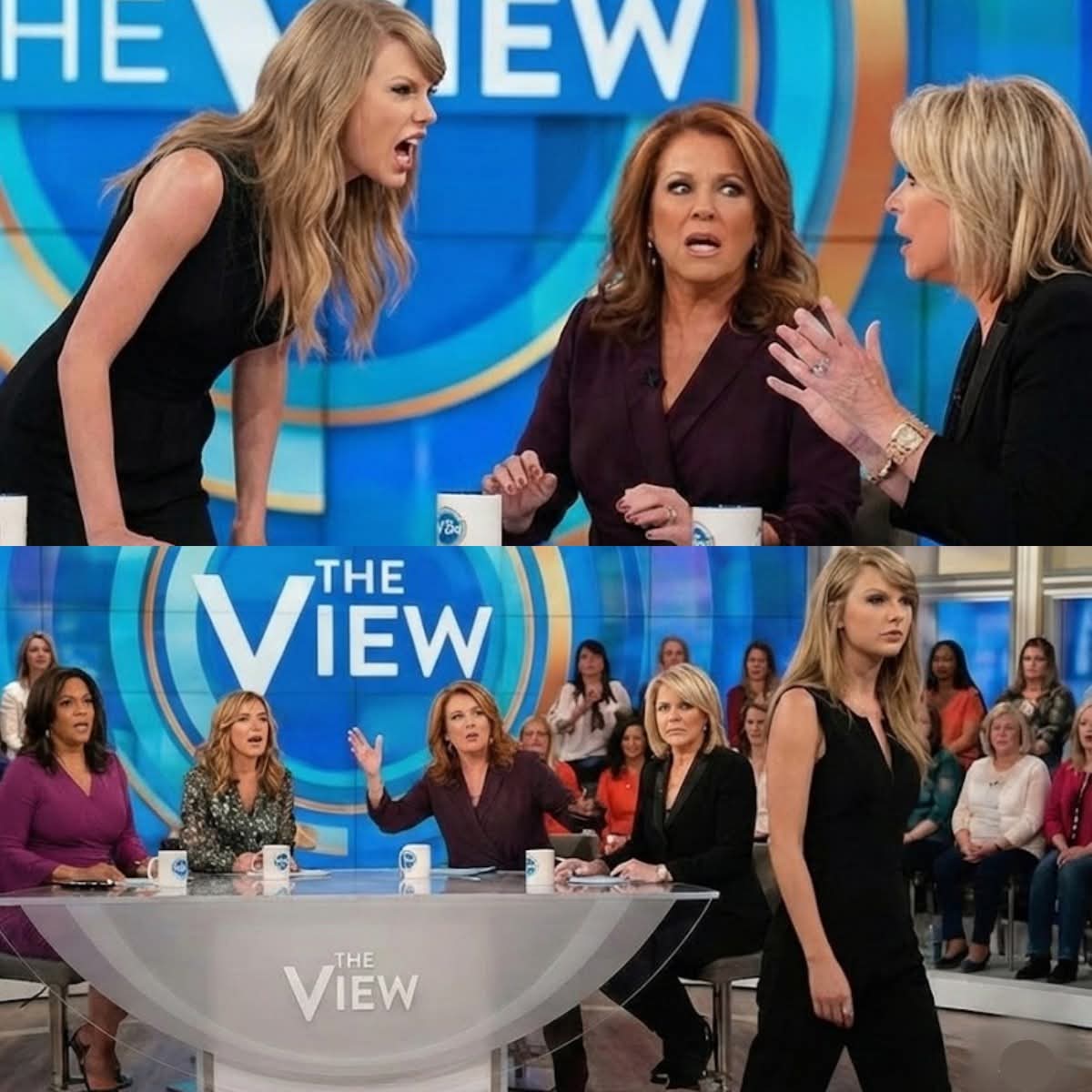
Taylor Swift and the Moment That Broke Daytime TV’s Illusion of Control
In the age of carefully managed interviews and pre-approved talking points, live television is supposed to be safe. Predictable. Contained. But one explosive moment—now ricocheting across social media—has reignited a larger conversation about authenticity, power, and who really controls the narrative when artists speak.
According to a viral account circulating online, The View became the setting for one of the most tense standoffs daytime television has seen in years. What began as a routine appearance allegedly spiraled into a confrontation that left the studio frozen and viewers stunned.
At the center of it all: Taylor Swift.
As the story goes, tensions escalated rapidly when Swift pushed back against what she perceived as scripted moralizing. The moment reached its breaking point when Joy Behar reportedly shouted, “STOP! CUT THIS—GET HER OUT OF MY STUDIO!”—a command that signaled a loss of control rarely seen on live TV.
But what made the moment unforgettable wasn’t the shouting.
It was the silence.
Swift, described as calm and unmoving, leaned forward and delivered a line that has since become the centerpiece of the viral narrative:
“You don’t get to lecture me from a teleprompter about truth.”
The studio, according to the account, went completely quiet. No applause. No interruptions. Just the weight of the words hanging in the air.
She continued, not with anger, but with precision—framing her career as a long fight for creative autonomy. Years of reinvention, public scrutiny, and industry pressure, she implied, had earned her the right to speak honestly, without permission or filters.
“I’m not here for applause,” she reportedly said. “I’m here because authenticity in art still matters.”
The exchange grew sharper when Swift was labeled “problematic” and “out of touch.” Yet instead of escalating, she doubled down on restraint.
“What’s out of touch,” she replied, “is mistaking volume for honesty and outrage for meaning.”
The words struck a nerve because they echoed a broader frustration shared by many artists and audiences alike: the feeling that modern discourse rewards noise over substance and conformity over truth.
Then came the line that sealed the moment’s place in pop-culture lore:
“Music was never safe. It was never scripted. And it was never yours to control.”
In the final beat of the story, Swift stood up, adjusted her stance, and delivered a quiet closing remark that supporters now describe as devastating in its simplicity:
“You wanted a performance. I gave you truth. Enjoy your show.”
She walked off the set.
Whether the moment unfolded exactly as described or has been amplified by the internet’s appetite for symbolic showdowns, its impact is undeniable. The narrative has sparked fierce debate—less about Taylor Swift herself and more about the systems surrounding fame, media, and expression.
Supporters see the moment as a rare act of defiance: an artist refusing to be managed, muted, or molded for comfort. Critics argue it reflects the dangers of celebrity power clashing with public discourse. But both sides agree on one thing—the story resonates because it taps into a deeper cultural tension.
Who gets to decide what is acceptable to say?
When does “conversation” become control?
And why does honesty feel so disruptive in spaces built on performance?


BREAKING NEWS: Do Americans Approve of Trump’s Way of Ruling? Public Opinion Splits as Debate Over His Leadership Style Resurfaces

‘WE GOT HIM!’: President Trump announced on Truth Social that U.S. forces carried out one of the most daring search-and-rescue missions in history, successfully recovering a senior officer who had been behind enemy lines in Iran.

“Andy Reid: ‘I Would Never Bet Against’ Patrick Mahomes Returning for Week 1 of 2026 Season”

Serena Williams shares a deep message for fans worldwide… Now people everywhere are reacting in a big way….

BREAKING: Trump Fires Attorney General Pam Bondi in Major Cabinet Shakeup Amid Iran War Tensions

See Serena Williams in Spicy Wet Red Barely-There Never-Before-Seen Mouth-Watering Photos: Fans Lose It When the Red Dress Couldn’t Hold Her Melons and Dropped and Revealed Her Giant…

See Serena Williams in Spicy Wet Red Barely-There Never-Before-Seen Mouth-Watering Photos: Fans Lose It When the Red Dress Couldn’t Hold Her Melons and Dropped and Revealed Her Giant…

The Goat ! Serena Williams at the vanity fair Oscar party …..

Fans have to check in : New 17 Serena Williams hot bikinis pictures
Hot Serena Williams bikini photos: 🎾 Serena Williams is embracing her new look and shutting down the noise. The tennis legend recently shared photos in bikinis

Fans Weren’t Ready for What Serena Williams Revealed While Trying on a Bikini in Her Wardrobe…