NEWS
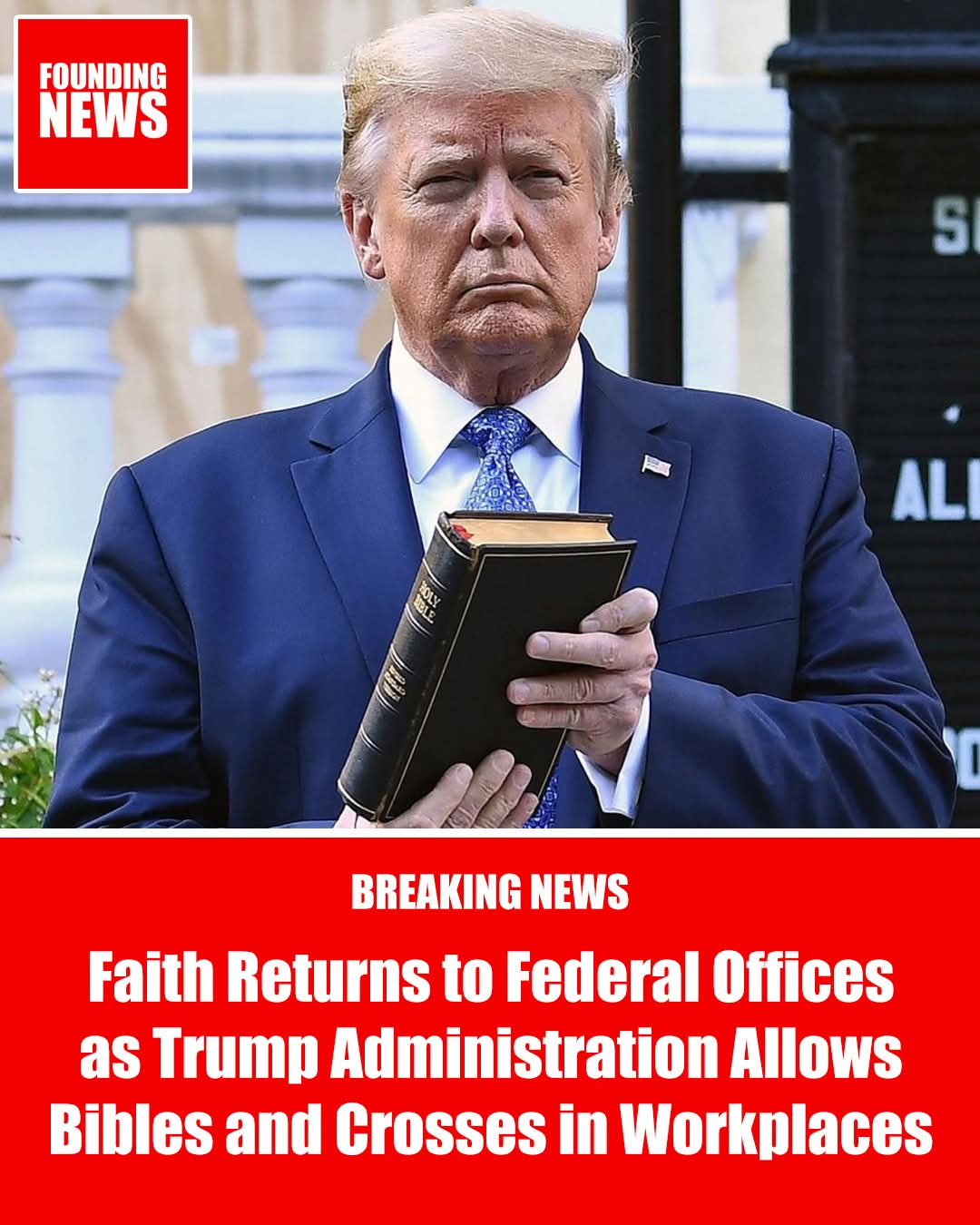
Faith is back in American Government workplaces! The U.S. Office of Personnel Management issued a memorandum called “Protecting Religious Expression in the Federal Workplace.

Faith, Freedom, and the Federal Workplace: A New Chapter in America’s Cultural Debate
A renewed debate over faith and public life has emerged following a memorandum from the U.S. Office of Personnel Management titled “Protecting Religious Expression in the Federal Workplace.” The guidance affirms that federal employees are permitted to display personal religious items—such as Bibles, crosses, crucifixes, and religious artwork—at their desks or on their person while at work.
For supporters, the memo represents a long-awaited reaffirmation of religious liberty. For critics, it raises familiar questions about the boundaries between faith and government.
At its core, the memorandum emphasizes a constitutional principle deeply rooted in American history: the free exercise of religion. The guidance makes clear that religious expression, when personal and non-disruptive, should not be treated differently from other forms of personal expression. Employees, it argues, should not feel compelled to hide their beliefs simply because they work for the federal government.
Supporters of the policy view it as a cultural and moral reset. Many believe that religious expression—particularly Christianity—has been increasingly marginalized in public institutions over the past several decades. From this perspective, the memo is not about elevating one faith above others, but about restoring balance and ensuring that people of faith are no longer singled out or discouraged from living openly according to their beliefs.
They argue that faith has always played a role in shaping American values, leadership, and civic life, and that acknowledging this heritage strengthens, rather than threatens, democracy.
The Trump Administration’s broader message resonates strongly with this audience. Advocates frame the move as part of a larger effort to reassert traditional values and defend religious Americans who feel excluded from modern public culture. In their view, protecting visible faith in government workplaces is not an imposition of religion, but a rejection of what they see as an unofficial hostility toward it.
Critics, however, express concern about how such policies are interpreted and implemented. They warn that visible religious symbols in government offices could blur the line between personal belief and institutional endorsement. While the memo explicitly focuses on individual expression rather than official messaging, skeptics fear that the distinction may not always be clear in practice. For them, the challenge lies in ensuring that inclusivity extends equally to people of all faiths—and to those with no religious affiliation at all.
This tension reflects a broader national conversation. Across the country, Americans are grappling with how to balance religious freedom, pluralism, and the secular nature of government institutions. The debate is not new, but it has grown more intense as cultural divisions deepen and as political leaders increasingly frame policy decisions in moral and spiritual terms.
What makes this moment significant is its symbolism. Allowing a Bible on a desk or a cross around a neck may seem small, but symbols matter. They signal what is welcome, what is protected, and what belongs in the public square. To supporters, the memo signals that faith is no longer something to be hidden or apologized for. To critics, it is a reminder of the need for vigilance in preserving neutrality and inclusion.
Ultimately, the memorandum does not resolve America’s long-running debate over faith and government—but it undeniably amplifies it. It forces the nation to confront a central question: can religious expression be openly protected in public institutions without crossing into endorsement?
As Americans continue to wrestle with this issue, one thing is clear: faith remains a powerful force in the country’s cultural and political life.
Whether seen as a restoration of freedom or a source of concern, the renewed emphasis on protecting religious expression ensures that the conversation about belief, identity, and public service is far from over.


“BREAKING: Taylor Swift & Travis Kelce Secretly Married Before $30M MSG Wedding — See Her New Ring + All The Photos”

Travis Kelce Broke Down Reading His Vows. The 2 Words Taylor Whispered Back Broke Everyone”

SERENA WILLIAMS JUST REVEALED A VIDEO OF WHAT SHE’S BEEN KEEPING PRIVATE FOR YEARS… AND IT’S EVERYTHING watch the video now before it gone

IT’S FINALLY OFFICIAL! Hearts Are Overflowing with Joy! Travis Kelce and Taylor Swift just stunned the world with a major announcement during the latest public appearance. The speculation is officially OVER, and the news is even more beautiful than anyone could have ever imagined!

Taylor Swift and Travis Kelce Are Officially Married! Taylor Swift and Travis Kelce tied the knot at Madison Square Garden in New York City on July 3

SERENA WILLIAMS JUST REVEALED WHAT SHE’S BEEN KEEPING PRIVATE FOR YEARS… AND IT’S EVERYTHING

Serena Williams finally show up what she has been keeping private body to everyone…..

Serena Williams Breaks Silence: How Gruelling, Invasive Doping Protocols Nearly Destroyed Her Confidence And Almost Forced Her To Quit Tennis For Good

Trump Kisses Mystery Woman LIVE at World Cup Draw… Melania’s Face Says It All during the 2026 World Cup Draw —— furious melania felling BETRAYED – RETALIATES by EXPOSING TRUMP SECRET

Internet Buzz: 3 hot Private Photos of Serena Williams Allegedly Leaked Online,click to see ..see more

Serena Williams Just Stepped Out in a Look That’s Got Everyone Talking – See Why Fans Are Calling It Pure Confidence
