
CELEBRITY
Trump Signs New Birthright Citizenship Executive Orders, Connecticut Attorney General Calls Them Unconstitutional

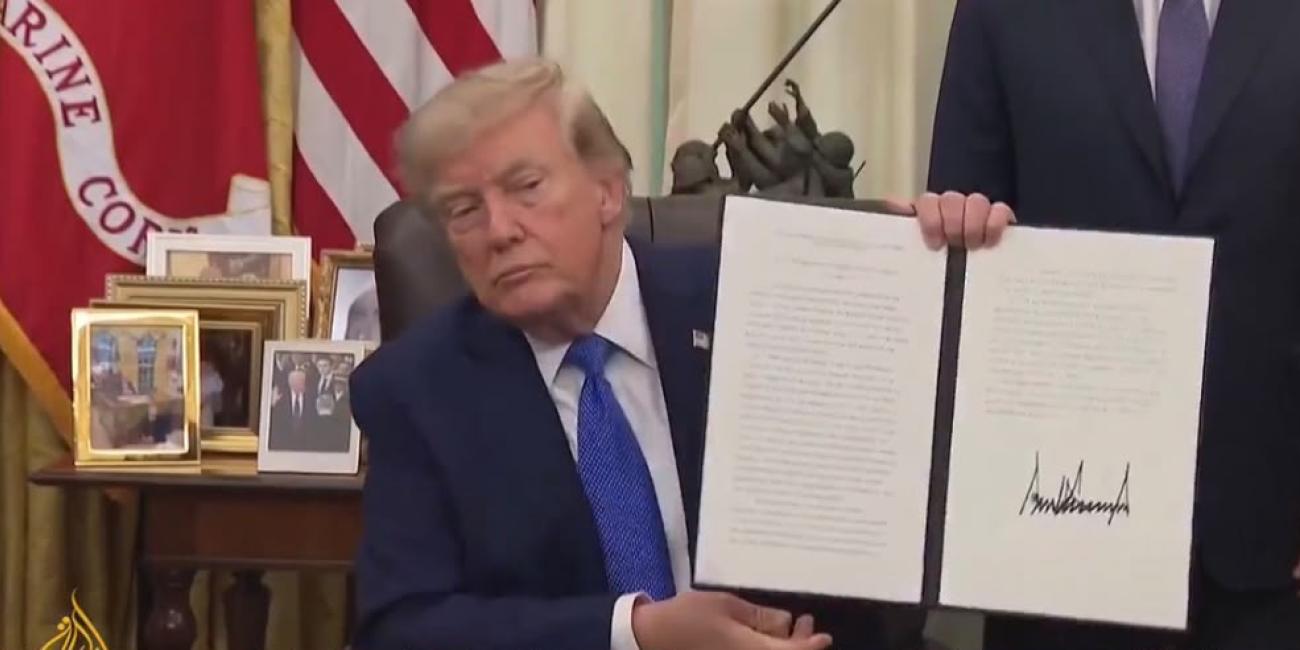
Speaking during the signing ceremony, White House Deputy Chief of Staff Stephen Miller said the orders prohibit the use of visas for what he called the “fraudulent purpose” of obtaining U.S. citizenship for newborns through birth tourism.
Connecticut Attorney General William Tong has criticised U.S. President Donald Trump’s latest executive orders seeking to restrict birthright citizenship, describing them as another unconstitutional attempt to undermine the protections guaranteed under the U.S. Constitution.
In a statement issued on Thursday, Tong said the orders came only weeks after the U.S. Supreme Court rejected Trump’s earlier attempt to end birthright citizenship through an executive order signed on the first day of his second term.
“The U.S. Supreme Court already rejected Trump’s attempt to end birthright citizenship, but rather than accept that decision, he’s back with another scheme to undermine and gut one of our Constitution’s clearest guarantees,” Tong said.
“The Fourteenth Amendment means what it says, and Trump cannot rewrite it or manufacture new exemptions because the Court rejected his blatantly unconstitutional efforts. We are reviewing these actions and considering all appropriate options.”
Tong did not specify what legal action Connecticut may pursue but indicated his office is assessing the executive orders and weighing its response.
The latest directives represent a narrower effort by the Trump administration to limit birthright citizenship after the Supreme Court ruled against the president’s previous executive action.
According to ABC Network, the new orders broaden the categories of people whose U.S.-born children would be considered ineligible for automatic citizenship and instruct immigration officials not to issue visas to foreign nationals suspected of travelling to the United States primarily to give birth, a practice the administration describes as “birth tourism.”
Speaking during the signing ceremony, White House Deputy Chief of Staff Stephen Miller said the orders prohibit the use of visas for what he called the “fraudulent purpose” of obtaining U.S. citizenship for newborns through birth tourism.
The executive orders also seek to restrict citizenship rights for children born in the United States to foreign government employees and individuals classified as “alien enemies.”
They could also affect people born in U.S. territories if Congress passes proposed legislation ending automatic citizenship there.
Trump has made limiting birthright citizenship a central part of his immigration agenda, arguing that the constitutional guarantee has been exploited by people travelling to the United States solely to secure citizenship for their children.
“We had a very unfortunate decision in the Supreme Court concerning birthright,” Trump said after signing the orders, referring to the court’s 6-3 ruling against his previous executive action.
The president’s first attempt, issued in 2025, directed federal agencies not to recognise the citizenship of children born in the United States if neither parent was an American citizen or lawful permanent resident.
That order was found to be inconsistent with the Fourteenth Amendment, whose Citizenship Clause has long been interpreted as granting U.S. citizenship to nearly everyone born on American soil, with only limited exceptions such as children of foreign diplomats or members of an occupying enemy force.
Legal experts expect Trump’s latest executive orders to face fresh court challenges, with opponents arguing that they again conflict with the constitutional guaran


tee of birthright citizenship.

The couple were spotted holding hands during a NYC date night just days after Travis celebrated his 37th birthday.

Breaking news- Formula 1 Reportedly Set for Historic Return to Africa With Rwandan Grand Prix in 2030

Roman Reigns Looms Large on Raw as Bronson Reed and a Masked Star Steal the Spotlight in Explosive Night

Breaking news- Trump Announces $90 Medicare Payment for More Than 20 Million Seniors — Here’s Who Could Receive It

Trump Announces One-Time $90 Medicare Payment for More Than 20 Million Seniors Ahead of Midterm Elections

Colts vs. Commanders London Showdown: Fantasy Managers Face Crucial Start-Sit Decisions

Trump Says “I Never Get Tired” as Grueling Midterm Schedule Draws Fresh Attention

Outrage Grows as Petition Demands Full Criminal Investigation in Cornell Fraternity Assault Case

Rest Now Tony Romo”: Fans React as CBS and Former NFL Star Part Ways After Nine Years

Biden Unleashes Fierce Attack on Trump at Maryland Democratic Gala, Accusing Administration of “Brazen, Blatant Corruption”

Rick Devens, Taylor Brown and the Final Two Twist That Changed the Big Brother 28 Finale
