
NEWS
New price: Oil Prices Climb on Stalemate in Strait of Hormuz

Oil prices rose on Monday as hopes dimmed for a breakthrough in the standoff between the United States and Iran over the Strait of Hormuz.
Iran and Oman recently indicated that they were near an agreement that would allow oil and other important commercial traffic to resume through the crucial waterway. But Iran has issued a long list of demands that it said would have to be met by the United States before ships could move freely again, and it was clear that Tehran wanted to continue to use the strait as leverage. Mr. Trump told Axios on Sunday that he believes that Iran will eventually come around because of economic distress and inflation.
Shipping traffic remains restricted.
A modest number of vessels passed through the Strait of Hormuz over the weekend, continuing to run at a fraction of the prewar pace. About a dozen ships per day have navigated the strait recently, according to Kpler, a maritime data company. Before the war, an average of 130 ships used the route daily.
Traffic through the Bab al-Mandab Strait has been stable, with an average of just under 40 ships per day between Friday and Sunday, per Kpler. There has not been a significant drop in traffic since the Houthis threatened to block Saudi ships in the region, although activity in that part of the Red Sea downshifted to its current pace in 2023, when the Houthis launched attacks on shipping in response to Israel’s war in Gaza.
On Saturday, the Emirati foreign ministry said an Iranian attack had targeted a tanker belonging to the state-owned Abu Dhabi National Oil Company as it crossed the Strait of Hormuz. The company had said that at least 15 of its vessels were attacked in the waterway since the conflict began, leading to one death and 20 injuries among crew members.
Stocks are muted.
Futures on the S&P 500 pointed to little change when stocks resume trading in the United States on Monday. The benchmark stock market index closed at a fresh record high on Friday.
In Europe, the Stoxx 600, a broad index that tracks the region’s largest companies, was flat.
Stocks in Asia, where countries import vast quantities of oil and gas, were mostly up. Japan’s Nikkei 225 rose more than 2 percent, while South Korea’s KOSPI and Hong Kong’s Hang Seng were both up around 1 percent.
Gasoline prices dip.
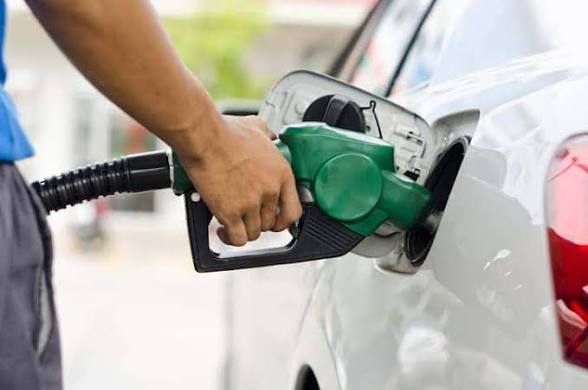
Gas prices fell slightly on Monday to a national average of about $4.01 a gallon, according to the AAA motor club. While prices have dropped by about 10 cents per gallon in the past week, drivers, on average, are still paying 35 percent more for gas than when the war began.
Gas prices don’t move in lock step with crude, usually trailing increases or drops by a few days.
The average price of diesel also fell slightly, to $5.30 per gallon, on Monday, but costs are still up 41 percent since the start of the war.

The couple were spotted holding hands during a NYC date night just days after Travis celebrated his 37th birthday.

Breaking news- Formula 1 Reportedly Set for Historic Return to Africa With Rwandan Grand Prix in 2030

Roman Reigns Looms Large on Raw as Bronson Reed and a Masked Star Steal the Spotlight in Explosive Night

Breaking news- Trump Announces $90 Medicare Payment for More Than 20 Million Seniors — Here’s Who Could Receive It

Trump Announces One-Time $90 Medicare Payment for More Than 20 Million Seniors Ahead of Midterm Elections

Colts vs. Commanders London Showdown: Fantasy Managers Face Crucial Start-Sit Decisions

Trump Says “I Never Get Tired” as Grueling Midterm Schedule Draws Fresh Attention

Outrage Grows as Petition Demands Full Criminal Investigation in Cornell Fraternity Assault Case

Rest Now Tony Romo”: Fans React as CBS and Former NFL Star Part Ways After Nine Years

Biden Unleashes Fierce Attack on Trump at Maryland Democratic Gala, Accusing Administration of “Brazen, Blatant Corruption”

Rick Devens, Taylor Brown and the Final Two Twist That Changed the Big Brother 28 Finale
